There is something ridiculously sweet about the way kids see the world. To a young child, the family dog is not “a canine companion.” He is a fuzzy roommate with strong opinions. The cat is not “a territorial animal with selective affection.” She is a tiny diva who lives in the house, judges everyone, and clearly understands English when snacks are involved. In many homes, children do not just love their pets. They quietly promote them to full human status.
That is why the funniest moments between kids and pets are often the most innocent ones. A toddler sets an extra place at the table for the beagle. A first grader explains bedtime rules to the hamster like a tiny HR manager. A preschooler gets genuinely offended that the goldfish refuses to wear a pretend birthday hat. These scenes are hilarious, but they also reveal something real about childhood. Kids use imagination, empathy, and everyday routines to make sense of the world, and pets often get drafted into that process whether they volunteered or not.
That mix of imagination and affection is exactly what makes this topic so lovable. Children often treat pets like siblings, classmates, dinner guests, or sleepy little coworkers. The result is a string of adorable misunderstandings that can turn an ordinary Tuesday into family legend material. Below are 30 of the most charming moments of kids not realizing their pets are not, in fact, tiny humans in fur coats.
Why Kids So Often Treat Pets Like People
Young children learn through pretend play, imitation, and storytelling. They practice family routines, social roles, and emotional language by assigning “people jobs” to toys, stuffed animals, and, yes, very patient pets. When a child tucks a dog under a blanket and whispers, “You worked hard today,” that is not confusion in a negative sense. It is the child’s imagination trying to organize love, routine, and empathy into a story that makes sense.
Of course, real animals still have real boundaries. A pet may be beloved, but it is not a toddler in a fur sweater. The funniest moments are the ones where a child’s logic is completely sincere while the pet’s expression says, I did not agree to this meeting. That contrast is comedy gold.
30 Adorable Moments Of Kids Not Realizing Their Pets Aren’t Human
1. Setting a Place at the Dinner Table
A child carefully arranges a plate, cup, and napkin for the dog, then looks shocked when the dog skips the fork and goes straight for the meatball. In their mind, table manners were clearly explained.
2. Reading a Bedtime Story Like It Is Mandatory
Some kids will sit beside the family cat and read with the seriousness of a public librarian. The cat stares into the middle distance, but the child remains convinced the audience is deeply moved.
3. Telling the Pet to “Use Your Words”
When the parrot squawks or the puppy whines, a small child may respond like a worn-out preschool teacher. “No, tell me what you need.” It is a lovely sentiment, even if the answer is still just barking.
4. Offering the Pet a Turn in a Board Game
A child hands the rabbit a game piece and patiently explains the rules. The rabbit, committed to chaos, tries to eat the corner of the board.
5. Scolding a Cat for Not Wearing Clothes
Kids who have to put on socks often feel it is only fair that the cat also participate in civilization. The cat, naturally, files a silent complaint with the universe.
6. Asking the Dog Which Cartoon He Wants to Watch
The remote gets held out like a microphone. “Do you want the puppy show or the dinosaur show?” The dog wags once, and suddenly that is considered informed consent.
7. Whispering a Secret Because “He Won’t Tell”
Pets become trusted confidants at lightning speed. A child may crouch next to the family dog and reveal hidden cookie locations, playground drama, and opinions about broccoli.
8. Putting the Hamster in “Time-Out”
When the hamster kicks bedding everywhere, a child may announce consequences. It is a very stern speech for an animal that still thinks cardboard is a lifestyle.
9. Inviting the Pet to a Tea Party
Every stuffed bear is seated properly, and then the dog is recruited as the guest of honor. He gets a plastic teacup, a fake cookie, and a level of social pressure no Labrador prepared for.
10. Explaining School Rules to the Goldfish
“You have to raise your hand.” The goldfish blinks in liquid silence while the child nods as though important life advice has just been exchanged.
11. Saving a Seat in the Car
Some children truly believe the pet needs the “good window seat.” There may be a full debate about leg room, comfort, and whether the cat gets carsick “because she reads too much.”
12. Telling the Dog Not to Interrupt
When barking begins mid-conversation, a child may look offended and say, “I’m talking right now.” It is polite, direct, and utterly wasted on a terrier.
13. Packing the Pet a Snack for the Trip
If the family is going out, a caring child might insist the pet also needs crackers, water, and an emergency stuffed toy. Honestly, the level of planning is impressive.
14. Asking the Cat About Her Day
Kids do not just talk to pets. They talk with them. “Did you have a hard day?” the child asks, while the cat stretches like someone who absolutely pays no rent.
15. Assuming the Dog Understands House Chores
Some kids recruit pets into cleanup time. “You get the blocks, I’ll get the books.” The dog contributes emotional support and maybe steals one sock.
16. Singing “Happy Birthday” to a Completely Random Animal
The turtle did not request a party. The turtle did not confirm the date. The turtle will still receive a birthday song, a paper crown, and mild confusion.
17. Comforting the Pet After a “Bad Mood”
If the dog goes to hide during a noisy afternoon, a child may interpret it as emotional burnout. Out comes a blanket, a toy, and a heartfelt “It’s okay, buddy, everybody needs space.”
18. Trying to Teach the Pet the Alphabet
A child points to letters with determined optimism while the guinea pig focuses on hay. No measurable progress occurs, but the lesson plan is excellent.
19. Insisting the Pet Needs Privacy
One of the funniest things kids do is defend a pet’s dignity like a tiny attorney. “Don’t look at him while he’s eating. He’s shy.” Suddenly the dog is a Victorian gentleman.
20. Giving the Pet a Job Title
Children love assigning roles. The cat may become “the house manager,” the dog “the baby protector,” and the lizard “the quiet boss.” None of these positions come with pay.
21. Expecting the Pet to Follow Playground Rules
“No pushing. Wait your turn. Be nice.” These are admirable standards for a child to remember, but the puppy is mostly focused on leaves and speed.
22. Tucking the Pet Into Bed Every Night
A child who needs a bedtime routine often assumes the pet needs one too. This can involve a blanket, a kiss on the head, and a lecture about the importance of sleep hygiene.
23. Getting Offended When the Pet Ignores Their Name
If a child has spent all week learning to respond when called, they assume the cat should do the same. The cat’s refusal feels less like instinct and more like personal disrespect.
24. Sharing Stickers Like a Reward Chart
Some pets get decorated with stars, hearts, or superhero stickers because the child believes they “did so good today.” The pet rarely agrees with the placement.
25. Saving the Pet From “Being Lonely”
A child may drag a stuffed animal over to the dog bed because “he needs a friend.” It is sweet, generous, and based on the assumption that all species enjoy plush company.
26. Telling the Pet Family News First
Whether it is a lost tooth or a new pair of shoes, many kids sprint to inform the dog before any adult hears the update. In that moment, the pet is clearly immediate family.
27. Trying to Include the Pet in Homework
“You can help me with math.” The dog cannot help with math. The dog can, however, sit on the worksheet and create a memorable lesson in patience.
28. Giving the Pet a Full Lecture About Behavior
Children love repeating the phrases adults use on them. “We do not chew things that are not ours.” The irony is especially strong when the speech is delivered to a sock-stealing puppy.
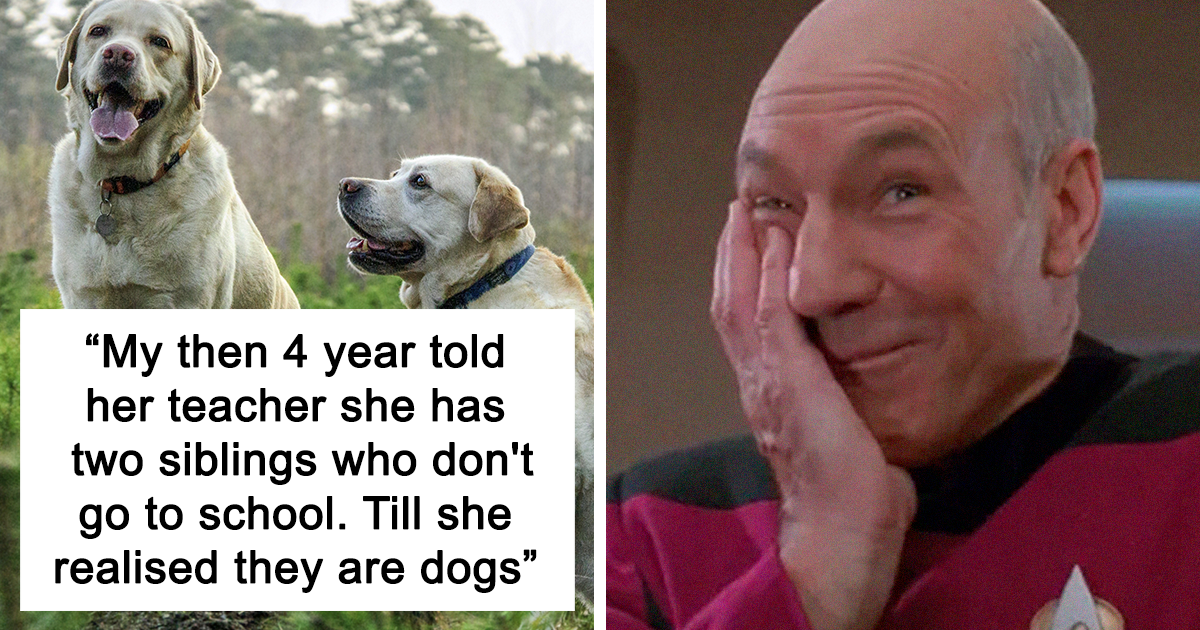
29. Thinking the Pet Is Also a Sibling
Some children include pets in family drawings with total confidence: mom, dad, me, baby brother, and Kevin the bulldog. Kevin may even get his own shirt color.
30. Believing Love Cancels Biology
The most adorable moment of all is the quiet assumption behind every tea party, blanket tuck, and whispered conversation: You are one of us. Kids do not always see species first. They see relationship first. And that is what makes these moments so funny, so tender, and so unforgettable.
What These Adorable Moments Really Reveal
Under the laughs, these moments show how children build empathy. They practice care by offering food, comfort, conversation, and inclusion. They test out social roles by becoming the teacher, the helper, the host, or the older sibling. Pets are perfect partners for this kind of imagination because they are present, expressive, and wonderfully unpredictable.
At the same time, adults have an important job to do. A funny moment stays funny when the pet is comfortable and the child is guided well. Teaching children to be gentle, to notice when a pet wants space, and to understand that animals have their own signals helps protect both sides of the relationship. In other words, yes, let the tea party happen, but maybe do not force the cat to wear a bonnet against her will. She has boundaries and an attitude.
Extra Experiences Inspired by This Topic
One of the most relatable experiences happens when a young child decides the dog is clearly a younger sibling who needs supervision. Suddenly, the child is reporting on the dog’s choices all day long. “He is in the kitchen again.” “He took my toy.” “He is not listening.” The funniest part is how seriously they take the role. They are not joking. They have accepted a leadership position in a household where the dog did not ask for management.
Another common moment shows up at bedtime. Plenty of kids feel strongly that no living creature should sleep without a blanket, a kiss, and at least one final sentence of encouragement. So they march over to the dog bed, tuck in a seventy-pound retriever like a sleepy office worker, and whisper, “Good night, do not be scared.” The retriever then stands up three seconds later, circles twice, and flops on top of the blanket instead. The child looks betrayed by the lack of appreciation for luxury accommodations.
Then there is the emotional support phase, which is honestly elite comedy. If the cat slips under the couch after a loud vacuum session, a child may kneel nearby and begin a heartfelt counseling session. “I know that was a lot for you.” “Take deep breaths.” “You can come out when you are ready.” It is impossible not to laugh, because the child is borrowing the language of empathy they have heard from adults and generously applying it to a startled animal with zero interest in processing feelings out loud.
Family outings create their own brand of adorable confusion. Kids often assume pets have the same social expectations humans do. So when the family is leaving for the park, a child may panic because the cat “doesn’t have shoes on” or insist the dog cannot be left behind because “he likes slides too.” The logic is heartfelt and a little chaotic. To the child, excluding the pet feels rude, almost like forgetting a cousin at Thanksgiving.
Perhaps the sweetest experience is when children include pets in important milestones without hesitation. Lost a tooth? Tell the dog. Got a new backpack? Show the cat. Learned to spell your name? Read it to the guinea pig with pride. Pets become trusted witnesses to childhood itself. They are not just background characters in the home. In a child’s mind, they are participants, confidants, and members of the inner circle.
That is why these moments stick in family memory for years. Adults may remember the mess, the barking, the fur on the couch, and the occasional stolen sandwich. Kids remember something else entirely: a companion who sat nearby during snack time, listened to every story, accepted every pretend invitation, and quietly belonged. The child may not fully understand the difference between human and animal yet, but they do understand attachment. And sometimes that simple, wholehearted love is what makes the whole scene feel so magical.
Conclusion
The charm of these adorable kid-and-pet moments comes from the same place childhood wonder always comes from: complete sincerity. Children do not overthink connection. If the dog lives in the house, hears the stories, shows up for the snacks, and watches the cartoons, then obviously the dog is part of the family team. Maybe not great at chores, maybe questionable in formal wear, but definitely part of the team.
That is what makes these stories funny, heartwarming, and deeply shareable. They remind us that kids often approach animals with imagination first, labels second. As long as adults help protect healthy boundaries and safe interactions, these sweet misunderstandings can become some of the happiest memories in a home. And really, if a child wants to invite the cat to a tea party, maybe the only correct response is to serve invisible cookies and enjoy the show.