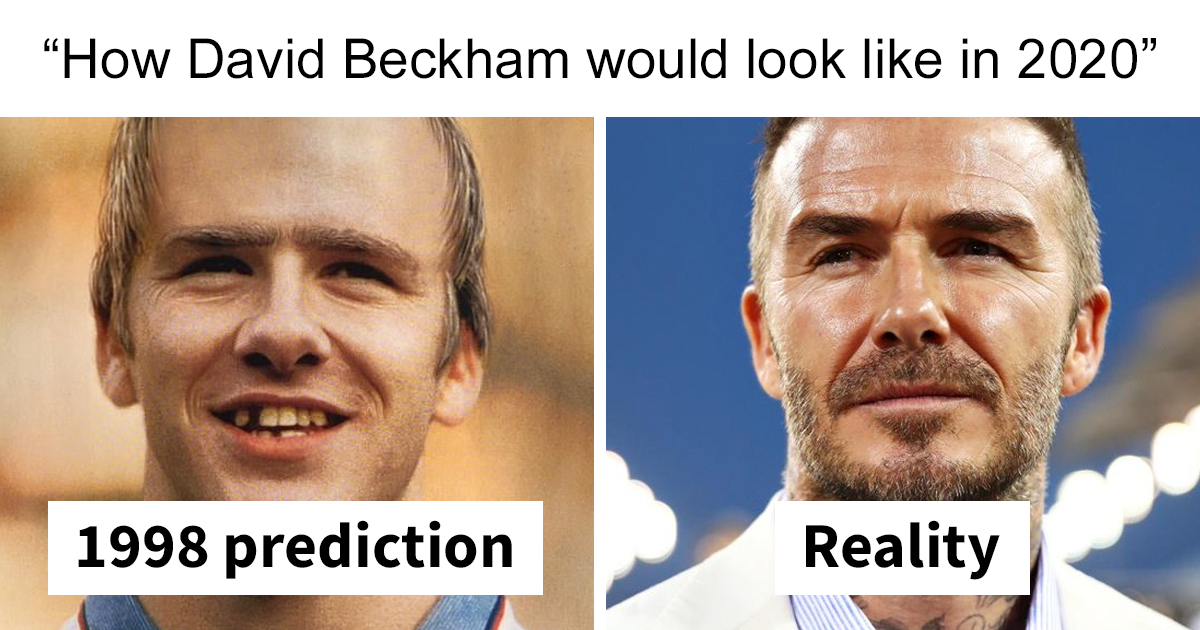
The 1990s had a special talent for predicting the future with total confidence and a straight face. It was the decade of dial-up internet, CD-ROM encyclopedias, neon windbreakers, chunky desktop computers, and futurists pointing dramatically at the year 2000 like it was a magical portal. Some predictions were smart. Some were close. And some aged like milk left inside a Tamagotchi.
To be fair, the ’90s were not boring. The World Wide Web was arriving in homes, mobile phones were shrinking from “brick” to “less embarrassing brick,” virtual reality was being hyped in magazines, and everyone was suddenly very worried that computers would panic at midnight on January 1, 2000. When technology changes fast, people naturally imagine it will keep changing in a straight line. Unfortunately, the future enjoys taking weird side streets.
Below are 30 ’90s predictions about the future that missed the mark. Some were wildly wrong. Others were wrong in a more interesting way: the idea happened, but not in the form people expected. Instead of faxing from beaches, we send memes from airport lounges. Instead of robot butlers, we have a circular vacuum that bravely attacks chair legs. Progress, apparently, has a sense of humor.
Why ’90s Future Predictions Were So Confident
The 1990s sat between two worlds: analog life and digital life. People still rented movies from stores, mailed paper bills, bought printed maps, and waited for photos to be developed. At the same time, computers were entering homes, the internet was becoming public, and companies were promising that the “information superhighway” would change everything.
That mix created bold predictions. Commentators often overestimated hardware and underestimated human habits. They imagined faster gadgets, but not always cheaper data plans, better batteries, social networks, app stores, cybersecurity problems, or the simple fact that people do not want every appliance in the house asking for a software update.
30 ’90s Predictions About The Future That Missed Reality
1. The Internet Would Collapse In 1996
One famous prediction claimed the internet would grow too fast and collapse under its own weight. Instead, the internet became the backbone of modern life. It did not collapse; it multiplied, monetized, and eventually learned how to show us ads for shoes we looked at once three weeks ago.
2. The Web Would Not Replace Newspapers
In the mid-1990s, skeptics argued that online databases could not replace daily newspapers. Print journalism still matters, but the web absolutely transformed how news is produced, distributed, discovered, and monetized. The newspaper did not vanish overnight, but the classified ad section certainly needed a support group.
3. Online Shopping Would Never Beat The Mall
The idea that people would buy airline tickets, books, clothes, and groceries online sounded unrealistic to many observers. Today, e-commerce is ordinary. The mall did not disappear, but it stopped being the undisputed temple of consumer life. The food court survived; its ego did not.
4. Nobody Would Make Restaurant Reservations Online
A ’90s skeptic could not imagine restaurant reservations becoming a common online task. Now booking a table, checking reviews, scanning menus, and complaining about parking can all happen before you leave the couch. The future arrived wearing sweatpants.
5. The Internet Would Stay Too Difficult For Normal People
Early internet access required patience, technical confidence, and the emotional strength to hear a modem scream. Many assumed it would remain a playground for specialists. Then browsers improved, search engines matured, smartphones appeared, and suddenly grandparents were sending animated birthday GIFs with alarming enthusiasm.
6. Y2K Would Cause Total Technological Chaos
The Y2K bug was a real technical issue, but some predictions turned it into full-blown apocalypse theater. There were fears of failed banks, broken utilities, grounded planes, and social disorder. Thanks to enormous preparation, the rollover caused mostly minor disruptions. Civilization continued, though many canned beans had been nervously purchased.
7. Elevators And Airplanes Would Fail At Midnight
One of the scarier Y2K fears was that embedded computer chips would suddenly malfunction in elevators, airplanes, medical devices, and infrastructure. Serious engineers did work hard to prevent problems, but the dramatic midnight disaster scenes did not happen. The elevators kept elevating. The planes stayed stubbornly plane-like.
8. The Paperless Office Was Finally Here
The office of the future was supposed to be clean, digital, and free of paper. Instead, offices gained email, printers, scanners, sticky notes, printed meeting agendas, and somehow more paper. The paperless office became the Bigfoot of workplace technology: often discussed, occasionally sighted, never fully captured.
9. CD-ROM Encyclopedias Were The Future Of Knowledge
In the ’90s, multimedia encyclopedias felt revolutionary. Encarta, Britannica CD-ROMs, and interactive learning discs promised a new era of home research. Then the open web and search engines changed the game. The CD-ROM went from futuristic treasure chest to shiny coaster faster than anyone expected.
10. Multimedia CD-ROMs Would Transform Education
Interactive discs with videos, maps, animations, and quizzes were supposed to remake classrooms. Some were useful, but the real educational shift came through broadband internet, learning platforms, streaming video, collaborative documents, and mobile devices. The CD-ROM was impressive until it met a search bar.
11. Interactive TV Would Become The Main Digital Hub
Many ’90s predictions imagined television as the center of the digital home. Viewers would shop, bank, learn, vote, and browse through the TV. In reality, smartphones and laptops became the primary personal gateways. The TV got smarter, yes, but mainly so it could ask for passwords at the worst possible moment.
12. Faxing From The Beach Would Be A Big Deal
Some futuristic ads imagined people sending faxes from beaches. Technically, mobile work did happen. But faxing from paradise was not the dream; email, messaging apps, cloud files, and video calls took over. Nobody wanted sand in the fax machine because nobody wanted the fax machine.
13. Payphone Video Calls Would Matter
Another prediction pictured people using public phones for emotional video calls. Video calling became real, but payphones faded into urban archaeology. The future did not put cameras into booths; it put cameras into every pocket and then taught people to take 47 selfies at brunch.
14. Cash Machines Would Sell Concert Tickets
Buying concert tickets from an ATM sounded practical in the early ’90s. Instead, ticketing moved to websites and apps, complete with digital queues, dynamic pricing, and service fees that make people reconsider whether music is necessary for human civilization.
15. Voice-Controlled Doors Would Be Everywhere
Voice control exists, but most people still unlock doors with keys, keypads, fobs, phones, or smart locks. Talking to your front door never became a universal habit. It turns out many people are uncomfortable shouting “open sesame” while a neighbor watches from behind the curtains.
16. Everyone Would Carry Medical Records In A Wallet
The idea of portable medical history was sensible, but the wallet card was not the final form. Health data moved toward patient portals, hospital systems, apps, and cloud-based records. The concept survived; the wallet solution did not become the standard.
17. Smart Refrigerators Would Run The Kitchen
Late-’90s and early-2000s smart-fridge hype promised appliances that tracked food, suggested recipes, ordered groceries, and managed family life. Smart fridges exist, but they did not become the command center of civilization. Most refrigerators still perform the noble ancient duty of hiding leftovers until they become science experiments.
18. Robot Butlers Were Right Around The Corner
The ’90s loved the idea of helpful domestic robots. Decades later, the average home robot is usually a vacuum cleaner with confidence issues. Robotics advanced enormously in factories, hospitals, warehouses, and research labs, but humanoid household servants remain more sci-fi than Saturday morning reality.
19. Virtual Reality Would Soon Be Normal Life
VR in the ’90s promised immersive education, entertainment, work, and exploration. The hardware was expensive, uncomfortable, and limited. VR eventually improved, but it did not become the default interface for daily life. Most people still prefer reality, even though reality has terrible graphics sometimes.
20. Virtual Worlds Would Become The New Front Porch
Online metaworlds and avatar spaces were imagined as the next great social revolution. They influenced gaming and digital communities, but they did not replace ordinary social life. The real “front porch” of cyberspace became a strange mix of social media feeds, group chats, livestreams, and comment sections where optimism goes to wrestle raccoons.
21. Everyone Would Wear Computers On Their Face
Wearable computing sounded inevitable in the ’90s. Smart glasses and headsets still attract investment, but they remain far from universal. The winning wearable turned out to be the smartwatch, not cyber-goggles. Apparently people like technology more when it does not make them look like a mall security cyborg.
22. Telecommuting Would Empty Offices By 2000
Telecommuting was discussed seriously in the ’90s, and some workers did it. But offices did not empty by 2000. Remote work needed better broadband, better collaboration tools, cultural acceptance, and, eventually, a global shock. The prediction was early, which in forecasting is just another way to be wrong.
23. The “Long Boom” Would Bring 25 Years Of Smooth Prosperity
Some late-’90s optimism imagined a long period of global prosperity, freedom, and environmental improvement. Then came the dot-com crash, the September 11 attacks, wars, the 2008 financial crisis, widening inequality, and intensifying climate concerns. The future did boom, but it also tripped over several coffee tables.
24. Dot-Com Grocery Delivery Would Replace Supermarkets Quickly
Online grocery delivery was a major dot-com dream. Early companies burned through money because the logistics were brutal. Today grocery delivery exists, but supermarkets are still here, and many people still prefer personally squeezing avocados like tiny green stress balls.
25. Digital Cash Would Replace Physical Money Fast
The ’90s produced big dreams around electronic cash and internet payment systems. Digital payments became huge, but not exactly as predicted. Credit cards, debit cards, PayPal-style accounts, mobile wallets, and banking apps won more ground than many early digital-cash experiments.
26. E-Books Would Quickly Overtake Printed Books
Electronic books were predicted to become dominant much sooner than they did. E-books are convenient and popular, but printed books remain stubbornly alive. Readers still enjoy paper, shelves, covers, margins, and the deeply human pleasure of buying books faster than they can read them.
27. The PC And Television Would Merge Into One Perfect Device
Digital convergence was a favorite ’90s idea. The computer and TV were supposed to become one grand household machine. Instead, we got many screens: phones, tablets, laptops, TVs, watches, dashboards, and refrigerators that occasionally try to join the conversation. Convergence happened, but it became screen multiplication.
28. Public Kiosks Would Be The Future Of Online Access
Some forecasts imagined public information kiosks as key tools for banking, shopping, ticketing, maps, and communication. Kiosks exist, but smartphones made them secondary. Why walk to a kiosk when a pocket computer can misdirect you to the wrong coffee shop instantly?
29. Human Cloning Would Soon Redefine Society
After Dolly the sheep was cloned in 1996, speculation exploded. Some imagined a near future of human clones, designer duplicates, and identity chaos. The reality has been far more cautious, regulated, and ethically complex. Human cloning did not become a normal social issue; it remained a science-fiction headache.
30. Designer Babies Would Become Routine
The Human Genome Project and biotech advances inspired predictions about custom-made children with selected traits. Genetic medicine has made major progress, but routine designer babies did not arrive. Biology, ethics, law, cost, uncertainty, and public concern all slowed the fantasy. The future is powerful, but it still has paperwork.
What These Failed Predictions Teach Us
The funniest thing about failed ’90s future predictions is that many were not completely foolish. They often identified real trends: digital communication, online commerce, remote work, virtual reality, smart homes, personalized media, and biotechnology. The mistake was assuming that technology alone decides the future.
In reality, the future is shaped by price, convenience, regulation, culture, trust, design, infrastructure, and timing. A technology can be possible and still not be desirable. A device can be impressive and still not fit into daily life. A prediction can be directionally right and still wrong enough to make us laugh.
For example, the smart home did arrive, but not as a fully automated paradise. It arrived as a speaker that sometimes misunderstands your playlist request and a thermostat that believes it has a philosophy degree. Online shopping did arrive, but it did not eliminate physical stores. Remote work arrived, but not on the cheerful schedule futurists expected. Virtual reality arrived, left, returned, improved, and still has to convince many people that wearing a headset is worth the forehead marks.
Personal Experience: Remembering The Future That Never Arrived
Looking back at ’90s predictions feels like opening an old time capsule and finding a floppy disk labeled “THE FUTURE!!!” in permanent marker. There was so much excitement around technology that even ordinary objects seemed ready for promotion. A phone was not just a phone; it was about to become a video portal. A refrigerator was not just a refrigerator; it was about to become your nutritionist, grocery assistant, calendar manager, and cold white life coach.
One of the most relatable experiences from that era was the feeling that computers were magical but also slightly hostile. You could install a CD-ROM encyclopedia and suddenly explore maps, animal sounds, historical timelines, and grainy videos. It felt like having a library trapped inside a plastic disc. Then the program would freeze, the computer would wheeze, and you would remember that the future still needed a reboot.
Dial-up internet created its own comedy. Getting online required negotiation with the household phone line. Someone picking up the phone could destroy your connection like a tiny domestic natural disaster. Web pages loaded slowly enough to build character. Downloading a picture felt like watching a curtain rise one pixel row at a time. Yet people still sensed that something big was happening. The experience was clumsy, but the possibility was enormous.
That is why many wrong predictions were understandable. If you saw the internet for the first time in the ’90s, you might reasonably imagine that everything would soon become digital. If you watched a VR demo, even a bad one, you could believe classrooms would become virtual oceans and offices would become 3D spaces. If you heard about Y2K, you might believe computers were fragile enough to bring the modern world down with a date error.
The lived reality was messier. The future arrived in pieces. We did not get flying cars parked over suburban driveways, but we did get GPS directions that reroute us around traffic. We did not get robot butlers, but we got delivery apps, smart speakers, automatic vacuums, and software that can summarize meetings nobody wanted to attend. We did not abandon paper, but we did learn to sign documents digitally and then print them “just in case.” Humanity remains charmingly inconsistent.
The best lesson from these ’90s predictions is humility. Every generation thinks it can see what comes next. Every generation is partly right and hilariously wrong. The next wave of predictions about AI, space travel, biotechnology, smart cities, and wearable devices will probably look just as funny someday. Future readers may laugh at us the way we laugh at beach faxes and internet-collapse forecasts. And honestly, fair enough. The future has always been less like a straight road and more like a shopping cart with one bad wheel.
Conclusion
The 1990s gave us unforgettable culture, explosive technology, and some of the most entertaining future predictions ever made. The decade saw the direction of change clearly: the world was becoming more digital, more connected, and more automated. But it often guessed the wrong devices, the wrong timelines, and the wrong human behavior.
That is what makes these 30 ’90s predictions about the future so funny. They remind us that innovation is not just invention. It is adoption. It is usefulness. It is cost. It is whether ordinary people actually want the thing after the trade-show applause ends. The future did arrive, but it came through smartphones, cloud services, search engines, apps, and platformsnot through fax machines on beaches, payphone video calls, or refrigerators that manage dinner like tiny kitchen executives.
So yes, we can laugh at the predictions that missed. But we should also appreciate the imagination behind them. Being wrong about the future is easy. Being interestingly wrong is an art form, and the ’90s were masters of it.