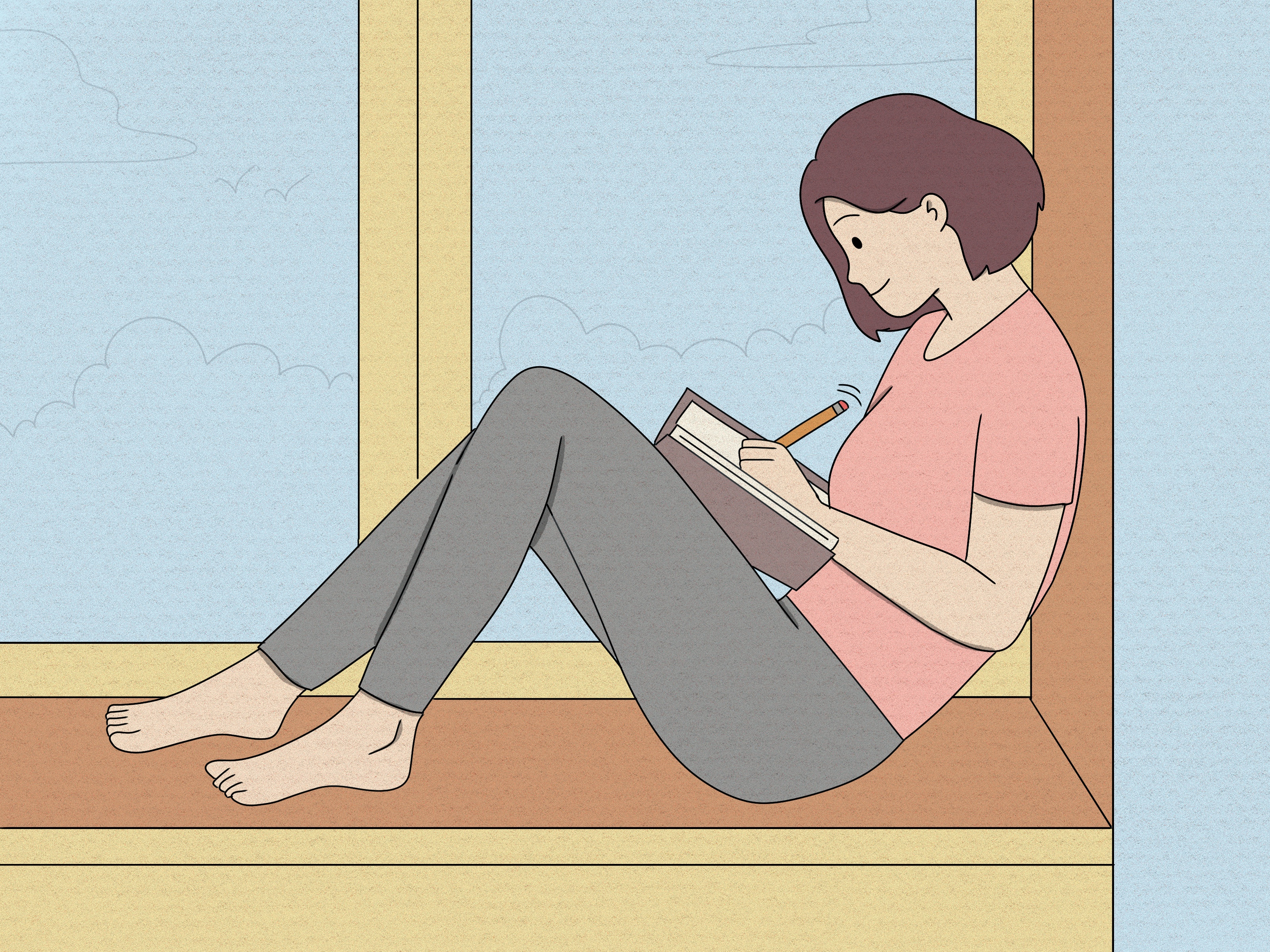
Every artist knows the drama of the blank page. You sit down with a pencil, open your sketchbook, take a deep breath, and suddenly your brain behaves like a refrigerator at midnight: full of things, yet somehow nothing looks useful. The good news is that creative block does not mean you are “out of ideas.” It usually means your idea-finding system needs a little tune-up.
If you have ever searched for what to draw, drawing ideas, sketchbook prompts, or things to draw when bored, you are not alone. Beginners, hobby artists, design students, illustrators, and even professional artists all run into the same question: “Okay… but what should I draw today?” The answer is not always a lightning bolt of inspiration. More often, it is a practical process.
This guide breaks the problem into three simple methods: observing the world around you, mixing ideas in unexpected ways, and building a personal drawing idea bank. These approaches work whether you draw with a graphite pencil, a digital tablet, a ballpoint pen, or the suspiciously fancy marker you bought and are now afraid to use.
Why It Feels So Hard to Think of What to Draw
The hardest part of drawing is often not the hand movement. It is choosing a subject. When the options are endless, your brain can freeze. Should you draw a portrait? A dragon? A coffee cup? A dramatic raccoon wearing a tiny cloak? Too many choices can make even fun activities feel strangely stressful.
Another reason people get stuck is the pressure to make every drawing “good.” That pressure turns a sketchbook into a courtroom. Every line is judged. Every idea is cross-examined. Before long, drawing feels less like play and more like trying to pass a secret art exam no one told you about.
The better approach is to treat drawing ideas as raw material, not final masterpieces. A subject does not need to be impressive to be useful. A shoe, a spoon, a houseplant, a family photo, or a scene from your walk home can become a strong drawing if you look closely, add meaning, or change the angle.
Way 1: Look Around and Draw from Real Life
The fastest answer to “What should I draw?” is often already within six feet of you. Real-life observation is one of the most reliable ways to generate drawing inspiration because it gives you shapes, textures, shadows, details, and stories without needing to invent everything from scratch.
Start with ordinary objects
Ordinary objects are secretly excellent drawing teachers. A mug teaches curves and ellipses. A backpack teaches folds, zippers, and overlapping shapes. A sneaker teaches texture, perspective, and patience. A pile of laundry teaches chaos, but in an educational way.
Choose one object near you and draw it three times. First, draw it simply in five minutes. Second, zoom in on one detail, such as a handle, label, button, seam, or shadow. Third, exaggerate it: make the mug look heroic, the lamp look mysterious, or the chair look like it has just heard shocking news.
Use the “close-looking” trick
Instead of asking, “Is this object interesting enough?” ask, “What have I not noticed yet?” Look for tiny dents, reflected light, uneven edges, strange shadows, and patterns. A leaf is not just a leaf. It has veins, curves, tears, color shifts, and a shape that may look like a map for ants with excellent hiking boots.
This habit turns your surroundings into an endless list of sketchbook ideas. Your room, kitchen, desk, sidewalk, garden, bus stop, or local café can all become a personal art studio. You do not need to travel to a dramatic mountain range. Sometimes your best drawing subject is the half-empty water bottle judging you from the corner of your desk.
Try quick observation prompts
When you do not know what to draw, use time limits. They reduce pressure and make drawing feel more like practice than performance.
- Draw one object in your room in three minutes.
- Draw the same object without lifting your pencil.
- Draw only the shadows, not the outlines.
- Draw five small thumbnail sketches of the same scene from different angles.
- Draw a natural object, such as a leaf, flower, shell, fruit, or rock, as accurately as possible.
These exercises are simple, but they train your eye. They also help you stop waiting for the “perfect” idea. The perfect idea usually shows up after you begin, not before.
Way 2: Combine Two Ideas to Make Something New
If observation gives you reality, combination gives you imagination. One of the easiest ways to create original drawing ideas is to mix two unrelated things. Your brain loves patterns, surprises, and odd connections. That is why “cat” is fine, but “cat astronaut selling tacos on the moon” suddenly has personality.
Use the formula: subject + twist
Here is a simple creative formula:
Basic subject + unexpected twist = fresh drawing idea
For example:
- A fish + a library = a fish librarian guarding underwater books.
- A houseplant + a personality = a dramatic plant demanding better sunlight.
- A city street + fantasy = buildings shaped like giant teapots and mushrooms.
- A self-portrait + weather = your mood drawn as a thunderstorm, fog, or sunshine.
- A dog + a historical outfit = a royal portrait of a very serious pug.
This method is especially helpful for illustration, comics, character design, animation concepts, and personal sketchbook practice. It gives you enough structure to begin, but enough freedom to play.
Make a three-column idea list
Open a page and divide it into three columns: things, places, and moods. Fill each column with random words.
For example:
- Things: umbrella, robot, turtle, clock, sandwich, violin
- Places: beach, attic, train station, forest, museum, kitchen
- Moods: nervous, cheerful, spooky, calm, dramatic, sleepy
Now combine one word from each column. You might get “sleepy robot in a museum” or “nervous turtle at a train station.” Congratulations, your sketchbook now has a tiny movie trailer inside it.
Turn questions into drawings
Questions are powerful drawing prompts because they invite your imagination to solve a visual problem. Try asking:
- What would my favorite snack look like as a superhero?
- What does Monday feel like as a creature?
- What would my room look like 200 years in the future?
- What would a tree dream about?
- What if my backpack had a secret world inside it?
These prompts are playful, but they also help you practice storytelling. A strong drawing does not always need perfect anatomy or complex shading. Sometimes it needs a clear idea, a little humor, and one memorable detail.
Way 3: Build a Personal Drawing Idea Bank
The artists who seem “always inspired” usually do not rely on inspiration alone. They collect ideas. They keep sketchbooks, photo folders, notes, references, word lists, color palettes, and unfinished thoughts. A personal idea bank gives you somewhere to look when your brain says, “Sorry, we are closed for maintenance.”
Create a sketchbook menu
A sketchbook menu is a list of go-to categories you can use anytime. Instead of asking the huge question “What should I draw?” you choose from a smaller menu.
Your menu might include:
- Faces and expressions
- Hands, shoes, and clothing folds
- Animals in funny situations
- Food with personality
- Rooms, buildings, and street corners
- Plants, flowers, and natural textures
- Scenes from dreams or memories
- Characters based on songs, seasons, or emotions
When you feel stuck, pick one category and make three small sketches. The goal is not to create a finished artwork. The goal is to get the creative engine running.
Collect references without copying blindly
Reference images are useful, especially when you are learning structure, lighting, anatomy, clothing, animals, architecture, or perspective. The key is to use references as learning tools, not as a replacement for your own decisions.
For example, if you want to draw a dragon, you might study lizards, birds, bats, crocodiles, and horses. You are not copying one image. You are gathering visual information. Then you combine it into your own design. This is how many artists build believable imaginary subjects.
Keep a “bad ideas welcome” page
One of the best ways to find good ideas is to allow bad ones. Make a page in your sketchbook labeled “Bad Ideas Welcome.” On that page, write or sketch anything that comes to mind: a banana detective, a haunted toaster, a mountain that hates hiking, a chair going through an identity crisis.
At first, the ideas may seem silly. That is the point. Silly ideas lower the pressure. Once the pressure drops, creativity becomes easier. Many strong concepts begin as ridiculous little sparks.
Bonus Drawing Prompts When You Are Completely Stuck
Here are practical prompts you can use today. Pick one quickly, before your inner critic starts preparing a PowerPoint presentation.
Easy drawing ideas for beginners
- Draw your favorite mug with three different expressions.
- Sketch your hand holding an object.
- Draw a fruit or vegetable as a cartoon character.
- Draw your bedroom from the point of view of a bug.
- Sketch a pair of shoes and invent the person who wears them.
Creative drawing ideas for your sketchbook
- Draw a city where every building is based on a different dessert.
- Create a map of an imaginary island.
- Draw a tiny creature living inside a pencil case.
- Illustrate the phrase “quiet thunder.”
- Design a poster for a movie that does not exist.
Meaningful drawing ideas
- Draw a memory using only objects, no people.
- Draw what stress feels like as a room.
- Create a self-portrait using symbols instead of your face.
- Illustrate a place where you feel safe.
- Draw a before-and-after scene showing personal growth.
How to Choose the Best Drawing Idea
When you have several ideas, choose the one that gives you a clear starting point. A good drawing idea does not have to be complicated. It should make you curious enough to begin.
Ask yourself three questions:
- Can I picture at least part of this idea in my mind?
- Does this subject help me practice something useful?
- Do I feel even slightly interested in seeing how it turns out?
If the answer is yes, start sketching. Do not wait until the whole image is planned perfectly. Many drawings improve while you work on them. You may begin with a simple chair and end up with a lonely throne in a moonlit room. Art likes to wander. Let it.
Common Mistakes When Looking for Drawing Inspiration
Waiting for a perfect idea
The perfect idea is a sneaky little myth. Most artists get better by making many imperfect drawings, not by waiting for one flawless concept. Start with a small idea and let it grow.
Comparing your sketchbook to finished artwork online
A sketchbook is a workshop, not a museum. It can contain experiments, mistakes, notes, half-finished faces, awkward hands, and creatures that look like potatoes with opinions. That is normal. Finished artwork online rarely shows the messy thinking behind it.
Only drawing what feels easy
Comfort subjects are fine, but growth happens when you occasionally draw something unfamiliar. If you always draw faces, try shoes. If you always draw characters, try rooms. If you always draw from imagination, try observation. Variety keeps your creativity flexible.
Conclusion: The Best Thing to Draw Is the Thing That Gets You Started
Learning how to think of what to draw is not about forcing inspiration to appear on command. It is about building habits that make ideas easier to find. Look closely at the world around you. Combine ordinary subjects in surprising ways. Keep a personal idea bank so you never have to face the blank page empty-handed.
The next time you feel stuck, do not panic. Draw the nearest object. Add a strange twist. Ask a funny question. Open your idea list. Make three tiny sketches. Once your pencil starts moving, the blank page becomes less scary and more like what it really is: an invitation.
Extra Experiences: Real-Life Lessons from Trying to Think of What to Draw
One of the most useful experiences many artists have is realizing that inspiration often arrives after action, not before it. I once sat with a sketchbook open for nearly half an hour, waiting for a brilliant idea. Nothing came. The page looked painfully white, like it was trying to embarrass me personally. Finally, I gave up on brilliance and drew the nearest thing on the table: a wrinkled paper napkin. At first, it felt boring. Then I noticed the folds looked like mountains. The shadow underneath looked like a cave. Ten minutes later, that napkin had turned into a tiny fantasy landscape. The idea did not appear first. The drawing created the idea.
Another helpful experience is using walks as idea hunts. You do not need a beautiful location. A regular street can offer signs, windows, bicycles, tree roots, cracked pavement, clouds, dogs, parked cars, and people carrying mysterious bags. The trick is to notice shapes instead of labels. Do not think, “That is just a trash can.” Think, “That is a cylinder with a tilted lid, a dark shadow, and a sticker peeling off like a dramatic movie villain.” When you look this way, the world becomes full of drawing prompts.
There is also value in drawing the same subject repeatedly. At first, repetition sounds boring, but it can unlock creativity. Draw the same houseplant realistically, then as a monster, then as a logo, then as a comic character, then as a pattern. By the fifth version, you are no longer just copying a plant. You are exploring design, mood, style, and storytelling. Repetition teaches you that one subject can hold many ideas.
Collaborative drawing can help too. Try asking a friend or family member for three random words, then turn them into a drawing. If they say “pancake,” “castle,” and “angry,” you now have an angry pancake castle. Is it strange? Absolutely. Is it drawable? Also absolutely. Randomness removes some of the pressure because you did not have to invent the idea alone.
The biggest lesson is this: do not judge ideas too early. Many drawings begin as awkward sketches. A character may look stiff. A room may look crooked. A cat may accidentally look like a confused loaf of bread. Keep going anyway. Adjust, exaggerate, simplify, or restart. Every drawing gives you information for the next one. The real skill is not always knowing what to draw. It is learning how to begin, experiment, and stay curious long enough for the idea to reveal itself.
Note: This article is written as original, publish-ready HTML content based on synthesized art education, museum learning, creativity, and drawing practice guidance. Source links are intentionally not included in the article body per the publishing requirement.