Note: This article is for educational purposes only. If you have sharp inner-knee pain, swelling, bruising, instability, locking, or trouble bearing weight, see a physician, sports medicine specialist, or physical therapist before starting an exercise program.
Your MCL may not have a fan club, a theme song, or a flashy nickname, but it quietly does one very important job: it helps keep the inside of your knee stable. The medial collateral ligament, better known as the MCL, runs along the inner side of the knee and helps prevent the joint from buckling inward. It is especially important during walking, running, cutting, pivoting, squatting, and those awkward “I almost slipped but saved it” moments that make your heart briefly leave your body.
When people search for how to strengthen your MCL, they usually want one of three things: to reduce the risk of injury, recover after a mild sprain, or feel more confident returning to sports and workouts. Here is the small catch: you do not strengthen a ligament the same way you strengthen a biceps muscle. Your MCL is not doing dumbbell curls in the corner. Instead, you strengthen the support system around ityour quadriceps, hamstrings, glutes, calves, hips, balance, mobility, and movement mechanics.
The best MCL strengthening strategy is not one magic exercise. It is a smart combination of controlled strength work, balance training, and gradual movement progression. In plain English: build the muscles, teach the knee to behave, and do not rush back into chaos before your body is ready.
What Is the MCL and Why Does It Matter?
The medial collateral ligament is one of the major ligaments of the knee. It connects the thighbone to the shinbone on the inner side of the joint and helps control side-to-side motion. The MCL is commonly injured when the outside of the knee takes a hit or when the knee collapses inward during a twist, fall, or awkward landing.
MCL injuries often show up in sports such as football, soccer, basketball, skiing, wrestling, and tennis. However, you do not need to be an athlete to irritate this ligament. A sudden slip on wet pavement, an overly ambitious pickleball lunge, or one dramatic misstep off a curb can be enough to make the inside of the knee complain loudly.
Common Signs Your MCL Needs Attention
MCL irritation or injury may cause pain along the inner knee, swelling, tenderness, stiffness, or a feeling that the knee is unstable. Some people notice discomfort when walking downstairs, changing direction, kneeling, or pushing off sideways. A more serious tear may cause bruising, difficulty bearing weight, or a clear sense that the knee might give way.
If your knee feels unstable, painful, or swollen after an injury, do not simply “walk it off” like a stubborn movie hero. Rest, evaluation, and proper rehab matter. Many mild to moderate MCL injuries heal with conservative care, bracing, and physical therapy, but the right plan depends on the grade of injury and whether other structures in the knee are involved.
Before You Start: The Golden Rule of MCL Strengthening
The golden rule is simple: exercises should challenge your knee without making symptoms worse. Mild muscle fatigue is fine. Sharp pain, increasing swelling, limping, or next-day flare-ups are signs you may be doing too much too soon.
If you are recovering from an MCL sprain, your early goals are usually to reduce pain and swelling, restore knee range of motion, normalize walking, and rebuild leg strength. Once those basics are in place, you can progress toward balance, agility, and sport-specific movement. Think of it like building a house: do not hang the chandelier before the foundation is dry.
Way 1: Strengthen the Muscles That Protect the MCL
The first and most important way to strengthen your MCL is to strengthen the muscles that support the knee. Your quadriceps, hamstrings, glutes, hip abductors, and calves all help control knee position. When these muscles are weak or poorly coordinated, the knee may drift inward, twist awkwardly, or absorb force unevenly. That puts extra stress on the MCL.
Start With Quad Sets
Quad sets are a simple, low-impact exercise often used early in knee rehab. Sit or lie down with your leg straight. Tighten the muscle on the front of your thigh by pressing the back of your knee gently toward the floor. Hold for five seconds, then relax. Repeat 10 to 15 times.
This exercise may look almost too easy, but it helps wake up the quadriceps, especially after pain or swelling has caused the muscle to “shut down.” The quad is a key stabilizer for the knee, so getting it back online is step one.
Add Straight Leg Raises
Lie on your back with one knee bent and the other leg straight. Tighten the thigh of the straight leg, then lift it about 12 inches off the floor. Hold briefly, lower slowly, and repeat 8 to 12 times.
Keep the knee straight and avoid swinging the leg. The goal is control, not launching your leg into orbit. If this causes knee pain, stop and return to gentler exercises.
Use Hamstring Curls for Back-of-Leg Support
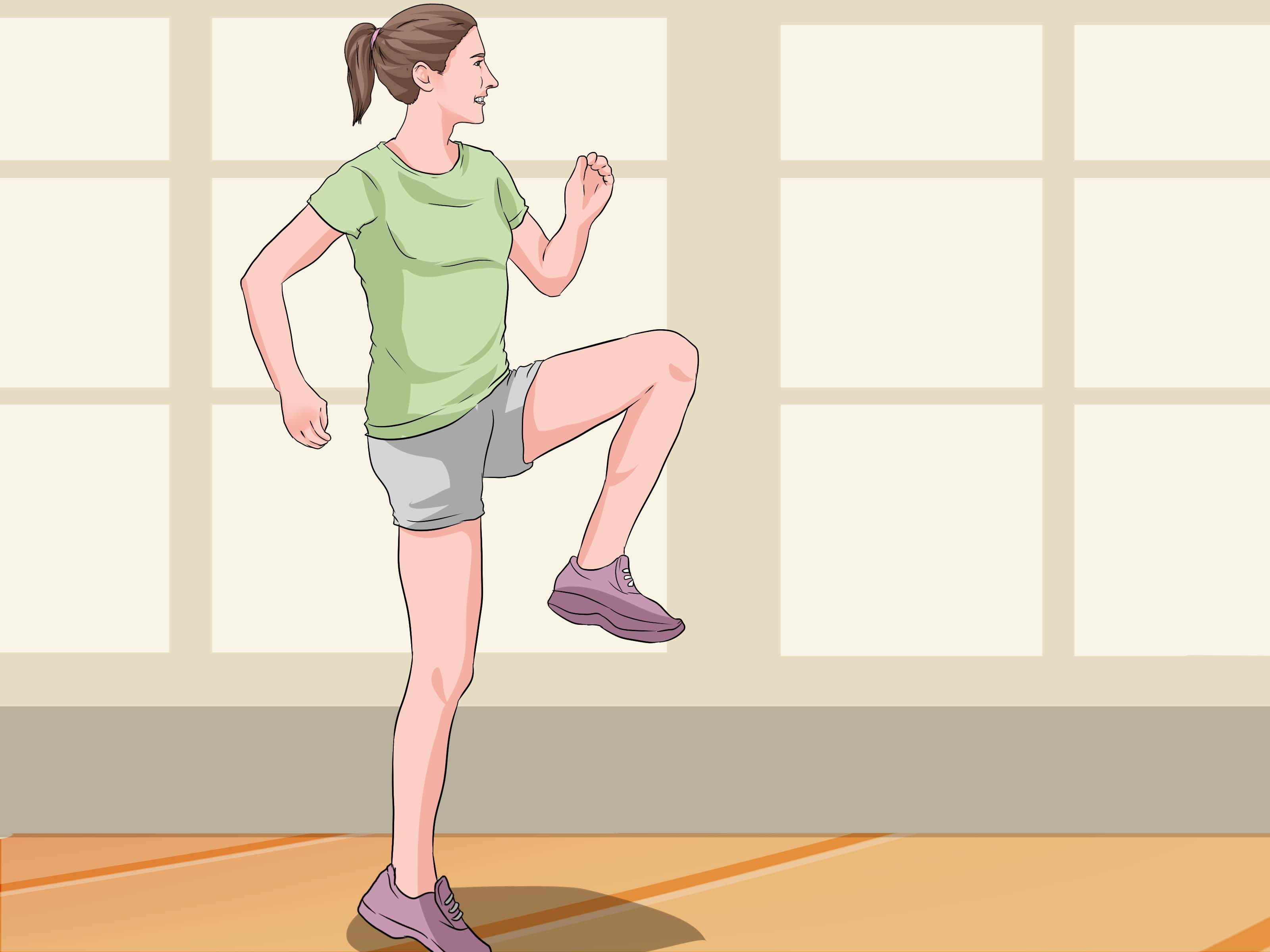
Your hamstrings help control knee motion and protect the joint during walking, running, and landing. To perform a standing hamstring curl, hold onto a chair or wall, bend one knee, and bring your heel toward your buttocks. Pause, lower slowly, and repeat 10 to 15 times.
As strength improves, you can add light ankle weights or resistance bands. Keep the movement smooth. Jerky reps do not impress your MCL.
Build Hip Strength With Side-Lying Leg Raises
Your hips have a surprisingly big influence on your knees. Weak glute muscles can allow the thigh to rotate inward, causing the knee to collapse toward the midline. That inward collapse is exactly the kind of movement pattern your MCL does not appreciate.
To perform side-lying leg raises, lie on your side with your top leg straight. Lift the top leg slowly, keeping the toes pointing forward. Lower with control. Do 10 to 15 reps per side.
Progress to Mini Squats
Mini squats train the quadriceps, glutes, and hips together. Stand with your feet hip-width apart. Slowly bend your knees and hips as if sitting back into a chair. Keep your knees tracking over your second and third toes. Do not let them cave inward. Return to standing and repeat 8 to 12 times.
At first, keep the movement shallow. A mini squat is not a dramatic powerlifting audition. Quality matters more than depth.
Way 2: Train Balance and Knee Control
Strength is only part of the MCL protection puzzle. Your knee also needs good control. Balance and neuromuscular training teach your body to keep the knee aligned during real-life movement. This is especially important for athletes, runners, hikers, dancers, and anyone who has ever tripped over absolutely nothing.
When your balance system is sharp, your muscles react faster. That means your knee is less likely to wobble, twist, or collapse inward when you change direction, land from a jump, or step onto uneven ground.
Practice Single-Leg Balance
Stand near a wall or chair for safety. Lift one foot off the floor and balance on the other leg for 20 to 30 seconds. Keep your hips level and your knee slightly bent. Your kneecap should point forward, not inward.
Once this feels easy, make it harder by turning your head slowly, standing on a folded towel, or closing your eyes. Only progress when you can maintain good form. If you look like a baby flamingo in a windstorm, stay with the easier version a little longer.
Add Step-Ups
Step-ups are excellent for teaching the knee to stay aligned under load. Use a low step or sturdy platform. Step up with one foot, press through the heel, and bring the other foot up. Step down slowly. Do 8 to 12 reps per side.
Watch your knee in a mirror if possible. It should track over the foot instead of diving inward. This small detail makes a big difference for MCL-friendly movement.
Try Lateral Band Walks
Place a resistance band around your thighs or ankles. Bend your knees slightly and take slow steps sideways. Keep tension on the band and avoid letting your knees collapse inward. Take 8 to 12 steps in one direction, then return.
Lateral band walks target the gluteus medius, one of the hip muscles responsible for controlling thigh position. Strong hips help keep the knee in a safer line during squats, running, and cutting movements.
Use Controlled Lunges Later in the Program
Lunges can be useful, but they are more demanding than they look. Start with reverse lunges before forward lunges because they are often easier to control. Step one foot back, lower slightly, and return to standing. Keep the front knee lined up over the foot.
If your knee wobbles or pain appears along the inner knee, go back to mini squats and step-ups. Progression is not a race. Your MCL did not sign up for CrossFit by surprise.
Way 3: Improve Mobility and Progress Gradually
The third way to strengthen your MCL is to improve mobility and increase activity gradually. A stiff knee does not move efficiently, and an under-conditioned leg tires quickly. Fatigue can lead to sloppy mechanics, and sloppy mechanics can put extra stress on the inner knee.
Good MCL care includes gentle range-of-motion work, flexibility, low-impact conditioning, and a slow return to higher-demand activities.
Use Heel Slides for Knee Motion
Lie on your back with your legs straight. Slowly slide one heel toward your buttocks, bending the knee as far as comfortable. Pause, then slide the leg back out. Repeat 10 to 15 times.
Heel slides help restore bending motion without heavy loading. They are often useful when the knee feels stiff after injury or inactivity.
Warm Up With Low-Impact Cardio
Before strengthening exercises, warm up for 5 to 10 minutes with easy walking, stationary cycling, or another low-impact activity. Warming up increases blood flow, improves joint comfort, and helps your muscles respond better.
A stationary bike is especially useful because it encourages smooth knee motion without the pounding of running. Start with low resistance and increase only when your knee feels calm during and after the session.
Stretch the Quads, Hamstrings, and Calves
Flexibility exercises can reduce unnecessary tension around the knee. Focus on gentle stretches for the quadriceps, hamstrings, calves, and hip flexors. Hold each stretch for 20 to 30 seconds without bouncing.
Stretching should feel like a mild pull, not a negotiation with your ancestors. If it causes inner-knee pain, ease off.
Return to Running and Sports in Stages
Running, jumping, pivoting, and cutting should come later, after strength, balance, and range of motion have improved. A smart progression may look like this: walking without pain, brisk walking, light jogging, straight-line running, controlled direction changes, agility drills, and finally sport-specific training.
Do not jump from “I can walk the dog” to “I am ready for full-court basketball.” That is not confidence; that is a knee-themed gamble.
A Simple MCL Strengthening Routine
Here is a sample routine for general MCL support. This is best for people without an acute injury or for those cleared by a healthcare professional to exercise.
Beginner Routine: 2 to 3 Days Per Week
- Warm-up: 5 to 10 minutes of walking or stationary biking
- Quad sets: 2 sets of 10 to 15 reps
- Straight leg raises: 2 sets of 8 to 12 reps per side
- Standing hamstring curls: 2 sets of 10 to 15 reps per side
- Side-lying leg raises: 2 sets of 10 to 15 reps per side
- Mini squats: 2 sets of 8 to 12 reps
- Single-leg balance: 2 rounds of 20 to 30 seconds per side
- Gentle stretching: 5 minutes
Intermediate Routine: 3 Days Per Week
- Warm-up: 8 to 10 minutes of low-impact cardio
- Step-ups: 3 sets of 8 to 12 reps per side
- Lateral band walks: 3 sets of 8 to 12 steps each direction
- Glute bridges: 3 sets of 10 to 15 reps
- Mini squats or goblet squats: 3 sets of 8 to 12 reps
- Reverse lunges: 2 to 3 sets of 6 to 10 reps per side
- Single-leg balance with challenge: 3 rounds of 30 seconds per side
- Stretching and cooldown: 5 to 8 minutes
MCL Strengthening Mistakes to Avoid
Mistake 1: Ignoring Pain and Swelling
Pain is information. Swelling is a message. If your knee becomes more swollen, painful, or unstable after exercise, your program may be too aggressive. Reduce the intensity and consider getting evaluated.
Mistake 2: Training Only the Knee
The knee is influenced by the hip, ankle, and core. If your hip strength is poor or your ankle mobility is limited, the knee may compensate. A good MCL strengthening program includes the whole lower body, not just the sore spot.
Mistake 3: Returning to Sport Too Soon
Feeling better is not the same as being ready. Sports require speed, reaction, balance, and force absorption. Before returning to cutting or contact sports, you should be able to squat, lunge, balance, jog, and change direction with good control and no symptom flare-up.
When Should You See a Doctor or Physical Therapist?
Seek medical care if you heard or felt a pop, cannot bear weight, have significant swelling, notice bruising, feel the knee giving way, or have pain that does not improve. Also get checked if symptoms return every time you exercise. An MCL injury can occur along with meniscus, ACL, or other ligament injuries, so proper diagnosis matters.
A physical therapist can assess your gait, strength, mobility, balance, and movement patterns. They can also help you progress safely from early rehab to full activity. This is especially helpful if you are an athlete or if your job requires kneeling, lifting, climbing, or long hours on your feet.
Real-World Experiences: What Strengthening Your MCL Actually Feels Like
Most people imagine knee strengthening as a neat little checklist: do the exercises, get stronger, return to life, cue inspirational music. In real life, strengthening the MCL support system can feel more like learning to trust your knee again. The physical part matters, but the confidence part matters too.
One common experience is the “first good walk.” After inner-knee pain, even a normal walk around the block can feel like a test. You may notice every step, every curb, every uneven patch of sidewalk. At first, that awareness can be annoying. Over time, it becomes useful feedback. You start to notice whether your knee tracks straight, whether your hip drops, or whether you favor one side. That awareness helps you move better.
Another common experience is discovering that the problem was not just the knee. Many people start MCL strengthening exercises and quickly realize their hips are weaker than expected. Side-lying leg raises, lateral band walks, and single-leg balance can be humbling. They look simple on paper, but they expose small weaknesses that running or walking may hide. This is not failure. It is information you can use.
There is also the patience factor. Ligaments and supporting tissues do not adapt overnight. Some days your knee may feel strong and steady. Other days it may feel stiff, especially after sitting too long or doing more activity than usual. Progress usually comes in waves, not a straight line. The goal is not perfection every day. The goal is fewer flare-ups, better control, and more confidence over time.
People returning to sports often describe a mental hurdle during side-to-side movement. Straight-line jogging may feel fine, but the first lateral shuffle or quick turn can feel suspicious. That is where balance drills and controlled agility work become valuable. They bridge the gap between gym strength and real-life movement. A leg press may build strength, but a step-down teaches control. A squat builds power, but single-leg balance teaches stability. Your MCL benefits from all of it.
For everyday life, the wins may be quieter but just as meaningful. Walking downstairs without guarding the knee, standing up from a chair without hesitation, carrying groceries without feeling wobbly, or playing with your kids without thinking about every stepthese are real signs of progress. You may not post them on social media, but your knee knows.
The best experience-related advice is to track how your knee responds over 24 hours. If an exercise feels fine during the workout but causes swelling or soreness later, scale back. If your knee feels stronger and calmer after a few sessions, you are likely on the right path. Strengthening your MCL is really about building a knee that can handle life’s surprisesstairs, sports, slippery floors, and that one enthusiastic dog who believes every walk is a sled race.
Conclusion
Strengthening your MCL is not about toughening up the ligament with one secret exercise. It is about building a stronger, smarter, more stable knee. The three best ways to do that are to strengthen the muscles that protect the MCL, train balance and knee control, and improve mobility while progressing gradually.
Start with the basics: quad sets, straight leg raises, hamstring curls, hip strengthening, mini squats, and gentle range-of-motion work. Then progress to step-ups, lateral band walks, single-leg balance, lunges, and controlled return-to-sport drills. Keep your knee aligned, avoid painful movements, and respect swelling when it shows up.
Your MCL may not be glamorous, but it is loyal. Treat it well, build the muscles around it, and it can help you move with more confidencewhether you are running, hiking, skiing, lifting, or simply trying to survive a surprise hallway slip in socks.