There are two kinds of microwave users: people who cover their food and people who regularly discover tomato sauce on the appliance ceiling. Fortunately, preventing a lunchtime Jackson Pollock requires neither advanced cooking skills nor an expensive gadget.
Covering food in the microwave helps contain splatters, retain moisture, shorten heating time, and promote more even cooking. The important part is choosing a microwave-safe cover and leaving enough room for steam to escape. An airtight seal can trap pressure, turning an innocent bowl of soup into a surprisingly dramatic event.
The three most practical options are a microwave-safe lid or splatter cover, an appropriate paper covering, and microwave-safe plastic wrap. Each has advantages, limitations, and foods it handles especially well. Here is how to use all three safely.
Why Should You Cover Food in the Microwave?
A microwave transfers energy into food, particularly its water molecules. Because foods vary in shape, thickness, density, and moisture content, they do not always heat uniformly. That is why yesterday’s casserole may be sizzling around the edges while its center still seems to remember the refrigerator fondly.
A suitable cover traps some of the water vapor released during heating. This creates a moist environment that can reduce drying and help heat move through the food more consistently. Covering also limits the distance that bubbling sauces, melting cheese, and hot fat can travel.
Covering food provides several practical benefits
- Fewer splatters: A cover catches droplets before they decorate the microwave walls.
- Better moisture retention: Rice, pasta, vegetables, and leftovers are less likely to become dry or rubbery.
- More even reheating: Trapped moist heat supports more consistent warming, especially when combined with stirring.
- Potentially shorter cooking time: Less heat and moisture escape from the dish.
- Easier cleanup: Washing one lid is generally more appealing than scrubbing six interior surfaces.
Covering alone cannot eliminate cold spots. Arrange food evenly, separate large pieces when possible, pause to stir or rotate the dish, and allow a short standing time after heating. According to USDA guidance, reheated leftovers should reach 165°F throughout. Check several areas with a food thermometer when safety matters, particularly with meat, poultry, casseroles, and dense dishes.
1. Use a Microwave-Safe Lid or Splatter Cover
A reusable microwave-safe lid is the most convenient all-purpose choice. It can be the lid supplied with a microwave-safe container, a vented silicone cover, a glass lid without metal components, or a domed splatter guard designed to sit over a plate.
This method works particularly well for soups, beans, curries, pasta dishes, vegetables, casseroles, and saucy leftovers. A domed cover also leaves space above the food, which is useful when melted cheese or sauce might otherwise touch the lid.
How to use a microwave lid correctly
- Transfer the food to a container labeled microwave-safe.
- Spread the food into a reasonably even layer.
- Add a spoonful of water or broth if the food is dry, such as rice or pasta.
- Place the lid loosely on top or open its steam vent.
- Heat in short intervals, stirring or rotating the food between cycles.
- Let the covered food stand briefly before checking its temperature.
Never lock all four sides of a snap-on lid before microwaving unless the manufacturer specifically designed it for sealed microwave cooking. Steam occupies more space than liquid water, so pressure can build rapidly in a tightly closed container. Venting gives that pressure a safe exit.
What makes a good microwave splatter cover?
Look for a clearly labeled microwave-safe product with ventilation holes and enough height to avoid resting on the meal. A transparent cover makes it easier to observe bubbling without opening the door every twenty seconds like an anxious game-show contestant.
Glass and ceramic lids can work when they are explicitly suitable for microwave use and contain no metallic trim. Reusable silicone covers are another convenient option, but they should still be vented as directed. Always follow the cover manufacturer’s instructions because materials and designs differ.
An upside-down microwave-safe plate can serve as a temporary cover for a bowl. Place it slightly off-center so steam can escape, and handle it with care because both the plate and trapped vapor may become extremely hot.
2. Cover Food With a Microwave-Safe Paper Product
Plain white paper towels, wax paper, and kitchen parchment paper can be useful microwave covers when the product is identified as microwave-safe. These lightweight choices are especially handy when you need a quick solution and do not want to wash another dish.
A paper towel provides a relatively loose cover. It controls splashes without trapping as much steam as a fitted lid, making it suitable for sandwiches, breakfast foods, bacon, baked goods, and dishes that should not become overly moist.
Using a paper towel
Place one plain, microwave-safe paper towel loosely over the dish. For bread, tortillas, or leftover rice that needs additional moisture, lightly dampen the towel first. It should be moist, not dripping like it just completed a swimming lesson.
Use short heating intervals and check the food frequently. A paper towel can dry out during extended cooking, especially around fatty or sugary foods that become extremely hot. Do not reuse a towel that has absorbed grease or food residue.
Using wax paper or parchment paper
Wax paper helps hold in heat while allowing more moisture to escape than a tight lid. It can be useful over sandwiches, meat portions, cooked fruit, and plates of leftovers. Cut a sheet large enough to extend over the edges of the dish so it does not slide away as the turntable moves.
Parchment paper is also useful as a loose cover. It resists moisture and grease well and can shield food without creating an airtight seal. Confirm that the package permits microwave use, since product instructions remain the best guide.
Paper products to avoid
Not every paper item in the kitchen is a suitable microwave accessory. Avoid newspapers, printed paper, brown grocery bags, and products containing metallic decoration. Some recycled paper products may contain small particles that can overheat or cause arcing, so plain microwave-safe paper is the safer choice.
Ordinary napkins and paper plates vary considerably. Dyes, coatings, decorative inks, and recycled content may make them unsuitable. If the packaging does not address microwave use, choose a known microwave-safe alternative.
3. Use Microwave-Safe Plastic Wrap
Microwave-safe plastic wrap can form a close cover that retains moisture effectively. It is especially useful when steaming vegetables, reheating rice, warming saucy meals, or cooking foods according to a recipe that specifically calls for plastic wrap.
The label matters. General-purpose storage film should not automatically be treated as microwave-safe. Use only wrap whose manufacturer permits microwave cooking or reheating, and follow any stated limits concerning temperature, power, or food type.
How to cover a dish with plastic wrap
- Place the food in a microwave-safe glass, ceramic, or approved plastic container.
- Stretch the wrap over the container rather than directly across the food.
- Keep space between the wrap and the food whenever possible.
- Fold back one corner or create a small vent for steam.
- Heat according to the recipe or package instructions.
- Remove the wrap carefully, lifting the far side first so steam escapes away from your face and hands.
Do not allow plastic wrap to sag onto hot, fatty, or sugary food. These foods can reach high temperatures, and direct contact may cause the material to soften or melt. A deeper bowl or domed cover provides more clearance.
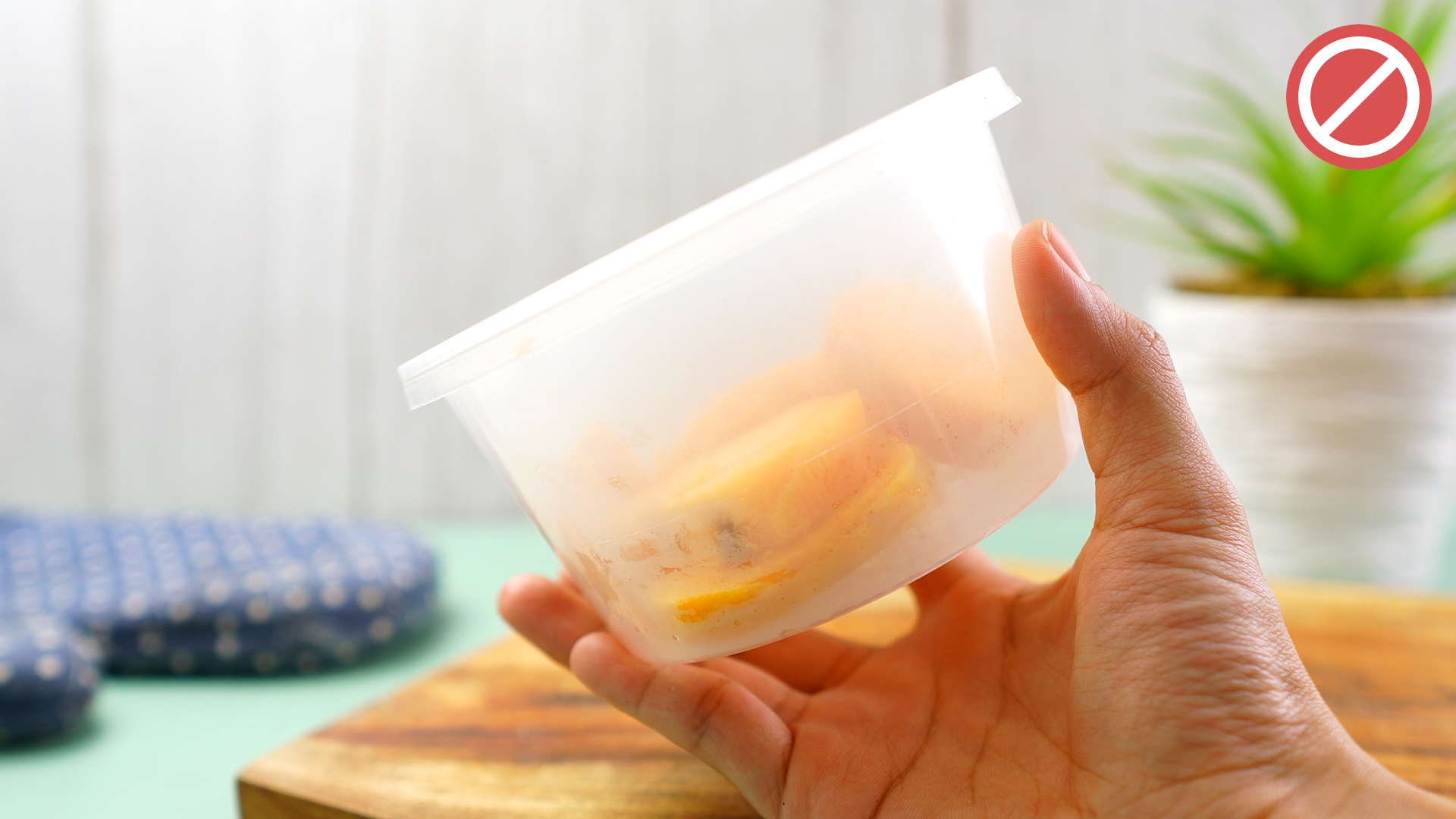
Thin grocery bags, produce bags, trash bags, and unknown plastic films are not substitutes. Nor should you microwave food in cold-storage tubs, foam trays, or disposable takeout containers unless the item is specifically labeled for microwave heating. “It did not melt last time” is not a safety certification.
Which Microwave Cover Should You Choose?
| Covering method | Best for | Main advantage | Important precaution |
|---|---|---|---|
| Vented lid or splatter cover | Soup, pasta, casseroles, beans, and saucy leftovers | Reusable and highly effective at containing splashes | Open the vent or leave the lid slightly loose |
| Microwave-safe paper | Sandwiches, bread, bacon, tortillas, and short reheating jobs | Fast, convenient, and less likely to over-steam food | Avoid printed, decorated, recycled, or unknown paper |
| Microwave-safe plastic wrap | Vegetables, rice, moist dishes, and recipe-specific cooking | Retains moisture exceptionally well | Vent it and prevent contact with food |
For everyday use, a vented reusable cover is usually the strongest option because it produces little waste and is easy to position. Paper towels are ideal for brief heating and foods that need only light protection. Microwave-safe plastic wrap is effective when a tighter, moisture-retaining cover is beneficial.
Safety Mistakes to Avoid When Covering Microwave Food
Creating an airtight seal
A cover should control moisture, not imprison it. Vent lids and wraps so steam can escape. Be cautious when uncovering the dish because condensed steam can cause burns even when the cover itself does not feel especially hot.
Using metal or metallic decoration
Avoid metal lids, foil, twist ties, metallic trim, and paper with foil decoration unless the microwave manufacturer gives specific instructions for their use. Metal can reflect microwave energy, create arcing, and damage the appliance.
Forgetting about combination modes
A convection microwave or microwave-grill combination may use direct heat in certain modes. A paper towel or plastic cover that is acceptable during microwave-only operation may burn or melt when a heating element is active. Check the appliance manual and confirm which cooking mode you selected.
Assuming that hot means evenly heated
A steaming edge does not prove that the center is safe. Pause to stir soups, sauces, rice, and casseroles. Turn or rearrange solid pieces, then allow standing time so heat can continue spreading through the food.
Heating leftovers carelessly
Place leftovers in a microwave-safe dish, add liquid if needed, cover and vent the container, and reheat to 165°F. Measure the temperature in more than one location because microwave ovens can leave cold spots where bacteria may survive.
Practical Examples for Common Foods
Tomato sauce or chili
Use a deep bowl with a vented lid or domed splatter cover. Heat in short cycles and stir between them. Leaving extra room at the top helps contain vigorous bubbling.
Rice and pasta
Add a small splash of water, break up compacted portions, and cover with a vented lid or microwave-safe plastic wrap. The added moisture creates steam that helps soften dry starches.
Sandwiches and tortillas
Cover loosely with a plain paper towel. For tortillas or bread that has begun to dry, use a lightly damp towel and heat for only a few seconds at a time.
Vegetables
Place evenly sized vegetables in a microwave-safe bowl with a small amount of water. Cover with a vented lid or approved wrap, cook until tender, and open the cover away from your face.
Pizza
A loose paper towel can limit splatters, but covering pizza tightly traps steam and softens the crust. If texture is the priority, use a microwave-safe plate and a loose cover, then heat in brief intervals.
What Experience Teaches You About Covering Food in the Microwave
The value of a microwave cover becomes obvious the first time you reheat marinara sauce without one. The sauce may begin peacefully, produce one suspicious bubble, and then coat the entire interior two seconds before the timer ends. Cleaning that mess takes considerably longer than placing a cover over the bowl would have.
In regular kitchen use, a vented dome is the most dependable choice for plates and bowls. It does not cling to cheese, it is easy to lift, and it can be rinsed immediately after use. Keeping one next to the microwave also removes the temptation to skip covering because the proper equipment is buried somewhere behind the colander collection.
Experience also shows that the tightest cover is not always the best one. A sealed lid may keep rice wonderfully moist, but it can make bread soggy and allow pressure to build. A loose paper towel often performs better for breakfast sandwiches, dinner rolls, or a slice of pizza. The goal is to match the amount of trapped steam to the food.
Leftover rice offers a useful example. Heated uncovered, it often develops hard edges while the middle remains cool. Breaking it apart, adding a teaspoon or two of water, and using a vented cover produces a noticeably softer result. Stirring halfway through matters just as much as covering; otherwise, one area may receive most of the steam while another stays dry.
Soup teaches a different lesson: container depth is part of the covering strategy. Filling a shallow bowl nearly to the rim and balancing a paper towel over it is optimistic engineering. A deeper bowl and a vented lid provide room for bubbling and make the dish safer to carry.
Another practical lesson involves steam burns. A covered bowl may look calm when the door opens, but hot vapor can collect beneath the lid. Letting the dish stand briefly and lifting the far edge first directs steam away from the hands and face. Oven mitts are useful when the container or cover has become hot.
Plastic wrap requires the most attention. It works well when stretched over a deep bowl and vented, but it is less convenient over piled food that might touch it. In that situation, a domed reusable cover is simpler. If the wrap’s packaging is gone and its microwave suitability is uncertain, choosing glass, ceramic, parchment, or a known-safe lid removes the guesswork.
Finally, covering food does not excuse setting the timer for five minutes and wandering into another room. Short heating intervals provide better control, reduce overheating, and create opportunities to stir. The most reliable routine is simple: choose the right cover, vent it, heat briefly, stir, check the temperature, and uncover carefully. The reward is moister food, fewer cold spots, and a microwave that does not need an emergency cleaning after lunch.
Conclusion
The best way to cover food in the microwave depends on what you are heating. A reusable vented lid handles most meals, microwave-safe paper works well for light coverage, and labeled microwave-safe plastic wrap provides excellent moisture retention. Whichever method you choose, leave a vent for steam, use only approved materials, stir the food, and verify that leftovers are thoroughly heated.
It takes only a few seconds to cover a dish. Those seconds can protect the food’s texture, support more even heating, and spare you from chiseling dried spaghetti sauce off the microwave ceiling later. That is an unusually generous return on investment for putting a lid on something.