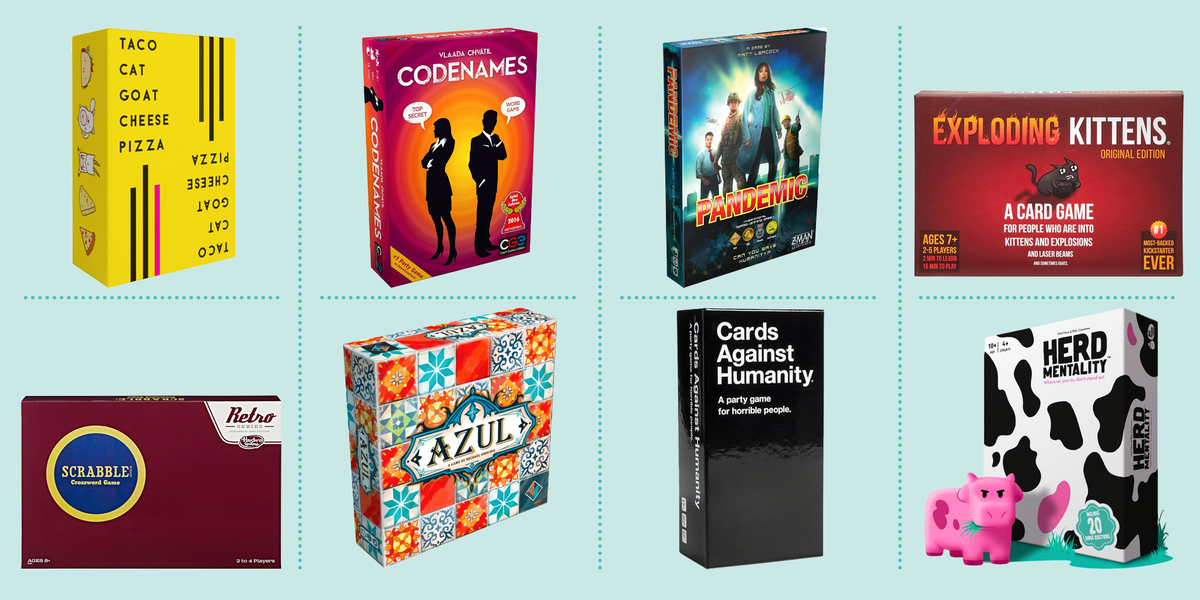
Finding a family board game sounds easy until the box lands on the table. Then somebody discovers the rulebook has 28 pages, the youngest player wanders away, and Uncle Mike begins negotiating as though plastic sheep are legal tender.
The best family board games avoid that fate. They are approachable without being boring, strategic without requiring a graduate degree, and entertaining for children and adults. Some encourage cooperation, others inspire friendly competition, and a few reveal that Grandma has been hiding the reflexes of a professional athlete.
This 2023-focused roundup was developed by comparing hands-on recommendations, family testing criteria, age guidance, and editorial reviews from major American publications, including Good Housekeeping, Parents, The Spruce, NBC Select, and Popular Mechanics.
The selection was also cross-checked against recommendations from Forbes Vetted, Parade, Wargamer, GamesRadar+, the American Tabletop Awards, and BoardGameGeek.
Finally, official publisher information was reviewed for established titles such as Ticket to Ride, Catan, and Codenames.
How We Chose the Best Family Board Games
A great family game must survive more than a quick glance at attractive box art. We prioritized games with manageable setup, understandable rules, satisfying replay value, and enough meaningful decisions to keep adults engaged.
Player count also mattered. A brilliant two-player game is not especially useful when six relatives are waiting around the dining table. We therefore included intimate strategy games, large-group party games, cooperative adventures, and options designed for younger children.
Recommended ages and playing times should be treated as practical guidelines rather than scientific laws. A strategy-loving seven-year-old may happily master a game labeled for ages eight and older, while a tired teenager may consider anything longer than 20 minutes a personal attack.
The 21 Best Board Games for Families in 2023
1. Ticket to Ride Best Overall Family Board Game
Best for: Families seeking accessible strategy
Typical players: 2–5
Approximate playtime: 30–60 minutes
Ticket to Ride asks players to collect colored train cards and claim railway routes between cities. The rules are simple enough to explain in one sitting, yet completing destination tickets creates genuine strategic tension. You may begin peacefully connecting Seattle to New York and finish by glaring at the relative who blocked your final route through Nashville.
It earns the top position because it works with children, teenagers, parents, and grandparents. Turns are quick, the board is inviting, and the game rewards planning without overwhelming first-time players.
2. Catan Best for Negotiation
Best for: Competitive families who enjoy trading
Typical players: 3–4
Approximate playtime: 45–90 minutes
Catan transforms wood, brick, grain, ore, and wool into the foundations of a surprisingly dramatic civilization. Players build settlements, expand roads, trade resources, and race to earn victory points on a modular island.
The negotiation is the star. A child who usually refuses to discuss homework may suddenly deliver a flawless presentation about why two sheep are worth one brick. Luck influences resource production, but smart placement and patient trading remain important. The standard game is recommended for ages 10 and older, while separate junior and family versions offer gentler entry points.
3. Azul Best Abstract Strategy Game
Best for: Quiet thinkers and visual players
Typical players: 2–4
Approximate playtime: 30–45 minutes
Azul challenges players to draft colorful tiles and arrange them into elegant mosaics. It looks peaceful, and for approximately three turns, it is. Then everyone realizes that taking the wrong group of tiles can ruin another player’s design.
The tactile pieces are satisfying, the scoring system rewards thoughtful planning, and each round presents new decisions. Azul contains very little text, making it suitable for families with mixed reading abilities or multilingual households.
4. Codenames Best Word Game for Teams
Best for: Large families, teens, and word lovers
Typical players: 4 or more works best
Approximate playtime: About 15 minutes
Two teams compete to identify secret agents represented by words on the table. Each spymaster gives a one-word clue and a number, hoping teammates connect the correct words without selecting the assassin.
The magic comes from discovering how differently relatives think. “Ocean, three” may seem perfectly clear to the clue-giver and completely unhelpful to everyone else. Codenames is quick, portable, replayable, and particularly effective when older children and adults play together.
5. Pandemic Best Cooperative Strategy Game
Best for: Families who prefer teamwork
Typical players: 2–4
Approximate playtime: About 45 minutes
Instead of defeating one another, players work together as specialists attempting to control outbreaks and discover cures. Each role has a useful ability, so communication and coordination are essential.
Pandemic is an excellent choice for children who find direct competition frustrating. However, enthusiastic adults should avoid making every decision for the group. A cooperative game is less cooperative when one person becomes the unpaid chief executive of everybody else’s turn.
6. Carcassonne Best Tile-Laying Game
Best for: Families ready for light strategy
Typical players: 2–5
Approximate playtime: 30–45 minutes
Players draw and place landscape tiles to build a shared map filled with cities, roads, fields, and monasteries. Small wooden followers, affectionately known as meeples, claim features and earn points.
Carcassonne is easy to teach because the board develops one tile at a time. Younger players can focus on matching landscapes, while experienced players compete over valuable cities and farms. Every completed map looks different, giving the game excellent replay value.
7. Splendor Best Engine-Building Game for Beginners
Best for: Older children and strategic thinkers
Typical players: 2–4
Approximate playtime: About 30 minutes
In Splendor, players collect gem tokens, purchase development cards, and gradually build an economic engine that makes future cards easier to acquire. The rules are compact, but deciding which gems to take can produce deliciously uncomfortable choices.
Turns move quickly, there is little reading, and the heavy poker-style tokens feel far more luxurious than fake gemstones have any right to feel.
8. Kingdomino Best Quick Strategy Game
Best for: Families graduating from basic children’s games
Typical players: 2–4
Approximate playtime: 15–25 minutes
Kingdomino combines familiar domino-style matching with kingdom building. Players select terrain tiles, connect matching landscapes, and score regions by multiplying their size by the crowns they contain.
It teaches spatial planning and basic multiplication without feeling like disguised homework. The clever turn-order system also creates an important tradeoff: choosing a powerful tile may mean selecting later in the next round.
9. Sushi Go Party! Best Card-Drafting Game
Best for: Bigger groups and fast rounds
Typical players: 2–8
Approximate playtime: 20–30 minutes
Players select one adorable sushi card from their hand and pass the remaining cards to the next person. Different combinations score in different ways, encouraging players to watch what opponents are collecting.
Sushi Go Party! adds a customizable menu and supports more players than the original game. Its cheerful artwork softens the emotional impact of realizing your own child deliberately withheld the final sashimi card you needed.
10. Qwirkle Best for Pattern Recognition
Best for: Mixed generations and non-readers
Typical players: 2–4
Approximate playtime: 30–45 minutes
Qwirkle uses wooden tiles marked with colors and shapes. Players create lines that match by color or shape while avoiding duplicate symbols. Completing a six-tile line produces the celebrated “Qwirkle.”
Because there is no board and almost no text, children can understand the central idea quickly. Adults still have enough tactical choices to remain interested, especially when several scoring opportunities appear at once.
11. Dixit Best Storytelling Game
Best for: Creative families and imaginative players
Typical players: 3–6
Approximate playtime: About 30 minutes
Dixit includes dreamlike illustrated cards with no fixed meanings. One player gives a clue inspired by a chosen card, and everyone else contributes a card that might fit the clue. Players then attempt to identify the storyteller’s image.
The best clue must be neither obvious nor impossible. That balance encourages creative thinking and produces wonderfully strange conversations about why a floating whale represents “Monday morning.”
12. Telestrations Funniest Family Party Game
Best for: Groups that enjoy drawing and laughing
Typical players: 4–8, depending on edition
Approximate playtime: 30–60 minutes
Telestrations combines the children’s game Telephone with drawing. Players sketch a secret word, pass the booklet, interpret another person’s artwork, and repeat the process until the original idea has mutated beyond recognition.
Artistic talent is unnecessary and may even be a disadvantage. A badly drawn lighthouse becoming a “haunted asparagus tower” is not a failure. It is the entire reason everyone came.
13. Blank Slate Best Word-Association Game
Best for: Families who know one another well
Typical players: 3–8
Approximate playtime: Around 20–30 minutes
A cue card displays a word with a blank before or after it. Each player secretly writes a word that completes the phrase, hoping to match exactly one other person.
Blank Slate is easy to learn, needs little setup, and becomes funnier when players understand one another’s habits. Matching with your spouse feels satisfying. Matching every answer with your sibling becomes mildly alarming.
14. Forbidden Island Best Cooperative Game for Younger Players
Best for: Families new to cooperative gaming
Typical players: 2–4
Approximate playtime: About 30 minutes
Players explore a sinking island, collect treasures, and attempt to escape before too many locations disappear beneath the water. Each character has a special ability, encouraging teamwork and discussion.
The changing island creates tension without requiring complex rules. It is also shorter and more accessible than many cooperative strategy games, making it a sensible stepping stone toward Pandemic and other challenging adventures.
15. Sequence Best Combination of Cards and Board Strategy
Best for: Large or multigenerational families
Typical players: 2–12
Approximate playtime: 20–40 minutes
Players play standard-style cards and place chips on matching spaces, attempting to create rows of five. Special jacks add tactical surprises by placing or removing chips.
Sequence is familiar enough for traditional card players but contains enough blocking and planning to feel like a modern board game. Team play also allows larger gatherings to participate without turning the dining room into a miniature convention center.
16. Blokus Best Spatial Strategy Game
Best for: Visual learners and puzzle fans
Typical players: 2–4
Approximate playtime: Around 20–30 minutes
Each player places brightly colored geometric pieces on a shared board. Pieces of the same color may touch only at their corners, so open territory disappears quickly.
Blokus can be explained in minutes, but mastering efficient placement takes practice. The final few turns are particularly satisfying, especially when somebody discovers that an awkward five-square piece fits absolutely nowhere.
17. Clue Best Classic Mystery Game
Best for: Families who enjoy deduction
Typical players: 2–6
Approximate playtime: 30–60 minutes
Clue remains a reliable family favorite because its central mystery is immediately understandable: determine the suspect, location, and weapon by gathering information and eliminating possibilities.
Newer editions may update characters or artwork, but the deduction remains intact. Younger players practice note-taking and logical reasoning, while adults practice saying, “I knew it was Professor Plum,” despite having accused everyone else first.
18. Exploding Kittens Best Portable Family Card Game
Best for: Quick games and silly humor
Typical players: 2–5 in the base game
Approximate playtime: About 15 minutes
Players draw cards while attempting to avoid exploding kittens. Defuse cards provide protection, while action cards allow players to skip turns, inspect the deck, shuffle danger, or inconvenience relatives.
The rules are light, the artwork is intentionally absurd, and the small box travels easily. Player elimination can leave someone waiting, but rounds are short enough that revenge is never far away.
19. Taco Cat Goat Cheese Pizza Best Reflex Game
Best for: Energetic families and short attention spans
Typical players: 2–8
Approximate playtime: 10–15 minutes
Players flip cards while repeating the sequence “taco, cat, goat, cheese, pizza.” When a spoken word matches the revealed card, everyone races to slap the pile.
The game is inexpensive, easy to carry, and gloriously noisy. Remove rings, clear nearby drinks, and remind highly competitive players that the objective is to slap the cardsnot send Cousin Ben’s hand into another postal district.
20. Outfoxed! Best Mystery Game for Young Children
Best for: Children approximately five and older
Typical players: 2–4
Approximate playtime: Around 20 minutes
Players cooperate to identify which fox stole a pie. By gathering clues and using a special evidence scanner, children eliminate suspects before the culprit escapes.
Outfoxed! introduces deduction without asking young players to compete directly against adults. The shared objective encourages discussion, turn-taking, and careful observation while keeping the story playful rather than intimidating.
21. Disney Villainous Best Themed Strategy Game
Best for: Disney fans, teens, and older children
Typical players: 2–6, depending on edition
Approximate playtime: 40–80 minutes
Each player controls a Disney villain with a unique deck, objective, allies, and obstacles. Maleficent, Ursula, Captain Hook, and other characters do not simply look different; they require genuinely different strategies.
The asymmetrical design creates strong replay value, although first-time players need patience while learning how each villain operates. It is a flavorful choice for families that enjoy character-driven games and do not mind discovering that the nicest person at the table is extremely good at being evil.
How to Choose the Right Family Board Game
Match the Game to the Youngest Player
The youngest participant does not need to win, but that player should understand the goal and make meaningful decisions. Select games with visual components, shorter rounds, or cooperative rules when playing with early elementary-age children.
Consider Actual Playing Time
A 60-minute game can become a 90-minute event when players are learning, taking snack breaks, or debating whether a rule applies. Save deeper strategy games for relaxed weekends and keep fast card games available for school nights.
Choose Interaction That Fits Your Family
Some families love negotiation, blocking, and theatrical betrayal. Others become emotionally divided over a stolen train route. Cooperative games such as Pandemic, Forbidden Island, and Outfoxed! are excellent alternatives when direct competition creates more tension than fun.
Prioritize Replay Value
Variable maps, changing card combinations, multiple character powers, and player-driven clues help games remain fresh. A strong family game should produce different decisions and stories rather than repeating exactly the same sequence every time.
Family Game-Night Experiences: What Playing These Games Usually Reveals
The most useful test of a board game is not how attractive it looks on a store shelf. It is what happens after the box opens, the rules are explained, and several people with different ages, personalities, and attention spans attempt to play together.
The First Round Is Usually a Tutorial
Families often expect the opening game to deliver immediate brilliance. In reality, the first session is frequently a rehearsal. Players forget scoring rules, overlook special powers, and make moves they would never repeat. Treating the opening round as practice reduces frustration and helps children ask questions without feeling that they are already losing.
This is especially important with Catan, Azul, Splendor, Pandemic, and Disney Villainous. These games are not impossibly complex, but their best qualities emerge only after players understand how individual choices connect to long-term goals.
Short Games Often Reach the Table More Frequently
A large strategy game may be the pride of a family’s collection, yet compact titles such as Taco Cat Goat Cheese Pizza, Exploding Kittens, Kingdomino, and Blank Slate are often played more frequently. They require less preparation and can fill the awkward 20-minute gap between dinner and bedtime.
Short games also make losing easier. A disappointing result feels less serious when another round can begin immediately. This creates useful opportunities for children to practice patience, fair play, and emotional recovery without receiving a lecture disguised as entertainment.
Cooperative Games Change the Conversation
During competitive games, players naturally hide information and protect their own plans. Cooperative games produce a different atmosphere. Families begin discussing options, dividing responsibilities, and celebrating group victories.
The challenge is ensuring that every voice remains involved. An experienced player may unintentionally control Pandemic or Forbidden Island by telling everyone what to do. A better house rule is to let the active player suggest a plan first. Other players may then offer advice rather than issuing commands.
Children Frequently Become the Teachers
Once children understand a game, allowing them to teach it to another relative can be surprisingly rewarding. Explaining setup, turn order, and scoring reinforces comprehension and gives younger players a sense of ownership.
This works particularly well with Ticket to Ride, Qwirkle, Sequence, and Blokus because their core rules can be described clearly. Adults should resist correcting every small wording mistake. The goal is not to prepare the child for a courtroom defense of the rulebook.
House Rules Can Rescue a Nearly Perfect Game
Official rules provide structure, but minor adjustments can make a game more suitable for a particular household. Younger players might receive open information, extra starting resources, or help reading cards. A family may also set a time limit, remove overly difficult prompts, or play in teams.
Changes should be agreed upon before the game begins. Inventing a new rule immediately after falling behind is less “family customization” and more “constitutional crisis.”
The Best Moments Rarely Involve the Final Score
Families may remember who won a dramatic game of Catan, but they are more likely to remember the terrible drawing in Telestrations, the impossible Dixit clue, or the moment Grandpa slapped the wrong card in Taco Cat Goat Cheese Pizza.
That is the real value of a strong family board game. It provides a structure for conversation, jokes, strategic surprises, and stories that continue after the pieces return to the box. Testing criteria matter, but laughter, inclusion, and the desire to play again remain the most meaningful measurements. Family-game guides consistently emphasize age suitability, understandable rules, entertainment value, playing time, and social engagement for precisely this reason.
Final Verdict
Ticket to Ride is the strongest all-around choice for most families because it combines approachable rules, satisfying strategy, attractive components, and broad age appeal. Catan is better for groups that love negotiation, while Azul offers a calmer and more visual challenge. Codenames, Telestrations, and Blank Slate shine at parties, and Pandemic or Forbidden Island can turn competitive relatives into temporary allies.
No single game will suit every household. The right choice depends on player ages, group size, available time, and whether your family enjoys peaceful cooperation or prefers to destroy one another’s railway plans with a smile.
SEO Information
Note: Recommended ages, player counts, components, and playing times may vary by edition. Check the information printed on the specific game box before purchasing.