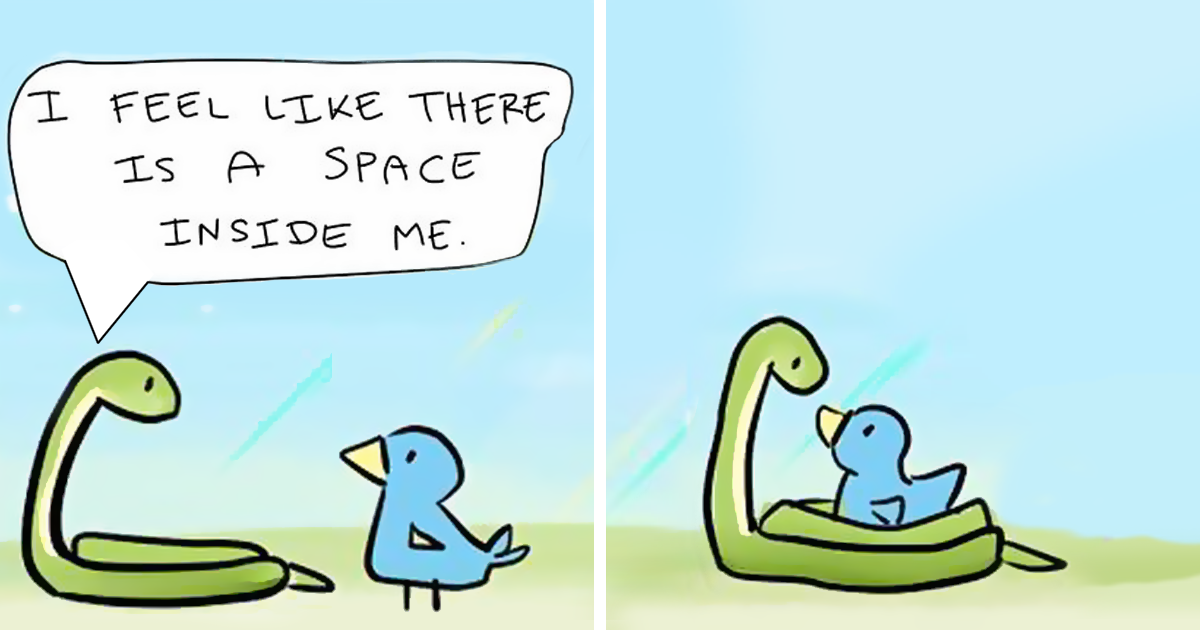
Monday has a reputation. It arrives carrying unread emails, unfinished chores, and the suspicious confidence of a day that knows you would rather still be Sunday. Fortunately, there is an antidote that requires no complicated morning routine: a hundred cheerful animal comics filled with friendship, encouragement, gentle jokes, and enough wholesome energy to make even a grumpy porcupine lower its defenses.
“100 Super Happy Animal Comics That’ll Make Your Monday” celebrates the work of illustrator Guy Kopsombut, creator of the 4amShower comics. The original collection was published by Bored Panda in March 2017 as a showcase of his positive animal illustrations. Rather than chasing sarcasm, shock value, or elaborate punch lines, these comics offer something deceptively simple: animals helping other animals feel a little better.
The result is the visual equivalent of finding an encouraging note in your lunchboxexcept the note may be delivered by a bear, duck, hedgehog, rabbit, snake, or suspiciously emotionally intelligent penguin.
Meet the Cheerful World of 4amShower Comics
The 4amShower universe is populated by expressive animals facing surprisingly familiar situations. They worry, make mistakes, offer compliments, feel overlooked, celebrate tiny victories, and occasionally need a friend to remind them that one difficult day is not the entire story.
Artist Guy Kopsombut is a self-taught illustrator based in Nashville, Tennessee. His background is unusual for a comic creator: he earned degrees in computer engineering and leadership and organizational performance from Vanderbilt University. That combination may help explain why his work feels both carefully constructed and deeply interested in how people support one another.
Small panels with surprisingly big emotions
Most of the comics do not need long setups. A character notices that another animal is discouraged. Someone offers a kind observation. A misunderstanding becomes a joke. A supposedly ordinary featurespots, spikes, a shell, a long neckturns into a reason for celebration.
The artwork is clean and inviting, allowing the emotional idea to land immediately. You do not need a character encyclopedia or a twelve-page explanation of the rabbit’s tragic backstory. The rabbit is having a rough morning. The bear brings encouragement. We understand the assignment.
Later descriptions of Kopsombut’s work note that many of his animal characters have no fixed names or genders, making it easier for readers to recognize themselves, their friends, or their own worries in each scene.
Why These Happy Animal Comics Feel So Refreshing
The internet contains an endless buffet of humor, but much of it is seasoned with outrage, embarrassment, or somebody having the worst day of their life in high definition. The appeal of happy animal comics is that they create amusement without requiring a victim.
Nobody has to be humiliated. Nobody gets pushed into a decorative fountain while strangers film vertically. The joke usually comes from wordplay, an unexpected interpretation, an animal characteristic, or the charming seriousness with which the characters treat a tiny problem.
The humor is gentle without becoming bland
Wholesome humor sometimes gets dismissed as humor wearing a bicycle helmet. Yet these comics show that kindness and comedy are not enemies. A visual pun can be clever without being cruel, and a warm message can still arrive with excellent comic timing.
The strongest strips often create a quick emotional turn. A character begins with insecurity, loneliness, or frustration. Another character changes the meaning of the moment through reassurance or playful logic. In a few panels, the reader moves from concern to relief.
That emotional turn is important. The comics do not pretend that sadness, anxiety, rejection, or exhaustion never happen. Instead, they suggest that uncomfortable feelings can share the same small space with friendship, humor, and hope.
The Big Themes Hiding Inside the Cute Drawings
Friendship that pays attention
Many of the comics revolve around one character noticing another. That sounds basic, but being noticed is often what people need most. The animals listen, respond, sit beside each other, and offer help without transforming every conversation into an unsolicited motivational seminar.
The message is not that friends must solve every problem. Sometimes friendship means providing company while the problem remains annoyingly unsolved. A tiny animal sitting beside a larger worried animal can communicate this more effectively than a paragraph full of inspirational buzzwords.
Self-worth without the dramatic speech
The characters frequently reinterpret qualities that might be treated as flaws. An unusual body shape becomes useful. A slow pace becomes thoughtful. Smallness becomes an advantage. A nervous creature is still brave because courage is not the absence of fear; it is fear wearing shoes and showing up anyway.
This makes the collection especially relatable to readers who have ever compared themselves with someone louder, faster, more confident, or apparently capable of answering emails before breakfast.
Kindness as an everyday skill
Kindness in these comics is practical. It can be a compliment, a shared snack, a moment of patience, or an invitation to join the group. The characters demonstrate that generosity does not always require a grand sacrifice accompanied by orchestral music.
Sometimes kindness is simply saying, “I saved you a seat.” Sometimes it is recognizing effort even when the outcome was imperfect. Sometimes it is allowing a turtle to take its time without standing behind it and aggressively checking a watch.
Rest, persistence, and realistic optimism
The comics also avoid confusing positivity with nonstop productivity. Some characters keep trying; others pause, recover, or ask for support. That distinction matters because encouragement should not sound like a fitness instructor yelling at someone who is already carrying three grocery bags and a broken umbrella.
The collection’s optimism is most effective when it feels flexible. You can move forward, but you can also rest. You can believe tomorrow may improve without pretending today was wonderful. Hope is presented as a companion, not a performance review.
Why Animals Make the Messages More Powerful
Animals work beautifully in comics because readers recognize them instantly while still having room to imagine personalities. A fox may appear clever, a bear protective, a turtle patient, and a bird energetic before anyone says a word. The artist can then play with those expectations.
Animals create a little emotional distance
A direct message about insecurity can feel uncomfortably personal. Put the same feeling into a worried koala, and readers can approach it more gently. The animal creates enough distance to make the emotion safe while preserving enough familiarity to make it meaningful.
This is why a comic about a discouraged hedgehog can make someone think about a difficult meeting, a friendship problem, or a disappointing grade. The hedgehog is not literally living the reader’s life. It probably has fewer passwords to remember. Yet the feeling is recognizable.
Animal traits create natural comedy
Comics can turn shells, tails, horns, feathers, spots, long legs, and unusual diets into visual punch lines. A giraffe has built-in height jokes. A snail brings its house everywhere. An octopus can technically give several hugs at once, although scheduling all those arms may require project-management software.
The comedy grows from the characters rather than being pasted onto them. Their physical differences become tools for connection, creativity, and affectionate nonsense.
The Science Behind the “Aww”
No comic collection can replace sleep, professional mental health care, supportive relationships, or a vacation in which nobody sends the phrase “quick question.” Still, research suggests that cute images, positive humor, and brief moments of amusement can influence attention and stress.
Cute images may sharpen careful attention
A widely discussed study published in PLOS ONE found that participants who viewed pictures of baby animals later performed certain tasks requiring careful attention more accurately. The researchers proposed that feelings triggered by cuteness may narrow attention and encourage more cautious behavior. A later study did not reproduce every performance benefit, however, suggesting that the effect may depend on factors such as the task or whether participants are pet owners.
Cute animal content may offer a brief stress break
Research publicized by the University of Leeds reported reductions in participants’ anxiety and improvements in physiological measures after they watched a montage of cute animal images and videos. The project was relatively small, so it should not be treated as proof that one cartoon capybara can repair an entire nervous system. It does, however, support the reasonable idea that pleasant animal content can provide a restorative pause.
Humor can help people reframe stressful moments
An American Psychological Association report on experimental research found that humorous memes helped some viewers feel calmer and more content while coping with pandemic-related stress. Broader humor research also associates positive humor styles with stronger psychological well-being and less perceived stress, although context and the type of humor matter.
Mayo Clinic and Cleveland Clinic similarly describe laughter as a way to activate and then ease the body’s stress response, relax tension, support social connection, and temporarily improve mood. Laughter is not a cure-all, but it is considerably more pleasant than adding “reduce stress” as item number 47 on a stressful to-do list.
Positive emotions can widen our perspective
Psychologist Barbara Fredrickson’s broaden-and-build theory proposes that emotions such as joy, interest, contentment, and love can temporarily broaden the way people think and respond. Over time, repeated positive experiences may help people build useful social and psychological resources. A happy comic is only a tiny positive experience, but tiny experiences are still experiences.
How to Enjoy 100 Comics Without Turning It Into Homework
A collection of one hundred comics sounds like a challenge only if you approach it with a clipboard. There is no quiz afterward, and the squirrel will not be disappointed if you stop at comic number 23.
Use the collection as a five-minute reset
Read a few strips between demanding tasks. The goal is not to disappear into an hour of scrolling but to create a clear break between one mental activity and the next. Stand up, breathe, enjoy several comics, and return before the internet convinces you to watch a raccoon wash grapes for forty minutes.
Save the messages that feel personally useful
Different comics will resonate with different readers. One person may respond to a joke about confidence; another may need a reminder to rest. Saving a favorite panel can turn a passing smile into a visual cue you revisit during a difficult week.
Share thoughtfully
A cheerful animal comic can be an easy way to check in with someone without demanding an immediate serious conversation. Sending a relevant strip can communicate, “I was thinking about you,” “You are doing better than you think,” or, occasionally, “This confused duck has exactly your energy today.”
Credit the artist and share from legitimate sources whenever possible. Wholesome art still requires time, skill, and creative labor, even when it looks as effortless as two penguins discussing emotional resilience.
Who Will Love These Super Happy Animal Comics?
The collection is a natural fit for animal lovers, webcomic fans, teachers, parents, students, office workers, and anyone whose Monday begins before their personality has fully loaded.
Because the humor is generally gentle and visually accessible, the comics can also work across age groups. Younger readers may enjoy the animals and puns, while adults may notice the deeper messages about belonging, self-acceptance, patience, and emotional support.
They are particularly appealing to people who are tired of irony-heavy feeds. There is nothing wrong with sharp satire, but sometimes the brain wants a joke that does not require understanding six political scandals, three streaming series, and the private history of two influencers arguing beside a ring light.
More Than a Monday Mood Booster
The title promises to improve Monday, but the collection’s usefulness is not limited to one day. A supportive comic can soften a tense Tuesday, rescue a chaotic Thursday, or help Sunday evening stop behaving like Monday’s ominous trailer.
More importantly, the comics model a style of communication worth carrying offline. Their characters ask questions, notice feelings, reinterpret differences, and offer encouragement in manageable doses. They rarely deliver perfect solutions. They create connection.
That may be the collection’s most lasting message: happiness does not always arrive as a major event. It can appear as a small joke, a kind sentence, a ridiculous animal pun, or a moment when someone recognizes that another person is struggling and chooses not to walk past.
A Reader’s Experience: Spending a Week With Happy Animal Comics
Consider a simple experiment: instead of beginning Monday by opening every notification at once, a reader starts with five animal comics. The change seems almost comically small. The inbox still exists. The calendar has not developed compassion. The coffee does not refill itself.
Yet the first few minutes feel different. One comic offers a silly visual joke. Another shows a nervous animal receiving encouragement. A third turns an awkward physical feature into something useful. By the time the reader opens work messages, the day has already contained something pleasant that was not earned through productivity.
That matters because difficult mornings often create momentum. One rushed moment leads to another, and soon the entire day feels like a shopping cart with one defective wheel. A cheerful comic interrupts that momentum. It does not eliminate pressure, but it changes the emotional starting point.
On Tuesday, the reader sends a favorite strip to a friend who has been preparing for a job interview. There is no long speech attachedjust a short message saying, “This made me think of you.” The friend replies with a laughing emoji and admits to being nervous. What began as a comic becomes an actual conversation.
By Wednesday, patterns emerge. The most memorable strips are not necessarily the ones with the biggest jokes. They are the ones that express something the reader has struggled to say: that rest is allowed, that progress can be slow, or that people do not need to become identical before they can support each other.
Thursday provides the real test. A project goes wrong, a meeting runs late, and lunch is mysteriously postponed until it becomes an early dinner. During a short break, the reader returns to one saved comic. It does not produce instant enlightenment. No choir of woodland creatures appears to reorganize the spreadsheet. It simply creates thirty seconds in which the problem is not the only thing occupying the mind.
That brief shift makes it easier to respond rather than react. The reader notices a tense shoulder, takes a breath, and sends a calmer message than the one originally typed. The comic has not supplied business advice. It has created enough emotional space for better judgment to reenter the room.
On Friday, the collection becomes less of an escape and more of a reminder. Several comics have emphasized appreciation, so the reader thanks a colleague for helping earlier in the week. Another strip inspires a check-in with a family member. The positive content begins influencing behavior in small, ordinary ways.
The week’s experience reveals why these comics remain appealing years after their original publication. They are easy to consume but not empty. Their bright drawings and animal characters create an inviting surface, while the underlying ideas reward a second look.
Most importantly, they do not demand that readers become relentlessly cheerful. They make room for discouragement, loneliness, mistakes, and uncertainty. Their optimism comes from what happens next: another character listens, helps, waits, or finds a kinder interpretation.
After one week, Monday is still Monday. Alarm clocks remain morally questionable, and unread emails continue multiplying when unsupervised. But the reader has collected several useful reminders: begin gently, notice people, laugh without cruelty, and never underestimate the emotional wisdom of a cartoon turtle.
Conclusion: A Hundred Small Reasons to Smile
“100 Super Happy Animal Comics That’ll Make Your Monday” succeeds because it understands that readers do not always need louder entertainment. Sometimes they need a quiet joke, an encouraging character, and a miniature story in which kindness is treated as sensible rather than sentimental.
Guy Kopsombut’s animal comics combine accessible artwork, playful humor, and sincere emotional observations. Read together, they create a world where differences become strengths, friends pay attention, and bad moments are allowed to remain moments rather than permanent definitions.
A hundred comics cannot complete your assignments, attend your meetings, or explain why the printer suddenly believes it is offline. They can, however, brighten a break and remind you that encouragement does not have to be complicated. Occasionally, all it takes is one cheerful animal telling another cheerful animal exactly what a human reader needed to hear.