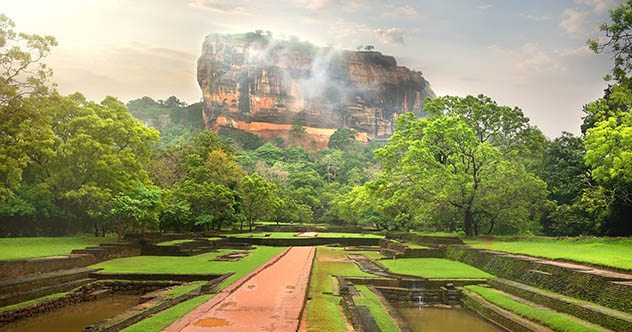
For centuries, lost cities have occupied the liveliest neighborhood in the human imagination. They appear in epic poems, explorers’ journals, local traditions, treasure-hunting tales, and movies where archaeologists somehow escape collapsing temples without losing their hats. Most legendary cities remain unconfirmed, but others have emerged from volcanic ash, desert canyons, tropical forests, mountain ridges, and even the bottom of the sea.
The phrase lost city, however, needs a little archaeological dusting. Many ancient cities were never completely forgotten. Local communities often knew where the ruins were long before foreign explorers arrived, posed beside them, and announced a “discovery.” In other cases, historians knew a city had existed but could not determine its location. A few genuinely disappeared beneath natural deposits or water.
The following legendary lost cities are real archaeological places. Their rediscovery transformed ancient history, challenged comfortable assumptions, and proved that old stories occasionally contain more truth than expected.
What Makes an Ancient City “Lost”?
A city can become lost in several ways. It may be physically buried, as Pompeii was. Vegetation can conceal roads and buildings, as happened throughout the Maya and Khmer worlds. Trade routes may shift, political systems may collapse, populations may relocate, and once-famous names may vanish from everyday memory.
There is also a difference between a site being lost to international scholarship and being unknown to everyone. Machu Picchu, Petra, Angkor, Tikal, Great Zimbabwe, and Ciudad Perdida were known to nearby residents. Their dramatic “rediscoveries” were largely moments when scholars, government officials, or foreign audiences recognized their historical significance.
In other words, archaeology sometimes finds a forgotten city. At other times, it finally starts listening to the people who already knew where it was.
1. Troy: The City Behind Homer’s Epic War
Location: Hisarlik, northwestern Turkey
For generations, Troy was treated as a magnificent piece of literature rather than a real city. Homer’s Iliad described a fortified settlement besieged by Greek forces, complete with heroic duels, divine interference, and one extremely suspicious wooden horse.
During the 19th century, archaeologist and diplomat Frank Calvert argued that the mound of Hisarlik was the most promising location. Heinrich Schliemann began major excavations there in 1870 and uncovered the remains of multiple cities built one above another. Unfortunately, his aggressive digging destroyed portions of the site, proving that enthusiasm and heavy equipment are not always a charming combination.
Archaeologists have since identified numerous occupation layers spanning thousands of years. Several Bronze Age levels show destruction, defensive walls, and evidence of a substantial settlement. Scholars still debate how closely Homer’s story reflects historical events, but Hisarlik is widely accepted as ancient Troy. The poetry may be embellished, yet the city beneath it was real.
2. Pompeii: A Roman City Frozen by Disaster
Location: Near Naples, Italy
Pompeii did not quietly fade away. In 79 C.E., Mount Vesuvius erupted, covering the Roman city with ash, pumice, and deadly volcanic material. Buildings collapsed, streets disappeared, and many residents died while attempting to escape or shelter indoors.
Although people in the region retained memories of the catastrophe, the exact urban landscape vanished beneath accumulated deposits. Workers encountered buried structures during construction projects in the late 16th century, but organized excavations began in 1748.
What emerged was astonishing: houses, shops, temples, theaters, bath complexes, political notices, graffiti, painted walls, food containers, and streets marked by wagon wheels. Excavators later created plaster casts from voids left by decomposed bodies, producing haunting impressions of the victims’ final moments.
Pompeii is legendary not because historians doubted it had existed, but because its recovery revealed ordinary Roman life in extraordinary detail. It is less like visiting a traditional ruin and more like walking into a city whose residents stepped away during a terrible afternoon and never returned.
3. Petra: The Rose-Red Capital Hidden in the Desert
Location: Southern Jordan
Petra was the spectacular capital of the Nabataeans, an Arab people who became wealthy by controlling important caravan routes. They carved monumental tombs, temples, and ceremonial façades directly into sandstone cliffs. They also constructed channels, dams, cisterns, and pipelines that supported a large population in an unforgiving desert environment.
Trade patterns eventually shifted, and earthquakes damaged parts of the city. Petra remained inhabited for centuries after Roman annexation, but its political and commercial importance declined. By the medieval period, it had largely disappeared from Western geographical knowledge.
Local Bedouin communities never forgot Petra. Swiss traveler Johann Ludwig Burckhardt reached it in 1812 while traveling in disguise, helping reintroduce the city to European audiences. Later archaeological work showed that Petra was far more than the famous Treasury façade. It contained marketplaces, villas, gardens, temples, a theater, workshops, and sophisticated water infrastructure.
The greatest surprise may be that Petra’s residents made desert urbanism look almost sensible. Modern homeowners become emotional when a sprinkler stops working; the Nabataeans supplied an entire stone metropolis.
4. Machu Picchu: The Inca Citadel Above the Clouds
Location: The Peruvian Andes
Built during the 15th century, Machu Picchu occupies a narrow ridge surrounded by steep mountains and the winding Urubamba River. Its terraces, temples, residences, stairways, and precisely fitted stone walls demonstrate the architectural skill of the Inca Empire.
The Spanish never documented destroying the settlement, and its original purpose remains debated. It may have served as a royal estate, ceremonial center, elite residence, or a combination of functions. After the Inca political system collapsed, the site was gradually abandoned.
American historian Hiram Bingham reached Machu Picchu in 1911 after receiving guidance from local residents. Farming families were living among and cultivating portions of the ruins, so the city was certainly not unknown. Bingham’s expeditions, photography, publications, and institutional connections brought it to international attention.
Today, Machu Picchu is routinely called the “Lost City of the Incas,” although that title simplifies a more complicated history. Its real story includes Indigenous knowledge, foreign exploration, disputed artifact collections, conservation challenges, and one unavoidable fact: somebody had to carry all those stones up there.
5. Angkor: The Vast Khmer Capital Beneath the Forest
Location: Northwestern Cambodia
Angkor was the heart of the Khmer Empire, which dominated large areas of mainland Southeast Asia between the ninth and 15th centuries. The region contains Angkor Wat, Angkor Thom, Bayon, Ta Prohm, reservoirs, canals, roads, neighborhoods, temples, and evidence of an enormous urban network.
Angkor was never completely lost. Buddhist monks continued using Angkor Wat, local communities lived throughout the region, and Cambodian traditions preserved knowledge of the monuments. French naturalist Henri Mouhot’s published descriptions in the 19th century helped make the complex famous in Europe.
Modern archaeology has dramatically expanded the definition of the city. Aerial surveys, satellite imagery, and lidar mapping have revealed roads, field systems, waterworks, residential patterns, and previously hidden structures beneath vegetation. These discoveries suggest that Angkor was not merely a collection of temples. It was a sprawling engineered landscape supported by one of the premodern world’s most ambitious water-management systems.
Its decline appears to have involved political change, regional conflict, infrastructure problems, and severe climatic stress. When your city’s plumbing network covers hundreds of square miles, maintenance becomes more complicated than calling the building superintendent.
6. Tikal: A Maya Metropolis Rising Above the Jungle
Location: Northern Guatemala
Tikal was one of the most powerful cities of the ancient Maya world. Its enormous temples tower above Guatemala’s forest canopy, while palaces, plazas, reservoirs, monuments, causeways, and residential zones extend across the surrounding landscape.
The city developed over many centuries and reached its greatest influence during the Classic Maya period. Tikal’s rulers fought wars, formed alliances, commissioned inscriptions, and competed with rivals such as Calakmul. By approximately the end of the ninth century, major construction and monument production had largely ceased.
Local people knew of the ruins, but an official Guatemalan expedition led by Modesto Méndez and Ambrosio Tut documented the site in 1848. Later investigations, including a major University of Pennsylvania project beginning in the 1950s, excavated and recorded large portions of its ceremonial center.
Research has linked Tikal’s decline to overlapping pressures, including drought, environmental degradation, political instability, warfare, and problems affecting water supplies. The city was not defeated by one cinematic disaster. Like many urban collapses, it appears to have suffered from an unpleasant committee of problems working together.
7. Great Zimbabwe: The African City Outsiders Refused to Believe
Location: Southeastern Zimbabwe
Great Zimbabwe was a major political, religious, and commercial center built primarily between the 11th and 15th centuries. Its most famous structures include the Hill Complex, the Great Enclosure, and massive dry-stone walls constructed without mortar.
Communities in the region had long known the ruins and connected them with ancestral history. When European travelers and colonial investigators encountered the site, however, many refused to believe that Africans had built it. They proposed imaginary Phoenician, biblical, Arab, or European creators, despite the absence of convincing evidence.
Professional archaeological research established that Great Zimbabwe was created by the ancestors of Shona-speaking peoples. Imported ceramics, glass beads, and other objects reveal participation in trade networks reaching the Indian Ocean, while local cattle, agriculture, gold, and craftsmanship supported its power.
The city’s rediscovery therefore involved more than identifying ruins. It exposed the racial assumptions that shaped early archaeology. Great Zimbabwe had not lost its builders; colonial scholarship had deliberately misplaced them.
8. Mohenjo-Daro: An Ancient City with Remarkably Modern Plumbing
Location: Sindh, Pakistan
Mohenjo-Daro was one of the largest urban centers of the Indus Valley Civilization. Built around the middle of the third millennium B.C.E., it featured standardized bricks, carefully arranged streets, wells, bathing areas, covered drains, and an imposing structure known as the Great Bath.
Archaeologist R. D. Banerji recognized the site’s ancient importance in the early 1920s. Subsequent excavations revealed an urban civilization comparable in scale and complexity to those of ancient Egypt and Mesopotamia.
Yet Mohenjo-Daro remains mysterious. The Indus script has not been convincingly deciphered, so historians cannot read royal lists, religious texts, tax complaints, or whatever else its citizens chose to record. Archaeologists have found no obvious royal palace comparable to those in many contemporary civilizations, leaving questions about government and social organization unresolved.
The city declined as the wider Indus urban system changed, probably because of interconnected environmental, economic, and demographic pressures. Its rediscovery reminded the world that urban planning did not begin with Romeand that some Bronze Age drains were better designed than facilities at certain modern campgrounds.
9. Thonis-Heracleion: Egypt’s City Beneath the Sea
Location: Aboukir Bay, Egypt
Ancient writers referred to a prosperous Egyptian port called Heracleion, while Egyptian inscriptions mentioned Thonis. For years, scholars debated whether these names described separate cities. Underwater discoveries eventually demonstrated that Thonis-Heracleion was one place known by different names in Egyptian and Greek traditions.
The city stood near the mouth of the Nile and controlled maritime access to Egypt before Alexandria became dominant. Temples, docks, canals, ships, anchors, statues, coins, jewelry, and ritual objects reflect its importance as both a commercial gateway and religious center.
Franck Goddio and a team of underwater archaeologists located the submerged remains in 2000. Geological instability, soil liquefaction, subsidence, earthquakes, and rising water contributed to the city’s gradual descent beneath the Mediterranean.
Thonis-Heracleion is the rare lost city that truly requires diving equipment. Its remains preserve a remarkable meeting point between Egyptian and Greek culturesand provide the strongest possible argument against building important temples on unstable coastal mud.
10. Ciudad Perdida: The Tairona City in the Mountains
Location: Sierra Nevada de Santa Marta, Colombia
Ciudad Perdida, also known as Teyuna, was built by the Tairona people in the mountains of northern Colombia. Construction began around the ninth century, making the settlement centuries older than Machu Picchu.
The city consisted of stone terraces, foundations, stairways, plazas, canals, and pathways adapted to steep tropical terrain. It was connected to a wider network of settlements and supported a substantial population before Spanish colonization devastated Indigenous communities throughout the region.
Looters encountered the ruins in the 1970s and began selling gold and ceramic objects. Reports of artifacts appearing on the market alerted archaeologists, and Colombian authorities reached the site in 1976. Descendant communities, including the Kogi, Arhuaco, Wiwa, and Kankuamo, retained cultural connections to the landscape.
Ciudad Perdida’s history demonstrates why archaeological context matters. A gold ornament in a private collection may look beautiful, but once looters remove it from its original location, much of its historical meaning disappears. Treasure hunting finds objects; archaeology tries to recover relationships, stories, and knowledge.
What These Rediscovered Cities Changed
These archaeological discoveries did more than add attractive destinations to travel brochures. Troy complicated the boundary between epic poetry and history. Pompeii exposed the routines of Roman urban life. Mohenjo-Daro revealed sophisticated South Asian city planning. Great Zimbabwe overturned colonial claims about African achievement. Thonis-Heracleion confirmed that a city described in ancient records lay beneath the Mediterranean.
The discoveries also changed archaeology itself. Early excavators frequently rushed toward monumental buildings, valuable objects, and royal tombs. Modern researchers examine seeds, soils, drainage systems, human remains, animal bones, household objects, satellite data, and microscopic residues. A broken cooking pot can reveal trade, diet, migration, technology, or social status. Archaeology has learned that the trash of an ancient household may be more informative than a treasure chestand is usually less likely to be guarded by fictional curses.
Experiences That Bring the Story of Lost Cities to Life
Look Beyond the Famous Monument
The most rewarding way to experience an ancient city is to resist racing directly toward its most photographed structure. Petra is not only the Treasury. Tikal is not only Temple I. Angkor is considerably larger than Angkor Wat, and Machu Picchu is more than the postcard view from its terraces.
Notice roads, retaining walls, water channels, doors, courtyards, storage areas, and ordinary houses. Monumental architecture tells visitors what leaders wanted people to see. Domestic spaces reveal how people actually lived. A city becomes believable when you stop viewing it as a collection of ruins and begin imagining deliveries, cooking fires, crowded markets, arguments between neighbors, and workers complaining that the temple renovation is already six months behind schedule.
Arrive Slowly When Possible
Many lost cities are inseparable from their landscapes. Walking part of the route to Ciudad Perdida, approaching Petra through the Siq, or watching the mountains appear around Machu Picchu creates a sense of distance that photographs cannot reproduce.
The journey also explains why these places were difficult for outsiders to reach. Mountain ridges, deserts, tropical forests, and unstable coastlines were not decorative backgrounds. They influenced defense, food production, water management, trade, transportation, and eventual abandonment.
Visit a Museum Before or After the Ruins
Archaeological sites can be visually confusing. What appears to be a random stone platform may have supported an important palace. A museum supplies maps, reconstructions, inscriptions, pottery, tools, and timelines that transform anonymous walls into meaningful spaces.
At Troy, understanding the stacked occupation layers makes the site far more impressive. At Tikal, learning to recognize carved stelae and Maya glyphs adds political drama to the plazas. At Pompeii, household objects make villas feel inhabited rather than staged.
Question the Word “Discovery”
When signs or guidebooks credit one explorer with discovering a city, ask who guided that person there. Who lived nearby? Which community preserved the place-name? Who supplied labor during the excavations? Who owned the objects that were removed?
This does not make exploration less interesting. It makes the story more accurate. Machu Picchu’s global fame is connected to Bingham, but local residents knew the ruins. Petra reentered European literature after Burckhardt’s visit, but Bedouin communities had not misplaced an entire canyon. Angkor remained part of Cambodia’s religious and cultural landscape.
Respect the Site More Than the Photograph
Ancient walls are not indestructible. Touching carvings, climbing restricted structures, taking stones, flying unauthorized drones, or stepping off marked paths can cause real damage. Even repeated footsteps gradually erode surfaces.
Responsible visitors follow local rules, avoid buying unverified antiquities, use licensed guides when required, and support conservation programs. The goal is to return home with photographs and knowledgenot a suspicious piece of masonry wrapped in a sock.
Leave Room for Uncertainty
Lost cities attract confident explanations because mystery makes excellent entertainment. Yet archaeology is a discipline built on incomplete evidence. Researchers still debate the historical events behind the Trojan War, Machu Picchu’s precise function, the political organization of Mohenjo-Daro, and the combination of forces that contributed to Angkor’s transformation.
Experiencing these sites means becoming comfortable with phrases such as “the evidence suggests” and “archaeologists currently believe.” Uncertainty is not a weakness. It is what separates responsible historical interpretation from a television narrator announcing that every unusual wall was obviously designed by visitors from another galaxy.
Conclusion
The legendary lost cities that have actually been found reveal a world more connected, inventive, and complicated than many early historians imagined. Ancient engineers moved water through deserts, built cities in forests, fitted stones across mountain ridges, organized vast trade networks, and adapted urban life to environments that still challenge modern planners.
Their rediscovery also teaches a humbling lesson. Cities are rarely lost for one simple reason, and they are rarely found by one heroic individual. Natural disasters, climate shifts, economic changes, warfare, migration, colonialism, local knowledge, scholarship, and technology all shape the story.
Somewhere beneath a field, forest, modern neighborhood, desert, or stretch of ocean, other ancient settlements are still waiting to be recognized. They may not contain golden idols or unusually theatrical traps. They may offer something better: evidence that changes how we understand human history.