Editorial note: The word “freaks” appears here because it was the historical label used by circus promoters, newspapers, and paying audiences. Today, it is widely regarded as dehumanizing. The people in this article were performers, workers, artists, parents, entrepreneurs, and human beingsnot exhibits.
Long before television turned private lives into entertainment, circus sideshows made a profitable business out of human difference. Posters promised “wonders,” “living curiosities,” and supposedly impossible bodies. Behind the painted banners, however, were real people navigating disability, racial prejudice, medical intrusion, family separation, and contracts designed to make somebody else rich.
Some famous sideshow performers earned impressive salaries and built careers unavailable to them elsewhere. Others were exhibited before they could speak, legally controlled by managers, or displayed even after death. Their stories are therefore more complicated than a simple parade of villains and victims. The sideshow could be a workplace, a community, a prison, or all three before lunch.
These ten heartbreaking backstories reveal the human cost hidden beneath the sequins, brass bands, dramatic nicknames, and enormous promises printed on circus posters.
1. Joseph Merrick: The Man Buried Beneath a Cruel Nickname
Joseph Carey Merrick was born in Leicester, England, in 1862. During childhood, unusual growths began affecting his skin, bones, head, and limbs. His exact diagnosis remains uncertain, although Proteus syndrome has frequently been suggested. As his condition progressed, walking and speaking became increasingly difficult.
Merrick’s mother died when he was young, and his relationship with his father and stepmother deteriorated. He tried working in a cigar factory and selling goods door to door, but his mobility and appearance made ordinary employment nearly impossible. Eventually, he entered the Leicester workhousean institution designed to make poverty so unpleasant that people would supposedly avoid it through sheer determination. Victorian social policy was not famous for its cuddly side.
Merrick later chose to exhibit himself as the “Elephant Man,” hoping to earn enough money to live independently. Although the show brought him income, audiences were encouraged to react with horror. After sideshow exhibitions were restricted in Britain, he traveled through continental Europe, where a manager reportedly robbed and abandoned him.
He eventually returned to London and found shelter at the London Hospital under surgeon Frederick Treves. There, people discovered an intelligent, gentle man who enjoyed reading, writing letters, making models, and attending the theater. Merrick died in 1890 at only 27, apparently after attempting to sleep lying down like other people. The weight of his head likely caused a fatal neck injury or asphyxiation.
Why His Story Still Hurts
Merrick’s greatest tragedy was not his body. It was a society that repeatedly mistook appearance for character and curiosity for permission.
Research support:
2. Julia Pastrana: Exploited in Life and Exhibited in Death
Julia Pastrana was born in Mexico in the 1830s. She had hypertrichosis, which produced extensive hair growth, as well as pronounced gums and facial features associated with another medical condition. She was also a talented singer and dancer who reportedly spoke several languages.
Promoters ignored those abilities whenever a more insulting advertisement could sell a ticket. Pastrana was described using racist and animalistic language and promoted under such names as the “Bear Woman” and the “Ugliest Woman in the World.” Audiences were invited to debate whether she was fully humanas though buying admission also included a temporary medical degree.
Her manager, Theodore Lent, eventually married her. The relationship gave him even greater control over her career and earnings. In 1860, while touring in Moscow, Pastrana gave birth to a baby who shared some of her physical characteristics. The child died shortly after birth, and Pastrana died from complications several days later.
Lent’s response was astonishingly cruel. He had Julia and her baby embalmed and continued exhibiting their bodies. For more than a century, Pastrana’s remains passed between showmen, museums, collections, and storage rooms.
After a long campaign led by artist Laura Anderson Barbata and others, Pastrana’s remains were returned to Mexico in 2013. She was finally buried in Sinaloa with dignitymore than 150 years after her death.
Why Her Story Still Hurts
Julia Pastrana was denied control over her public image, her labor, her body, and even her remains. Her burial was not merely ceremonial; it was the delayed recognition of a person whom the entertainment industry had treated as property.
Research support:
3. Millie and Christine McKoy: Born Enslaved and Sold as a Single Attraction
Millie and Christine McKoy were conjoined twins born into slavery in North Carolina in 1851. Joined near the lower spine, the sisters had separate arms and legs but shared part of their skeletal structure. Before they were old enough to understand money, contracts, or audiences, they were sold for their commercial value.
The twins passed through the hands of several owners and managers. They were separated from their mother, exhibited at fairs, subjected to medical examinations, and even kidnapped during a dispute over who had the legal right to profit from them. Because they were enslaved children, the law initially treated the sisters themselvesnot merely their laboras saleable property.
Millie and Christine eventually received an education and developed an accomplished stage act involving singing, dancing, music, and conversation. They became known as the “Two-Headed Nightingale” and performed for audiences in the United States and Europe.
After emancipation, the sisters had more influence over their careers and earnings. They supported family members, purchased property, and later retired to North Carolina. Yet even their autobiography and promotional materials were shaped by the expectations of white audiences and managers.
They died within hours of each other in 1912.
Why Their Story Still Hurts
Millie and Christine transformed forced exhibition into skilled performance, but their success cannot erase the fact that their earliest tours began through slavery, childhood separation, and the legal sale of their bodies.
Research support:
4. Chang and Eng Bunker: Famous Around the World, Free Only on Complicated Terms
Chang and Eng were born in Siam, now Thailand, in 1811. Connected by a band of tissue at the chest, they were brought to the United States as teenagers and exhibited to audiences fascinated by their bodies, nationality, clothing, and supposed exoticism. Their fame helped popularize the now-outdated term “Siamese twins.”
The brothers’ early managers controlled their schedule and collected much of the revenue. After realizing how much money others were making from them, Chang and Eng took charge of their own tours. They became successful businessmen, settled in North Carolina, adopted the surname Bunker, married sisters Adelaide and Sarah Yates, and fathered 21 children between them.
Their story resists a tidy moral. Chang and Eng were targets of racial stereotyping and invasive medical observation, but they also became slaveholders in the American South. They experienced exploitation and later participated in an exploitative system themselves.
Following the Civil War, financial losses pushed them back onto the exhibition circuit. Chang’s health declined after a stroke. In January 1874, Chang died during the night. Eng, still physically connected to his brother, died a few hours later.
Why Their Story Still Hurts
The Bunkers achieved wealth, family life, and unusual independence, yet they could never fully escape the public gaze. Their legacy also demonstrates that being marginalized does not automatically make someone morally uncomplicated.
Research support:
5. Charles Stratton: The Little Boy Who Became “General Tom Thumb”
Charles Sherwood Stratton was born in Connecticut in 1838. His growth slowed dramatically during infancy, and by early childhood he was noticeably smaller than other children. Showman P.T. Barnum met him when he was about four years old and quickly recognized his commercial potential.
Barnum renamed him “General Tom Thumb,” increased his advertised age, invented a more exotic background, and trained him to sing, dance, tell jokes, and impersonate figures such as Napoleon. Before most children have mastered tying their shoes, Stratton was performing for enormous crowds and European royalty.
Stratton became an exceptionally capable entertainer and earned substantial wealth. As an adult, he married fellow performer Lavinia Warren in a highly publicized ceremony that became one of the biggest celebrity events of the 1860s. He eventually gained financial leverage and even helped Barnum during one of the promoter’s business crises.
Yet his success began with adults turning a preschooler’s body into a brand. His age, identity, costumes, romantic life, and marriage were all transformed into advertising material. He died suddenly in 1883 at the age of 45.
Why His Story Still Hurts
Stratton was neither a helpless puppet nor proof that exploitation did no harm. He was a gifted performer whose childhood disappeared inside one of America’s earliest celebrity-marketing machines.
Research support:
6. Annie Jones: The Baby Who Was Placed on Display
Annie Jones was born in Virginia in 1865 with unusual facial hair. At only nine months old, she began appearing in P.T. Barnum’s exhibitions under the name “Infant Esau.” Her parents received a large salary, but Annie herself was far too young to consent to becoming a public attraction.
Accounts from her childhood describe an attempted kidnapping by a man who wanted to exhibit her independently. Some details may have been inflated by Barnum’s publicity machine, which could turn breakfast into a three-act drama, but the story reflects the financial competition surrounding profitable child performers.
Jones grew into a poised musician and celebrity. Her carefully styled clothing and long hair challenged the crude way promoters described her. She eventually became one of the most prominent performers in the circus and reportedly objected to the word “freak,” advocating for more respectful language.
Her personal life included divorce, remarriage, and widowhood. After the death of her second husband, she returned to touring. Jones died of tuberculosis in 1902 at approximately 37 years old.
Why Her Story Still Hurts
Annie Jones spent her adulthood trying to claim dignity inside an industry that had named, advertised, and displayed her before she could walk.
Research support:
7. Myrtle Corbin: A Private Medical Life Turned Into Public Entertainment
Josephine Myrtle Corbin was born in 1868 with dipygus, an extremely rare congenital condition involving duplication of the lower body. She had two pelvises and four legs, although the smaller inner legs were not strong enough for walking.
As a young child, Corbin was exhibited as the “Four-Legged Girl from Texas.” Promotional descriptions invited audiences to inspect her body as proof that the advertisements were not fraudulent. Medical journals also discussed her anatomy in extraordinary detail, often with little concern for the privacy we would expect for a child today.
Corbin retired from regular exhibition while still young, married James Bicknell, and became a mother. Her pregnancies attracted another wave of medical attention because she possessed duplicated reproductive anatomy. Details that would normally remain between a patient and physician became international curiosities.
She later returned to exhibition for a period when promoters offered significant money. Corbin lived into her late fifties and died in 1928.
Why Her Story Still Hurts
Myrtle Corbin’s story illustrates how quickly medical interest can become voyeurism. She built a family life beyond the sideshow, yet strangers continued to discuss the most intimate aspects of her body as though privacy were a luxury reserved for ordinary-looking people.
Research support:
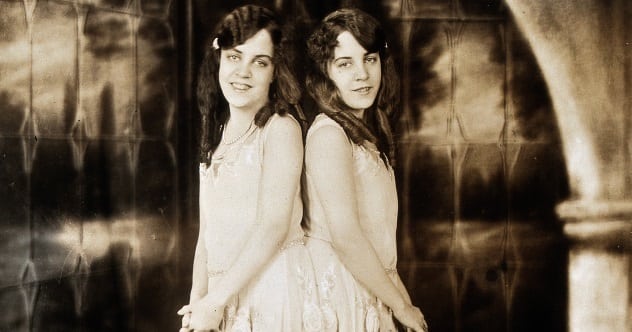
8. Daisy and Violet Hilton: Conjoined Sisters Treated Like Inherited Property
Daisy and Violet Hilton were born in Brighton, England, in 1908. Joined at the hip, they were placed in the care of Mary Hilton, who recognized their earning potential and trained them for public performance.
The sisters learned music, dance, and stagecraft, but their guardians exercised intense control over their lives and income. After Mary Hilton died, control reportedly passed to her daughter and son-in-law as though the performers were part of an estate. Daisy and Violet later described threats, isolation, and punishment behind the cheerful stage act.
They eventually pursued legal action and gained independence in the early 1930s. For a time, they became successful vaudeville and film performers, appearing in Tod Browning’s controversial 1932 movie Freaks.
As vaudeville declined, their career collapsed. In 1961, a manager abandoned them in Charlotte, North Carolina, without transportation or reliable income. They found work at a grocery store and lived quietly for several years.
Both sisters contracted influenza and were found dead in their home in early 1969. Evidence suggested that one had died before the other, leaving the surviving sister attached to her deceased twin for some time.
Why Their Story Still Hurts
Daisy and Violet escaped abusive management but not the economic system that had made their bodies their primary source of survival. When the applause disappeared, so did many of the people who had profited from them.
Research support:
9. Grady Stiles: When Exploitation, Abuse, and Violence Formed a Cycle
Grady Franklin Stiles Jr. was born in 1937 with ectrodactyly, a hereditary condition affecting the development of the hands and feet. Several members of his family had the same condition and performed under the name “The Lobster Family.” Stiles entered the sideshow as a child.
His later life, however, cannot be presented as a simple story of an innocent performer mistreated by society. Family members described him as controlling, violent, and abusive, particularly when drinking. In 1978, he shot and killed his daughter’s fiancé shortly before the couple planned to marry.
Stiles was convicted of third-degree murder. Because authorities said no prison was equipped to accommodate his disability, he received probation and house arrest. The result left his frightened family living with a convicted killer whose physical strength and behavior made him dangerous.
In 1992, Stiles was murdered in a plot involving his wife, stepson, and a teenage gunman. The crime ended one violent chapter while beginning another round of prosecutions, tabloid coverage, and public spectacle.
Why His Story Still Hurts
Stiles’s disability did not cause or excuse his crimes. His story is heartbreaking because childhood exhibition, family dysfunction, addiction, inadequate institutions, and domestic violence combined into a cycle that harmed nearly everyone around him.
Research support:
10. Schlitzie: A Beloved Performer Whose Real Identity Nearly Disappeared
Schlitzie remains one of the most recognizable performers from the 1932 film Freaks, yet basic facts about his early life are uncertain. He may have been born in New York around 1901, perhaps with the name Simon Metz. Records are incomplete because people with intellectual disabilities were frequently transferred between relatives, institutions, guardians, and show owners with minimal documentation.
Schlitzie had microcephaly and required lifelong assistance. Sideshow advertisements presented him using fabricated identities and insulting labels. He was dressed in loose gowns, partly for practical care needs, and was sometimes promoted as female or as a supposedly primitive “missing link.”
People who knew Schlitzie described him as affectionate, sociable, and delighted by music, dancing, and attention. The carnival may therefore have offered companionship and stimulation as well as exploitation. That contradiction is important: removing someone from a stage is not automatically compassionate when the alternative is isolation.
After the death of a guardian, Schlitzie was placed in a hospital. Accounts suggest that he became deeply unhappy until a circus worker recognized him and helped arrange his return to the show community. He spent his final years in Los Angeles and died in 1971.
Why His Story Still Hurts
Schlitzie became an international image while the details of his actual identity disappeared. Millions recognized his face, but history nearly forgot his name, origins, preferences, and personal voice.
Research support:
Experiencing Sideshow History Without Repeating Its Cruelty
Learning about famous sideshow performers can be an unsettling experience. At first, the old photographs and posters seem to belong to a distant, almost fictional world: striped tents, elaborate costumes, brass bands, painted banners, and headlines promising the strangest sight ever witnessed by human eyes. Then the dates, contracts, family records, and medical reports begin to restore the person inside the advertisement.
A responsible encounter with sideshow history starts by noticing the language. Promoters rarely sold a straightforward biography. They invented tribes, royal titles, missing-link theories, dramatic rescues, and impossible ages. A person born in Connecticut might become an eleven-year-old European general. A Mexican singer might be marketed as part animal. Conjoined twins from Thailand could be presented as evidence of an exotic and supposedly mysterious East. The poster was not a neutral description; it was a sales weapon.
Visitors examining these materials in museums or digital archives may feel a pull between curiosity and discomfort. That tension is useful. Curiosity is not automatically cruel. Medical difference, circus culture, costume design, performance history, and early celebrity are legitimate subjects of study. Cruelty begins when the person’s humanity becomes less important than the thrill of looking.
One helpful practice is to study what each performer actually did. Millie and Christine McKoy were multilingual singers and musicians. Annie Jones developed a polished public image and challenged degrading terminology. Charles Stratton mastered comedy, mimicry, and timing. Daisy and Violet Hilton played instruments and navigated the complicated choreography of moving and performing together. Describing their skills does not erase exploitation, but it prevents their bodies from becoming the only fact worth remembering.
Another important experience is recognizing the sideshow as a workplace. For some disabled performers, mainstream employers offered nothing except rejection. The circus could provide income, travel, community, housing, and a degree of celebrity. It could also involve abusive guardians, fraudulent accounting, relentless touring, and no retirement protection. Both realities can be true. Treating every performer as completely powerless removes agency; treating every contract as freely chosen ignores the limited alternatives available.
The stories also encourage uncomfortable comparisons with modern entertainment. Contemporary audiences no longer line up beneath a banner reading “Human Oddities,” but reality television, viral videos, medical documentaries, and social media can reproduce the same appetite for spectacle. A humiliating clip can now reach more people in an afternoon than a nineteenth-century showman could attract in a lifetime. The tent has changed shape; the ticket booth fits in a pocket.
Experiencing this history thoughtfully therefore requires more than feeling sorry for people from the past. It asks us to consider consent, compensation, privacy, accessibility, and who controls the story. Are disabled people speaking for themselves? Are medical details necessary, or merely sensational? Does an audience admire a performer’s work, or consume the performer as an object?
The most meaningful response is not to stare harder or look away faster. It is to replace the sales pitch with the biography. Behind every dramatic nickname stood a person managing relationships, ambition, boredom, illness, bills, grief, and hope. Once that truth becomes visible, the sideshow banner loses some of its powerand the individual finally steps forward.
Conclusion
The heartbreaking backstories of famous sideshow performers are not simply tales about unusual bodies. They are stories about power: who controlled the contracts, who collected the money, who wrote the advertisements, who authorized medical examinations, and who decided whether a person deserved privacy.
Joseph Merrick sought safety. Julia Pastrana waited more than a century for burial. Millie and Christine McKoy survived enslavement and became accomplished artists. Daisy and Violet Hilton fought for independence only to be abandoned when their fame faded. Others found genuine community and opportunity in the circus while still enduring language and treatment that denied their dignity.
The most respectful way to remember them is not as “freaks,” monsters, or medical puzzles, but as complicated individuals who worked inside an industry built on wonder and inequality. Their bodies attracted the crowds. Their humanity is what deserves our attention now.