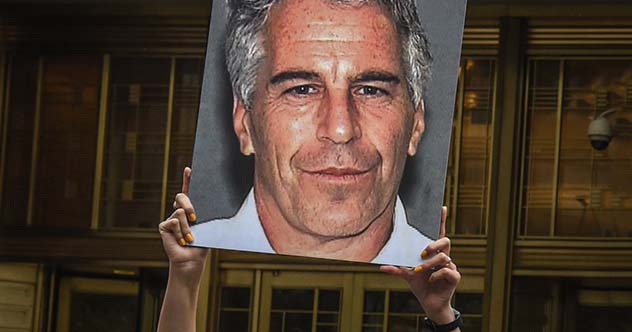
Note: This article examines documented facts that have fueled public suspicion around Jeffrey Epstein’s death. Official investigations by the New York City Medical Examiner, the Department of Justice, and the FBI concluded that Epstein died by suicide, and no official finding has established that he was murdered.
Introduction: Why the Epstein Death Still Feels Like a Locked Room Mystery
Few modern news stories have generated as much suspicion, argument, and late-night group-chat detective work as the death of Jeffrey Epstein. On August 10, 2019, Epstein was found dead in his cell at the Metropolitan Correctional Center in New York City while awaiting trial on federal sex-trafficking charges involving minors. Officially, his death was ruled a suicide by hanging. Unofficially, the public reaction was closer to: “You expect us to believe that happened by accident?”
That reaction did not come out of nowhere. Epstein was not an ordinary inmate. He was wealthy, connected, notorious, and facing charges that could have exposed more details about his network. He had known relationships with powerful figures in politics, finance, academia, royalty, and entertainment. When someone like that dies in federal custody after a chain of almost cartoonishly bad security failures, skepticism is not just predictableit is practically manufactured by the circumstances.
To be clear, documented facts are not the same as proof of murder. But the Epstein case is packed with facts that make people question the official story. Some are forensic. Some involve prison staffing. Some involve surveillance. Some involve the broader failure of institutions that had already mishandled Epstein for years. Taken together, they explain why the phrase “Jeffrey Epstein didn’t kill himself” became a cultural slogan, a meme, and a shorthand for distrust in elite accountability.
Here are 10 documented facts that keep the Epstein murder theory aliveand why each one matters.
10 Facts That Fuel Suspicion Around Jeffrey Epstein’s Death
1. Epstein Died While in Federal Custody
The first fact is also the biggest: Jeffrey Epstein died inside a federal jail. Not in a private mansion. Not on a remote island. Not in a chaotic street incident. He died while under the custody of the U.S. Bureau of Prisons, in one of the most watched criminal cases in America.
That matters because custody creates responsibility. When the government holds a person, it is responsible for keeping that person alive, especially when the inmate is high-profile, legally explosive, and potentially suicidal. Epstein’s death did not merely end a life; it ended the possibility of a public criminal trial that could have revealed more about his operations and associates.
For skeptics, that timing is impossible to ignore. Epstein was facing serious federal charges and potentially decades in prison. A public trial could have brought testimony, documents, names, travel records, financial trails, and uncomfortable questions into the open. His death conveniently removed the central defendant from the courtroom. That does not prove murder, but it does explain why so many people looked at the official ruling and said, “That is a little too neat.”
2. He Had Recently Been on Suicide Watch
Weeks before his death, Epstein had been found injured in his cell after what authorities treated as a possible suicide attempt. After that incident, he was placed on suicide watch, a status that usually involves much stricter monitoring and restrictions.
Then, shortly before he died, he was taken off suicide watch. That decision remains one of the most criticized parts of the case. A man accused of horrific crimes, facing massive public disgrace, and recently involved in a suspected self-harm incident was no longer under the strictest suicide-prevention measures. In plain English: the system saw smoke, then stored the fire extinguisher in another room.
Supporters of the official conclusion argue that removing inmates from suicide watch can happen when mental-health staff believe they are no longer at immediate risk. Skeptics counter that Epstein was exactly the kind of inmate who should have remained under extraordinary supervision. Whether the decision was incompetence or something darker, it remains a major reason people doubt the official narrative.
3. He Was Left Alone When He Was Supposed to Have a Cellmate
Epstein was supposed to have a cellmate. On the night he died, he did not. His cellmate had been transferred, and no replacement was put in the cell with him.
This detail is central because cellmates can act as an informal safety layer. They may alert staff if something is wrong, interrupt a self-harm attempt, or at minimum become a witness to what happened. Leaving Epstein alone removed that layer entirely.
Was that a bureaucratic mistake? Possibly. Was it suspiciously convenient? Many people think so. In a case involving a high-profile inmate with powerful connections and a recent suicide-watch history, “Oops, he was alone” lands with all the grace of a piano falling down a stairwell.
4. Guards Failed to Perform Required Checks
Correctional officers were supposed to check on Epstein regularly. According to official investigations, required rounds were not performed for hours. Epstein was effectively unmonitored from roughly late evening until he was discovered the next morning.
This is one of the most damaging facts for public confidence. The whole point of jail monitoring is that staff actually monitor people. If the official story depends on Epstein having enough uninterrupted time to kill himself, then the missing checks are not a side notethey are the doorway through which the entire official explanation walks.
For murder skeptics, the unanswered question is simple: how did so many failures align so perfectly? No cellmate. No meaningful checks. A high-profile inmate. A locked cell. A dead defendant. It sounds less like normal negligence and more like a thriller plot rejected for being too obvious.
5. Guards Falsified Records
The guards assigned to Epstein’s unit were later accused of falsifying records to make it appear that required checks had been completed. That fact is gasoline on the conspiracy fire.
Falsified records do not prove murder. People falsify paperwork for ordinary reasons too: laziness, fear of discipline, panic after a mistake, or the timeless workplace instinct of “Maybe nobody will notice.” But in a death this consequential, false records create a massive credibility problem.
When official documents say one thing and the truth is another, the public naturally asks: what else is inaccurate? If the logs were false, were other parts of the story incomplete? Were mistakes hidden? Were inconvenient details minimized? In a case already surrounded by elite connections and institutional distrust, falsified jail records made the official story feel less like a conclusion and more like a sales pitch.
6. Several Cameras Were Not Working Properly
Surveillance problems are among the most infamous details in the Epstein case. Reports and official reviews described serious camera failures around the Special Housing Unit. Some cameras were not recording. Some footage was limited. Some views did not directly show the cell itself.
For a high-profile inmate, camera failure feels like the worst possible coincidence. The public expects that someone like Epstein would be monitored with more care than a vending machine in a bus station. Instead, the security record looked like a checklist of things that should not happen in the most sensitive jail death of the decade.
Official reviews have said available footage supported the conclusion that no one entered the relevant tier during the key window. But skeptics continue to focus on the cameras that failed, the blind spots that existed, and the fact that the public did not get a simple, crystal-clear video answer. In modern America, if there is no clean footage, suspicion fills the empty space fast.
7. The Autopsy Raised Questions About Neck Injuries
The official medical examiner ruled Epstein’s death a suicide by hanging. But Dr. Michael Baden, a forensic pathologist hired by Epstein’s family, publicly argued that certain neck fractures appeared more consistent with homicide than suicide.
The disputed injuries included fractures involving the hyoid bone and thyroid cartilage. The medical examiner’s office stood by the suicide ruling and stated that such fractures can occur in both suicides and homicides. That means the forensic debate is not as simple as internet slogans make it sound.
Still, the existence of a credible forensic disagreement mattered. When one expert says the injuries fit suicide and another says they raise homicide concerns, readers do not hear “complex forensic interpretation.” They hear “even the doctors are arguing.” That kind of uncertainty is exactly where conspiracy theories put down roots, water themselves, and begin charging rent.
8. Epstein Had Powerful Connections
Epstein’s social world included billionaires, politicians, academics, celebrities, and royals. That does not mean those people were involved in his crimes or his death. But it does explain why the public viewed him as someone who knew dangerous information.
The murder theory often rests on a simple assumption: if Epstein had information that could harm powerful people, powerful people had a motive to silence him. Motive alone does not prove action. But in public perception, Epstein’s connections made his death feel unusually consequential.
For years, many people believed Epstein escaped meaningful accountability because institutions treated him differently. His 2008 plea deal in Florida was widely criticized as unusually lenient. When the same man later died before trial, the public did not view it in isolation. They viewed it as another chapter in a long story of powerful systems failing to deliver justice.
9. His Death Prevented a Full Criminal Trial
Epstein’s death meant there would be no trial of Jeffrey Epstein himself. That is legally and socially enormous. A trial could have forced evidence into the open. It could have allowed victims to testify. It could have clarified how his operation worked, who enabled it, and what prosecutors could prove.
Without a trial, many questions remained unresolved. Civil litigation, later prosecutions, document releases, and investigations continued, but the central criminal proceeding against Epstein ended with his death.
This is one reason the public reaction remains so intense. People are not only suspicious about how he died; they are angry about what his death interrupted. When a defendant accused of abusing minors dies before trial, the result is not closure. It is a locked door with the key snapped off inside.
10. Official Explanations Confirmed Negligence, Not Confidence
The most fascinating part of the official story is that it does not exactly inspire confidence. The official conclusion is suicide, but the official investigations also documented shocking institutional failures: poor supervision, staffing problems, missed checks, falsified records, excessive linens, broken or limited camera coverage, and management failures.
That creates a strange paradox. Authorities say Epstein was not murdered, but they also acknowledge that the jail failed in ways that made his death possible. For skeptics, the list of failures looks too long and too convenient. For defenders of the official conclusion, the failures show incompetence, not conspiracy.
Either way, the public was asked to accept a story built on a foundation of proven dysfunction. That is why the Epstein case remains so combustible. People may disagree about whether he was murdered, but almost no one can honestly say the system performed well.
What the Official Record Actually Says
Despite all these suspicious facts, official investigations concluded that Epstein died by suicide. The New York City Office of the Chief Medical Examiner ruled the cause as hanging and the manner as suicide. The Justice Department Inspector General later found serious failures by Bureau of Prisons staff but did not establish that Epstein was killed. The FBI and DOJ also reviewed evidence and stated that they found no evidence supporting the claim that Epstein was murdered.
That is important for responsible reporting. A publishable article should not present murder as a proven fact when official findings say otherwise. The strongest accurate framing is this: Epstein’s death was officially ruled suicide, but the documented failures surrounding it were so severe that public suspicion remains understandable.
Why People Still Believe Jeffrey Epstein Was Murdered
Belief in the murder theory is not only about one night in jail. It is about accumulated distrust. People watched Epstein receive a controversial plea deal years earlier. They watched wealthy and connected people avoid hard questions. They watched victims fight for recognition. They watched official institutions release partial answers, heavily redacted documents, and complicated explanations. Then they watched Epstein die in custody before trial.
In that environment, the murder theory became more than a theory. It became a symbol. For some, it represents the belief that elites protect each other. For others, it reflects anger at a justice system that seems powerful against ordinary people but strangely clumsy around the rich and connected. For many, it is simply the conclusion they reach when too many coincidences stack up in one direction.
But there is a difference between suspicion and proof. The documented facts justify questions. They justify criticism. They justify demands for transparency. They do not, by themselves, prove that someone murdered Epstein. That distinction matters, especially when discussing a case involving real victims whose abuse should not be buried under endless internet speculation.
Experience-Based Reflection: What the Epstein Case Teaches About Trust, Truth, and Public Suspicion
Anyone who has followed true-crime stories, court cases, or government scandals knows the feeling: a public explanation arrives, and instead of closing the case, it somehow opens fifty more tabs in your brain. The Epstein case is the ultimate example. It has all the ingredients that make people suspicious: elite connections, missing accountability, failed security, disputed forensic details, sealed records, and a death that arrived at the most consequential moment possible.
The experience of reading about Epstein’s death is not like reading about an ordinary jail suicide. It feels like walking into a room where every smoke alarm has been removed, every security camera is pointed at the ceiling, and someone calmly tells you, “Nothing unusual happened here.” Maybe nothing criminal happened beyond negligence. But the presentation is so bad that disbelief becomes almost instinctive.
For many readers, the most frustrating part is not even the official suicide ruling. It is the sense that powerful people rarely face the same level of exposure as everyone else. When ordinary defendants are accused of crimes, the legal process can be brutal and public. When Epstein’s world came under scrutiny, the public saw redactions, sealed records, legal settlements, and unanswered questions. That contrast creates a credibility gap big enough to park a private jet inside.
There is also a lesson here for media consumers. Suspicion can be reasonable, but certainty requires evidence. It is easy to move from “this looks suspicious” to “therefore murder happened.” That leap may feel satisfying, but it can also distract from proven facts: Epstein abused minors, institutions failed victims, jail officials failed in their duties, and the public still deserves transparency about how such exploitation continued for so long.
The best way to approach the Epstein case is with disciplined skepticism. Do not swallow official statements whole, but do not replace them with unsupported claims either. Ask what is documented. Ask what is disputed. Ask who benefits from confusion. Ask what victims have said. Ask why systems failed repeatedly. And above all, resist the urge to let the mystery of Epstein’s death overshadow the crimes that brought him back into federal court in the first place.
In the end, the Epstein story remains disturbing not because every conspiracy theory is true, but because enough real failures happened to make trust difficult. The official conclusion is suicide. The public reaction is suspicion. Between those two facts sits a case study in how institutions lose credibility: not always through one giant lie, but through years of secrecy, privilege, incompetence, and explanations that arrive too late to feel clean.
Conclusion: Suspicion Is Not Proof, But the Questions Are Real
Jeffrey Epstein’s death remains one of the most controversial events in recent American criminal history. The official record says suicide. The documented circumstances say catastrophic failure. The public response says distrust. Those three realities can exist at the same time.
The 10 facts above do not prove Epstein was murdered. They do show why millions of people continue to doubt the official narrative. A high-profile defendant died alone after being removed from suicide watch. Guards failed to check on him. Records were falsified. Cameras were unreliable. His trial never happened. His connections were powerful. The result was a perfect storm of suspicion.
For readers searching “Jeffrey Epstein murder facts,” “Epstein death evidence,” or “why people think Epstein was murdered,” the most honest answer is this: the murder claim has not been officially proven, but the failures surrounding his death were real, severe, and historically damaging. Whether one sees those failures as incompetence or something more sinister, they remain a stain on the justice systemand a reminder that transparency is not optional when public trust is already on life support.