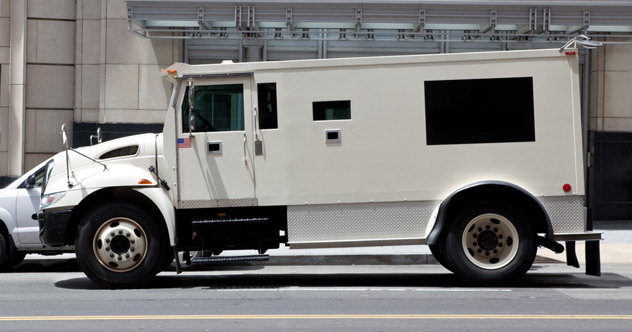
Armored vehicles are built to survive collisions, bullets, and the occasional action-movie fantasy. Yet the most vulnerable part of any cash-delivery operation is often the brief moment when money moves between the truck, an ATM, a bank door, or a storage facility. The following publicly unresolved armored car heists involved disguises, abandoned getaway vehicles, violent ambushes, distinctive tattoos, and enough surveillance footage to fill a particularly stressful television marathon.
Why Armored Car Robberies Still Happen
An armored truck looks like a rolling safe, but it cannot remain sealed forever. Guards must step outside, unlock machines, enter bank vestibules, carry deposit bags, and follow schedules that may become familiar to anyone watching from a distance. Those transition points create opportunities that even reinforced steel cannot eliminate.
For this article, “unsolved” means that no complete public resolutionsuch as an announced identification, arrest, or conviction tying up the casewas found in official notices or major U.S. reporting reviewed through July 11, 2026. Investigators may possess evidence or private leads that have never been released. Several cases also remain on FBI wanted or information-seeking pages, indicating that authorities still want help from the public.
The humor below is reserved for strange disguises, questionable wardrobe choices, and getaway plans with more confidence than subtlety. The violence itself is no joke. Armored couriers are workers performing a difficult job, and several guards in these cases were threatened, stunned, beaten, or shot.
1. The Christmas Eve-Eve Ambush in Chicago
A guard was shot during a routine bank stop
On December 23, 2025, an armored-car guard was servicing a Chase Bank branch on South Archer Avenue in Chicago when a robber demanded money and opened fire. The wounded guard survived, while the attacker escaped in what investigators described as a bronze Hyundai Elantra with tinted windows.
The timing made the attack especially brazen. Two days before Christmas, commercial areas were busy, cash demand was high, and plenty of potential witnesses were likely nearby. Crowds, however, do not always help. A crowded scene can produce conflicting descriptions, obstructed views, and dozens of people who assume somebody else saw more.
The FBI offered a reward of up to $10,000 and warned that the suspect should be considered armed and dangerous. The case remains featured in FBI materials, with investigators continuing to seek information identifying the gunman.
Source basis:
2. The $30 Million Sylmar Cash-Facility Heist
A holiday-weekend vault breach with no obvious alarm
During Easter weekend in 2024, thieves entered a GardaWorld cash-storage facility in Sylmar, California, breached its vault, and reportedly escaped with as much as $30 million. The missing money was discovered when employees returned after the holiday. It was one of the largest cash thefts ever reported in the Los Angeles area.
This was not a roadside armored-truck ambush, but it struck the heart of the armored-cash network: the secured facility where currency was collected, processed, and stored. Investigators examined how the burglars entered the building, reached the vault, handled an enormous volume of cash, and apparently avoided triggering an immediate response.
The scale created its own mystery. Thirty million dollars is not something a person casually stuffs into a gym bag unless the gym bag has been engineered by NASA. Yet no publicly announced arrest or full recovery of the money was located in the official and major-news reporting reviewed for this article.
Source basis:
3. The Tattooed ATM Robber of North Miami
A distinctive hand marking became the central clue
On January 31, 2024, a robber targeted an armored-truck employee servicing an ATM at a Chase Bank on Northeast 125th Street in North Miami. The suspect fled on foot, leaving investigators with surveillance images and one unusually specific identifying feature: a visible tattoo on the back of his left hand.
Distinctive tattoos can be valuable clues because they are more difficult to replace than a hoodie or baseball cap. Unfortunately, surveillance cameras do not always capture enough detail to identify the design, and a partial image can resemble hundreds of common symbols. Investigators still needed someone who recognized the person, the tattoo, or both.
The FBI released images and requested information about the suspect’s identity and location. Searches of subsequent official and major local reporting did not reveal a publicly announced resolution, leaving the hand tattoo as a clue that appears memorable but has not publicly cracked the case.
Source basis:
4. The Violent Brink’s Robbery in Philadelphia
The attackers stole cash and the guard’s firearm
On October 12, 2023, two armed men attacked a Brink’s guard outside a Bank of America branch on South Christopher Columbus Boulevard in Philadelphia. One assailant reportedly carried a firearm equipped with an extended magazine. During the struggle, the guard was shot in the side, kicked in the head, and robbed of both the money and his duty weapon.
The robbers escaped in a Chevrolet Malibu that investigators later recovered. An abandoned vehicle can contain fingerprints, biological material, digital evidence, fibers, or clues about where it had previously traveled. It can also be stolen, wiped down, and deliberately discarded to send detectives down a long, pothole-filled road.
The FBI said the suspects might have connections to Camden, New Jersey, and continued requesting public assistance. The agency’s active information page indicates that authorities have not publicly closed the book on the attack.
Source basis:
5. The Orange-Vest Robbery in El Segundo
A familiar work uniform helped the suspect blend in
On February 21, 2023, an armored-vehicle driver was confronted at gunpoint near a bank on North Pacific Coast Highway in El Segundo, California. The robber wore an orange reflective safety vest, a blue face covering, a black hoodie, jeans, and dark shoes before escaping in the passenger seat of a maroon sedan.
The reflective vest is the fascinating detail. Safety gear is designed to make workers visible, yet it can also make a stranger look as though he belongs near loading areas, utility equipment, parking lots, and commercial entrances. It is the universal costume of “I am probably supposed to be standing here,” right up until somebody notices the firearm.
Authorities offered a reward of up to $15,000 for information leading to an arrest and conviction. No publicly reported resolution was located in the reviewed FBI and Los Angeles-area coverage.
Source basis:
6. Houston’s “Baby Bib Bandit” Robbery
A strange nickname attached itself to a serious crime
On August 17, 2020, two men confronted an armored courier at a Family Dollar store on Homestead Road in Houston. One suspect displayed a semiautomatic handgun and demanded the courier’s bag. The pair escaped with the money, and the FBI later publicized images in hopes that somebody would recognize them.
One robber was nicknamed the “Baby Bib Bandit” because of the distinctive way part of his clothing appeared in surveillance footage. Investigators described him as having dreadlocks with gold-colored tips and wearing a blue shirt with basketball shorts. His accomplice was shorter and wore a white T-shirt.
Nicknames help the public remember a case, but they are not evidence. A catchy label cannot substitute for a confirmed identity, usable forensic material, or a witness willing to provide a name. No later public announcement resolving the robbery was found in the reporting reviewed through July 2026.
Source basis:
7. The Skull-Mask Ambush in Atlanta
Witnesses reportedly left before investigators could interview them
On March 21, 2019, a Loomis courier carrying a substantial amount of currency approached a Wells Fargo branch on Moreland Avenue in Atlanta. A robber wearing a black hoodie and a mask displaying a skull design ambushed the courier near the entrance and escaped with the money.
The costume seemed created for maximum memorability. A skull mask does not exactly whisper, “Please overlook me.” Even so, a frightening image is not the same as a recognizable face. The mask concealed the features investigators most needed, while the dark clothing offered little that was unique.
Authorities said several people witnessed the robbery, but some left before police could speak with them. The FBI and Loomis offered a combined reward of up to $30,000. Despite the witnesses and surveillance imagery, no publicly announced solution was found in subsequent official or local reporting reviewed for this article.
Source basis:
8. The Drive-Through ATM Robbery in Lithonia
The getaway vehicle may have been scouting the area
On November 26, 2016, a Dunbar armored courier was servicing a drive-through ATM at a Bank of America branch in Lithonia, Georgia. A robber approached with a handgun, took the money, and fled to a waiting dark-colored Jeep SUV driven by an accomplice.
Investigators noted that the vehicle had no visible license plate and carried a white sticker on its rear bumper. Authorities also believed the suspects or their vehicle may have appeared near the location in the days or weeks before the robbery, possibly giving customers or nearby workers an opportunity to recognize suspicious behavior in retrospect.
That is the frustrating thing about surveillance. Something can appear perfectly ordinary until after a crime, when a parked SUV, repeated visit, or unfamiliar face suddenly becomes important. Rewards were announced, but reviewed public records did not reveal an arrest specifically resolving this robbery.
Source basis:
9. The Fedora-Wearing Taser Robber in Virginia
A bizarre outfit could not produce a confirmed identity
On July 3, 2015, a Brink’s guard was unlocking an ATM at a Wells Fargo branch on South Laburnum Avenue in Henrico County, Virginia. The attacker used a Taser against the guard, grabbed a Brink’s bag, and ran toward a wooded area near an apartment complex. Some of the money was dropped during the escape and then retrieved.
The suspect wore a blazer, dress shirt, fedora, and Polo-brand shoes. The outfit looked like a confused combination of bank manager, jazz-club regular, and man who had dressed for brunch before remembering he planned to commit a felony.
Surveillance images captured the clothing but did not reveal enough of the robber’s face. A reward of up to $15,000 was offered. The suspect continued to appear in FBI archival materials, and no public announcement identifying or convicting him was found in the reviewed sources.
Source basis:
10. The Mace Attack at a Queens ATM Lobby
Investigators connected the crew to another robbery
On January 31, 2014, three men attacked a GardaWorld guard as he left an HSBC ATM lobby on Broadway in the Elmhurst neighborhood of Queens. The suspects threatened the guard with a firearm, grabbed the deposits he was carrying, and sprayed him with mace before escaping.
The getaway vehicle was described as a green Ford Explorer XLT, possibly from the 2002 or 2003 model year. The FBI believed the same group may have committed another armored-car robbery at a check-cashing business in Queens in January 2013. That possible connection suggested planning, experience, and a willingness to repeat the same category of crime.
GardaWorld offered a reward of up to $50,000. Despite vehicle details, surveillance material, and the suspected link between attacks, no later public resolution was located in the official and New York news reporting reviewed for this article.
Source basis:
The Real-World Experience Behind These Unsolved Heists
Routine can become a security weakness
Reading these cases together reveals that the armored vehicle itself was rarely the primary target. The critical moment came when a courier stepped onto a sidewalk, approached an ATM, crossed a parking lot, or entered a vestibule. A guard may repeat that movement hundreds of times without incident. That familiarity can create confidence, but it may also create a pattern visible to someone watching from nearby.
For security teams, the practical lesson is not that every customer, parked vehicle, or person in a reflective vest is suspicious. Constant panic would make the job impossible. The lesson is that procedures must remain layered. Communication, observation, route management, access controls, camera placement, and rapid reporting all matter because no single precaution can stop every threat.
Witnessing a robbery is more confusing than movies suggest
People often imagine that they would remember every detail of a dramatic crime. In reality, a sudden weapon, loud command, mask, or burst of movement can narrow attention. One witness may focus on a handgun, another on a getaway car, and another on whether an injured guard needs help. Their accounts can all be honest while differing on clothing colors, height, direction of travel, or the number of seconds involved.
That is why apparently small details become important. A tattoo, gold-tipped dreadlocks, a bumper sticker, a fedora, or a maroon sedan may trigger recognition in someone who knows the suspect. Investigators release those details not because they form a complete portrait, but because one unusual feature may connect the public’s memory to evidence already collected.
The workers carry consequences long after the money is gone
Coverage of cash heists naturally focuses on the amount stolen. A figure such as $30 million produces instant fascination. Yet insured currency can be counted and replaced. The human effects are harder to measure. Guards who have been threatened, shocked with a Taser, beaten, sprayed with chemicals, or shot may face physical recovery, trauma, lost work, and anxiety during routine stops that once felt ordinary.
Coworkers also experience the aftermath. Procedures may change. Routes may be reassigned. Every unfamiliar vehicle can suddenly appear significant. Businesses should treat employee support as part of incident recovery rather than assuming that a worker is fine once the surveillance footage has been copied and the paperwork completed.
Large amounts of stolen cash create a different problem
Stealing cash is only the first half of a major heist. Spending it without attracting attention is another challenge. Currency may be bundled, recorded, contaminated with tracking materials, or connected to evidence from the scene. Sudden purchases and unexplained changes in lifestyle can also bring scrutiny. A robber who successfully leaves the parking lot has not necessarily escaped the investigation.
Still, time works against detectives. Memories fade, vehicles are dismantled, clothing disappears, associates move away, and physical evidence may not immediately match anyone in available databases. A case can remain quiet for years before a fingerprint, DNA match, tip, financial record, or cooperating witness gives old evidence new meaning.
Public curiosity should never become amateur pursuit
These cases invite speculation, especially when surveillance images are dramatic. People should resist confronting anyone they think resembles a suspect. Similar clothing, body types, hairstyles, vehicles, and tattoos can lead to dangerous mistakes. Useful information should be given directly to the responsible law-enforcement agency, allowing trained investigators to compare it with evidence that has not been made public.
The best tip is not necessarily a cinematic revelation. It may be a remembered comment, an unexplained absence, knowledge of a vehicle, or recognition of a detail that seemed insignificant at the time. Unsolved armored car heists often depend on one person finally realizing that a fragment of information belongs to a much larger puzzle.
Conclusion: Strong Steel Cannot Eliminate Human Risk
These ten brazen armored car heists show why reinforced vehicles, armed guards, cameras, alarms, and secure vaults cannot remove every vulnerability. Money must eventually move, doors must open, and people must make decisions under pressure.
The cases are memorable because of their dramatic details: a skull mask, an orange vest, a hand tattoo, a strangely formal fedora, an abandoned sedan, and a vault emptied during a holiday weekend. What keeps them relevant, however, is not their resemblance to movie plots. It is the fact that victims still deserve answers and investigators may still be waiting for one reliable piece of information.
Some of these mysteries could eventually be solved through new forensic matches or long-delayed tips. Until then, they remain reminders that a spectacular escape is not the same thing as a perfect crime. Sometimes it simply means the final chapter has not been written yet.
Editor’s note: Case status reflects publicly available FBI notices and major U.S. news reporting reviewed through July 11, 2026. “Unsolved” refers to the absence of a located public announcement fully resolving the case; investigators may hold nonpublic evidence or leads.