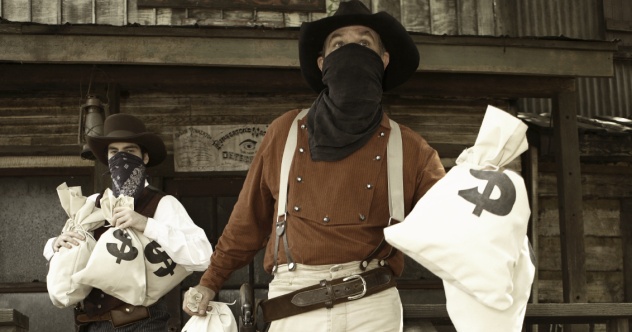
Some crimes seem to arrive with their own screenplay. They have disguises, secret tunnels, coded radio chatter, insider betrayals, impossible vaults, and getaways involving everything from rental trucks to speedboats. Then comes the inevitable final act: a fingerprint, a discarded sandwich, or one accomplice who suddenly spends money like a lottery winner with no financial adviser.
The following audacious historical heists were real, although several details remain disputed because criminals are not famous for keeping reliable minutes. Together, these cases show that the most spectacular robberies rarely depended on a single brilliant trick. They exploited routine, trust, weak procedures, and human overconfidence. They also left victims, damaged institutions, and consequences that lasted far longer than the glamorous few minutes usually shown on screen.
1. The Mona Lisa Theft: One Man Walks Out With a Masterpiece
Paris, France 1911
On August 21, 1911, Vincenzo Peruggia entered the Louvre wearing the white work clothes used by museum employees. The Italian glazier had previously worked there, so he knew the building and did not look dramatically out of place. With the museum closed to visitors, he removed Leonardo da Vinci’s Mona Lisa from the wall, separated it from its protective frame, and carried the wooden panel away.
The disappearance was not recognized immediately. Once officials realized the painting was gone, the Louvre closed and the scandal became international news. Pablo Picasso was questioned, poet Guillaume Apollinaire was arrested, and newspapers enthusiastically transformed an art theft into a cultural circus.
Peruggia kept the painting for more than two years. He was finally caught after contacting Florence art dealer Alfredo Geri about returning or selling it in Italy. Ironically, the theft helped turn an already respected Renaissance portrait into the world’s most recognizable painting. Apparently, nothing boosts an artwork’s profile like vanishing from the Louvre.
2. The Great Train Robbery: A Red Signal and £2.6 Million
Buckinghamshire, England 1963
In the early hours of August 8, 1963, a large gang stopped a Royal Mail train traveling from Glasgow to London. The robbers manipulated a trackside signal, covered the green light, and produced a false red one. When the train halted, they overpowered its crew and moved the valuable mail carriage to Bridego Bridge.
The gang removed roughly 120 sacks containing about £2.6 million in used banknotes, an extraordinary sum at the time. The raid was carefully planned, but it was not bloodless. Driver Jack Mills was struck during the attack and suffered serious injuries.
The thieves retreated to Leatherslade Farm, where they counted the money and reportedly played Monopoly using real cash. That detail feels tailor-made for cinema, but their hideout also delivered valuable evidence. Fingerprints and other clues helped police identify much of the gang. Several participants received lengthy prison sentences, while Ronnie Biggs later became famous for escaping prison and living abroad. The robbery had precision, celebrity, violence, and a spectacularly unhelpful board-game session.
3. The Baker Street Robbery: Criminals Borrow From Sherlock Holmes
London, England 1971
Career criminal Anthony Gavin reportedly drew inspiration from Arthur Conan Doyle’s “The Red-Headed League,” in which thieves tunnel toward a bank. Gavin’s crew rented Le Sac, a leather-goods shop near a Lloyds Bank branch on Baker Street, and excavated a tunnel approximately 40 feet long. The passage led beneath the vault’s heavily reinforced floor.
During the weekend of September 11, the burglars broke through and opened hundreds of safe-deposit boxes. Estimates of the stolen property range from about £1.25 million to £3 million, partly because customers were reluctant to describe everything they had stored inside.
The operation included a rooftop lookout communicating by radio. Amateur radio enthusiast Robert Rowlands overheard the conversations and alerted police. Officers checked hundreds of banks but found their doors secured and initially failed to locate the active burglary. The gang continued working while Rowlands listened to what was essentially the world’s most stressful podcast.
Later rumors claimed the government suppressed news coverage because compromising material belonging to prominent people had been taken. Those stories remain unproven, but they gave the Baker Street robbery a perfect conspiracy-thriller epilogue.
4. The Lufthansa Heist: The Crime Behind a Movie Classic
New York City 1978
On December 11, 1978, masked robbers entered Lufthansa’s cargo facility at John F. Kennedy International Airport. Guided by inside information, they restrained employees and stole approximately $5 million in cash and $875,000 in jewelry. It was the largest cash robbery reported in the United States at that time.
The money came from international currency shipments passing through the airport, and the gang knew where it would be stored. Airport worker Louis Werner supplied information and was later convicted. Organized-crime associate James “Jimmy the Gent” Burke was widely described as the operation’s mastermind, although he was never convicted of the heist itself.
The robbers’ troubles began when the getaway van was left where investigators could find it instead of being destroyed. A violent aftermath followed, with several people connected to the plot murdered or disappearing. Most of the stolen property was never recovered.
The case inspired a major sequence in Goodfellas, but the real story was less a breezy caper than a grim study of paranoia. In Hollywood, the crew celebrates over champagne. Here, the credits rolled over betrayals, prosecutions, and bodies.
5. The Brink’s-Mat Robbery: When the Loot Was Better Than Expected
London, England 1983
Six armed robbers entered the Brink’s-Mat warehouse near Heathrow Airport on November 26, 1983. With assistance from security guard Anthony Black, they expected to find roughly £1 million in foreign currency. Instead, they discovered three tons of gold bullion, plus diamonds, cash, and other valuables worth about £26 million.
This was not merely a successful robbery; it was the criminal equivalent of ordering fries and being handed a gold mine. The unexpected haul created an enormous logistical problem. Gold bars are valuable, but they are also heavy, identifiable, and difficult to spend at the neighborhood grocery store.
Much of the bullion was melted, recast, mixed with other gold, and pushed into legitimate markets. The resulting laundering network touched property deals and financial businesses, while violence followed people associated with the proceeds. Two robbers were convicted of armed robbery, and several others were prosecuted for handling or laundering the gold. Most of the bullion was never directly recovered, giving the case an unusually long and poisonous afterlife.
6. The Gardner Museum Heist: Fake Police and Empty Frames
Boston, Massachusetts 1990
Shortly after midnight on March 18, 1990, two men dressed as police officers arrived at the Isabella Stewart Gardner Museum. They claimed to be responding to a disturbance. Once admitted, they restrained the guards and spent approximately 81 minutes moving through the galleries.
The thieves took 13 objects, including Vermeer’s The Concert, Rembrandt’s The Storm on the Sea of Galilee, works by Degas and Manet, a Chinese bronze vessel, and a Napoleonic eagle finial. The selection was oddly inconsistent, suggesting the robbers were not expert curators. Several paintings were cut from their frames, a brutal act that may have damaged them.
The stolen collection has been valued at more than $500 million. No one has been charged with carrying out the theft, and none of the objects has been recovered. In accordance with Isabella Stewart Gardner’s arrangement for the museum, empty frames remain in place. They are haunting placeholdersand perhaps the most effective “missing” posters in art history.
7. The Dunbar Armored Robbery: An Insider Knows the Schedule
Los Angeles, California 1997
Allen Pace III had worked as a regional safety inspector for Dunbar Armored, giving him detailed knowledge of the company’s Los Angeles cash depot. He understood its camera positions, employee routines, security procedures, and the unusually large volume of money handled on Friday nights.
On September 12, 1997, Pace and five childhood friends entered the facility, restrained employees, seized surveillance equipment, and loaded $18.9 million into a rented truck. The robbery took about half an hour and was, at the time, the largest cash armed robbery in American history.
The crew avoided immediate capture and tried to conceal or launder the money. Their downfall came more than two years later when Eugene Hill gave a real-estate broker cash that still carried identifying currency straps. Hill eventually confessed and implicated the others.
Pace was sentenced to more than 24 years in federal prison. The case illustrates a recurring principle in famous heists: defeating the vault is only the opening act. Explaining why you suddenly possess bundles of marked cash is the much less entertaining sequel.
8. The Millennium Dome Raid: A Bulldozer Meets an Ambush
London, England 2000
The attempted Millennium Dome diamond robbery sounded as if someone had combined a James Bond chase with a construction-site accident. On November 7, 2000, a gang used a heavy excavator to smash through the perimeter and enter the Dome. Their target was a De Beers exhibition containing the 203-carat Millennium Star and other diamonds collectively valued at hundreds of millions of pounds.
After breaking the display, the robbers planned to escape across the Thames in a speedboat. Unfortunately for them, police had monitored the crew for months under Operation Magician. The real diamonds had been replaced with replicas, undercover officers were positioned around the attraction, and an armed team waited behind a concealed wall.
The gang had barely reached the display when police emerged and arrested them. Other officers detained accomplices near the river. Although no diamonds were successfully stolen, the attempted raid earns a place among history’s most audacious heists because its sheer theatricality is difficult to beat. Bulldozer entrance, speedboat exit, hidden police: the screenplay practically formats itself.
9. The Antwerp Diamond Heist: Ten Layers of Security Defeated
Antwerp, Belgium 2003
The vault beneath the Antwerp Diamond Center was protected by an imposing collection of defenses, including heat and motion detection, magnetic sensors, surveillance, a seismic alarm, and a massive door. Its combination lock alone offered 100 million possible settings. Naturally, criminals considered this a challenge.
Leonardo Notarbartolo rented an office in the building and spent years observing its routines. Over the weekend of February 15–16, 2003, his crew entered the underground vault and opened 109 safe-deposit boxes. Diamonds, gold, jewelry, cash, and securities worth more than $100 million disappeared. Precise descriptions of how every security layer was defeated remain disputed, and some dramatic details come from Notarbartolo’s own later account.
The thieves did not lose because of the vault. They lost because incriminating trash was discarded on private land beside a roadway. Documents, videotapes, food remnants, and DNA evidence helped investigators identify the crew. Notarbartolo received a 10-year sentence, yet most of the valuables were never recovered. Years of meticulous preparation had met its natural predator: careless waste disposal.
10. The Banco Central Burglary: A Business Above, a Tunnel Below
Fortaleza, Brazil 2005
In 2005, a criminal group rented a property near the Banco Central branch in Fortaleza and presented it as the home of a landscaping company. The business provided an explanation for soil, equipment, and workers moving around the building. Beneath the surface, however, the crew was digging an engineered tunnel nearly 260 feet long.
The passage included lighting, ventilation, and structural support. During the weekend of August 6, the burglars entered the bank vault from below and removed approximately 164.7 million Brazilian reais in used notesthen worth close to $70 million. The cash weighed roughly 3.5 tons, so even after reaching the vault, the thieves faced an exhausting underground moving job.
Investigators eventually arrested many suspects and recovered part of the money. The enormous pool of stolen cash also triggered extortion, kidnappings, disputes, and killings within Brazil’s criminal world. Like several other celebrated historical heists, the operation looked ingenious when viewed as a diagram. Its human aftermath was chaotic, violent, and impossible to control.
Why These Audacious Heists Feel Like Hollywood Movies
Each case contains a strong cinematic hook. The Mona Lisa disappears in broad daylight. A mail train stops at a false signal. Burglars tunnel beneath Sherlock Holmes’ neighborhood. Fake officers enter a Boston museum, and a bulldozer crashes into a diamond exhibition while police wait behind a wall.
Yet spectacle alone does not make these stories endure. Their real dramatic engine is the gap between control and chaos. The crews plan schedules, disguises, transportation, and access, believing they have reduced the crime to a sequence of manageable tasks. Then human nature arrives. Someone leaves a van, keeps incriminating trash, flashes suspicious cash, trusts the wrong partner, or cannot resist talking.
The best heist stories also include a reversal. In Antwerp, the supposedly invincible vault was conquered, but garbage exposed the thieves. At the Millennium Dome, the gang thought it was springing a surprise while walking into a meticulously staged police trap. In the Gardner case, the robbery succeeded, yet the unusable fame of the paintings may have made the masterpieces impossible to sell.
Experiencing Heist History Beyond the Headlines
Visit the Places That Preserve the Absence
The most affecting way to encounter a historical heist is often through what remains. At Boston’s Gardner Museum, the empty frames transform an unresolved crime into a physical experience. They do not simply mark missing property; they interrupt rooms designed as a unified artistic environment. Visitors see how theft can damage a collection without damaging the building itself.
Railway museums and transport archives provide a different experience. Exhibits related to the Great Train Robbery place the crime within the working world of postal trains, track signals, mail sorting, and mid-century communications. That context makes the operation understandable without turning it into a celebration. A robbery that seems effortlessly stylish in a movie becomes an attack on ordinary employees doing a night shift.
Compare Screen Versions With Documented History
Films and television series are excellent entry points, but they rearrange reality for pace. Characters may be combined, timelines shortened, and disputed stories presented as fact. Watching Goodfellas alongside reliable reporting about the Lufthansa heist, for example, reveals how cinema converts a complicated investigation into a tightly focused narrative.
A useful viewing habit is to ask three questions: Which details are independently documented? Which come from participants who had reasons to exaggerate? Whose experience has been removed from the retelling? Those questions do not spoil the entertainment. They add another layerthe pleasure of seeing how history is manufactured for the screen.
Follow the Investigation, Not Just the Break-In
The robbery itself is usually the shortest part of a famous heist. The more revealing story begins afterward, when detectives trace money, interview witnesses, compare physical evidence, and follow networks that may extend across countries. The Dunbar case was cracked through currency straps, while the Antwerp investigation gained momentum from abandoned trash. Neither clue has the glamour of a laser-filled vault, but both show how painstaking police work actually proceeds.
Archival newspapers are especially valuable for following this changing picture. Early reports frequently contain incorrect totals, rumors, or confident assumptions that later collapse. Reading coverage chronologically lets audiences experience the uncertainty faced by investigators and the public rather than beginning with an ending already known.
Remember the Victims Behind the Clever Plot
Historical heists are entertaining because they turn secure institutions into puzzles. However, real people were threatened, restrained, injured, or financially devastated. Small diamond merchants in Antwerp lost uninsured property. Gardner Museum visitors lost access to irreplaceable works. Train driver Jack Mills suffered lasting consequences after the 1963 attack. The aftermath of the Brink’s-Mat and Banco Central robberies included intimidation and deadly violence.
The richest experience of heist history holds two ideas at once: the planning may be fascinating, and the crime may still be cruel. That tension is more interesting than simple admiration. It explains why these stories continue to attract filmmakers, historians, museum visitors, and armchair detectives long after the getaway vehicles have disappeared.
Conclusion: The Perfect Heist Is Mostly a Myth
These audacious historical heists demonstrate that security is rarely defeated by magic. It is undermined by routine, misplaced trust, inside knowledge, delayed responses, and the assumption that an impressive system cannot fail. The criminals exploited those weaknesses with patience and nervebut their apparent victories often unraveled afterward.
That is why the cases remain fit for Hollywood. Every ingenious plan contains a flaw, every enormous prize creates a new problem, and every clean getaway opens the door to betrayal. The tunnel reaches the vault, the train stops, or the painting leaves the museum. Then somebody drops the sandwich.