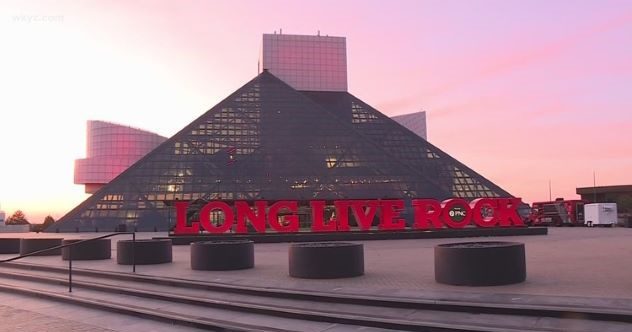
Getting into the Rock & Roll Hall of Fame once is the sort of career achievement most musicians can only dream about. Getting inducted twice? That means an artist did something even trickier: made history in one musical life, then somehow built another legacy large enough to deserve its own spotlight.
The Rock Hall’s multiple inductees include musicians honored first as members of legendary bands and later as solo artists, as well as performers whose work with more than one major act earned separate recognition. This list focuses on 10 especially fascinating examples. It is not a ranking, because trying to rank John Lennon against Stevie Nicks, Curtis Mayfield, and Ozzy Osbourne would be a fine way to start a very loud family argument.
One famous name is deliberately missing: Eric Clapton. He did not merely join the double-inductee club. He went one better, earning three inductions through the Yardbirds, Cream, and his solo career. Show-off.
Why Being Inducted Twice Is Such a Big Deal
A second Rock & Roll Hall of Fame induction usually reveals something important about an artist’s creative identity. Success inside a famous band does not automatically translate into an equally influential individual career. The chemistry that produces a classic group can disappear the moment its members separate.
The artists below escaped that problem in different ways. Some reinvented themselves. Some finally received recognition for music that had always existed alongside their group work. Others moved between bands so influential that a single plaque simply could not tell the whole story.
1. John Lennon: The Beatles and a Solo Voice That Could Not Be Ignored
Inducted with the Beatles in 1988 and as a solo artist in 1994
John Lennon first entered the Rock & Roll Hall of Fame as a member of the Beatles, a group whose cultural influence is so enormous that calling it “influential” almost feels like calling the ocean “slightly damp.”
His second induction recognized the distinctly personal career that followed. Lennon used solo work to explore confession, politics, peace, anger, vulnerability, and experimentation. Songs such as Imagine, Instant Karma!, and material from John Lennon/Plastic Ono Band established an identity that was connected to the Beatles but never dependent on simply recreating Beatlemania.
That distinction matters. Lennon’s solo career often stripped away the polished group mythology and replaced it with something more exposed. His writing could be idealistic one moment and painfully self-critical the next. The second induction acknowledged that John Lennon was not merely one-quarter of history’s most famous rock band. He remained a major artistic force outside it.
2. Paul McCartney: From Beatlemania to a Remarkably Restless Career
Inducted with the Beatles in 1988 and as a solo artist in 1999
Paul McCartney’s post-Beatles career could have been a comfortable victory lap. Instead, he kept writing, recording, forming new groups, experimenting, touring, and generally behaving as though retirement were an unpleasant rumor.
After the Beatles, McCartney built a major new chapter with Wings while also developing a broad solo catalog. His gift for melody remained obvious, but his post-Beatles work ranged from homemade recordings and arena rock to orchestral projects and unexpected collaborations.
His 1999 individual induction recognized a career that had long since become too substantial to fit underneath the Beatles umbrella. McCartney demonstrated one of the central themes shared by many artists inducted twice into the Rock Hall: the ability to carry a legendary past without becoming trapped inside it.
3. George Harrison: The Quiet Beatle Who Built a Loud Legacy
Inducted with the Beatles in 1988 and as a solo artist in 2004
George Harrison spent much of the Beatles era working alongside the formidable songwriting partnership of Lennon and McCartney. Yet his own artistic identity became increasingly powerful, producing Beatles classics such as Something and Here Comes the Sun.
After the group’s breakup, Harrison’s solo career immediately proved how much material and ambition had been waiting for room to breathe. All Things Must Pass became his defining solo statement, while his continuing interest in Indian music and spirituality expanded the vocabulary of mainstream rock.
Harrison also organized the Concert for Bangladesh, an important early model for large-scale rock benefit events, and later joined the Traveling Wilburys. His posthumous solo induction in 2004 recognized a musician whose influence reached far beyond his famous nickname as the “quiet Beatle.” Quiet, apparently, is not the same thing as insignificant.
4. Ringo Starr: The Beat Behind the Beatles Gets Individual Recognition
Inducted with the Beatles in 1988 and individually in 2015
Ringo Starr’s second Rock Hall honor came under the Award for Musical Excellence, making his path somewhat different from the standard band-then-solo performer route. The recognition nevertheless confirmed something musicians had understood for decades: Ringo’s contribution was not simply that he happened to sit behind John, Paul, and George.
His drumming was economical, musical, instantly recognizable, and unusually well suited to the Beatles’ constantly evolving arrangements. He rarely played to demonstrate how many notes could be squeezed into four minutes. He played for the song, which sounds simple until you listen to how many drummers fail spectacularly at it.
Outside the Beatles, Starr built a lasting solo career with songs including It Don’t Come Easy and Photograph, while his All-Starr Band became a long-running celebration of collaborative rock performance. His second induction gave individual recognition to a style whose apparent simplicity concealed enormous musical intelligence.
5. Neil Young: A Solo Icon and a Member of Buffalo Springfield
Inducted as a solo artist in 1995 and with Buffalo Springfield in 1997
Neil Young entered the Hall first for his solo career and then returned two years later as a member of Buffalo Springfield. That order feels appropriate for an artist whose individual catalog became one of the most unpredictable bodies of work in modern rock.
Young can move from fragile acoustic ballads to distorted electric storms without asking anyone’s permission. Albums including After the Gold Rush, Harvest, and Rust Never Sleeps helped define singer-songwriter rock while also proving that commercial success did not have to eliminate creative risk.
Buffalo Springfield, meanwhile, had a relatively brief existence but an outsized influence on the development of folk rock and country rock. Young’s two inductions therefore honor both sides of his musical character: the collaborative young songwriter emerging from the 1960s scene and the stubbornly independent artist who spent decades refusing to remain in one lane.
6. Rod Stewart: Solo Superstar and Member of the Faces
Inducted as a solo artist in 1994 and with the Small Faces/Faces in 2012
Rod Stewart possesses one of those voices that requires approximately half a second to identify. Raspy, warm, swaggering, and occasionally tender, it became a defining sound of several rock eras.
His solo induction honored a huge catalog that moved between rock, pop, soul, standards, and ballads. Long before that career became a genre-hopping institution, however, Stewart had been central to the Faces, the gloriously loose rock band that seemed capable of turning every performance into both a concert and a particularly successful pub accident.
The Faces brought grit, humor, blues, and boogie to early 1970s rock. When the Small Faces/Faces were inducted in 2012, Stewart became a two-time Rock Hall inductee, receiving separate recognition for his individual stardom and the rowdy ensemble that helped establish his reputation.
7. Jeff Beck: The Guitarist Who Refused to Stand Still
Inducted with the Yardbirds in 1992 and as a solo artist in 2009
Jeff Beck’s career is a reminder that virtuosity becomes most interesting when it serves curiosity. He first entered the Hall with the Yardbirds, the influential British group whose guitar lineup also included Eric Clapton and Jimmy Page at different points. Apparently there was something unusual in the water near that rehearsal room.
Beck’s second induction recognized decades of adventurous work outside the band. He moved through blues rock, hard rock, jazz fusion, instrumental music, and electronic textures while maintaining a remarkably expressive approach to the guitar.
Many great guitarists develop a signature sound and protect it like valuable property. Beck kept rebuilding his. His playing could whisper, snarl, imitate a human voice, or explode into controlled chaos. The two Hall of Fame inductions capture both his place in a foundational British rock group and his larger achievement as an individual innovator.
8. Curtis Mayfield: The Impressions and a Revolutionary Solo Career
Inducted with the Impressions in 1991 and as a solo artist in 1999
Curtis Mayfield’s music combined social observation with grooves so inviting that listeners could be dancing before realizing they had just been given something serious to think about.
With the Impressions, Mayfield helped create elegant, gospel-rooted soul music that became closely associated with hope, dignity, and the civil rights era. Songs such as People Get Ready carried spiritual and social meaning without losing their melodic warmth.
His solo career became more direct and cinematic. The Super Fly soundtrack remains a landmark, pairing sophisticated funk and soul with a clear-eyed examination of urban life, temptation, exploitation, and survival.
Mayfield’s second induction in 1999 recognized that his achievements as a solo artist were not merely an extension of the Impressions. Together, the two honors reflect one of popular music’s most important songwriters, producers, guitarists, and social commentators.
9. Stevie Nicks: Fleetwood Mac Icon and Historic Solo Inductee
Inducted with Fleetwood Mac in 1998 and as a solo artist in 2019
Stevie Nicks made Rock Hall history when her 2019 solo induction made her the first woman to be inducted twice.
Her work with Fleetwood Mac produced some of rock’s most enduring songs and one of its most recognizable visual identities. The voice, the shawls, the dramatic stage presence, and the mystical imagery all became unmistakably hers. Yet the theatrical image would mean little without the songwriting underneath it.
Nicks built a major independent career with albums such as Bella Donna and songs including Edge of Seventeen and Stand Back. Her solo material allowed her to expand the emotional and sonic world she had created within Fleetwood Mac while proving that her audience would follow her under her own name.
The second induction was therefore more than another trophy. It was recognition of two overlapping but distinct careers, and a milestone in the Hall’s history of honoring women in rock.
10. Ozzy Osbourne: Black Sabbath’s Frontman and a Solo Metal Institution
Inducted with Black Sabbath in 2006 and as a solo artist in 2024
Black Sabbath helped establish the musical language of heavy metal: enormous riffs, ominous atmosphere, and a sense that something very bad might be lurking behind the amplifier stack. Ozzy Osbourne’s unmistakable voice was central to that sound.
His 2006 induction with Black Sabbath honored one of the most consequential bands in heavy music. His 2024 solo induction recognized what happened after the original chapter ended.
Beginning with Blizzard of Ozz, Osbourne built a solo catalog that introduced a more melodic but still unmistakably heavy form of metal to huge audiences. Songs such as Crazy Train became staples, while his concerts, theatrical persona, Ozzfest, and later television fame turned him into a pop-culture figure far beyond the metal community.
The two inductions represent different achievements. Black Sabbath helped invent a musical world. Ozzy’s solo career proved he could leave that world, build another kingdom nearby, and remain one of heavy metal’s most recognizable personalities.
What These Double Inductions Tell Us About Rock History
The most interesting thing about artists inducted twice into the Rock & Roll Hall of Fame is not the number itself. It is the transformation behind the number.
John Lennon, Paul McCartney, George Harrison, and Ringo Starr all faced the almost absurd challenge of creating lives after the Beatles. Neil Young moved between collaboration and radical independence. Curtis Mayfield used different career phases to deepen his social and musical impact. Stevie Nicks established a solo identity powerful enough to stand beside Fleetwood Mac. Ozzy Osbourne turned dismissal from one legendary band into the beginning of another extraordinary chapter.
These stories also challenge the idea that an artist has one definitive era. Great careers are rarely neat. They involve breakups, experiments, commercial detours, failed albums, unexpected collaborations, and occasionally a hairstyle that seemed like an excellent decision at the time.
A second induction recognizes durability, but more importantly, it recognizes creative independence. The artist did not merely survive a famous group. The artist found another way to matter.
The Double-Inductee Listening Experience: How to Hear the Evolution
Start with the group, then follow the artist into unfamiliar territory
One of the best ways to experience these 10 careers is not to build a conventional greatest-hits playlist. Instead, listen in pairs. Choose one recording from the artist’s famous group and place it directly beside a solo recording from a later period. The contrast often explains the second Hall of Fame induction better than a biography ever could.
Move from a tightly constructed Beatles recording to the emotional directness of John Lennon’s solo work. Follow the polished complexity of late-period Beatles music with the sprawling freedom of George Harrison’s All Things Must Pass. Listen to Stevie Nicks inside Fleetwood Mac’s carefully balanced chemistry, then switch to the larger, more personal world of Bella Donna.
The experience becomes especially interesting when the second career does not sound like a simple continuation of the first. Jeff Beck is a perfect example. A listener starting with the Yardbirds may expect more British blues rock, only to encounter instrumental music that keeps changing shape. Neil Young can make the transition even more dramatic: a polished folk-rock track may be followed by electric guitar that sounds as though the amplifier has developed strong political opinions.
Listen for what changes and what refuses to change
Across these careers, certain traits survive every transformation. Ringo Starr’s instinct for serving the song remains recognizable outside the Beatles. Curtis Mayfield’s combination of musical elegance and social awareness connects his work with the Impressions to his solo recordings. Ozzy Osbourne’s voice remains instantly identifiable even as the musical environment changes from Black Sabbath’s foundational doom to the sharper, more melodic attack of his solo career.
That is part of the fun of exploring double inductees. The listener begins to recognize an artistic fingerprint. Bands may change. Producers may change. Technology certainly changes. Hair changes with alarming frequency. Yet something essential remains.
Use the second induction as an invitation, not a final verdict
A Rock Hall honor can easily become a museum label: important artist, important year, please proceed to the gift shop. A better experience is to treat each second induction as a doorway into the less obvious parts of a catalog.
For Paul McCartney, move beyond the universally known Beatles standards and explore the strange corners of his post-Beatles work. For Rod Stewart, compare the looseness of the Faces with the range of his solo recordings. For George Harrison, follow the thread connecting spirituality, guitar playing, collaboration, and philanthropy. For Curtis Mayfield, listen not only for the groove but for the precision of the storytelling inside it.
This approach makes the Rock & Roll Hall of Fame feel less like a scoreboard and more like a map. The two inductions mark separate destinations, but the journey between them is where the story becomes compelling. A group may provide the first breakthrough, yet the second recognition often reveals the harder achievement: developing a voice that remains meaningful after the original chemistry, cultural moment, or safety net has disappeared.
Spend an evening moving between these artists’ two musical lives and the pattern becomes clear. The truly remarkable double inductees are not simply people who succeeded twice. They are artists who changed context without losing identity. That is why these careers remain rewarding to revisit long after the ceremonies, speeches, and trophies are over.
Conclusion
The 10 artists inducted twice into the Rock & Roll Hall of Fame on this list represent far more than repeat recognition. Their careers show how musicians can emerge from legendary collaborations and continue creating work influential enough to earn separate historical acknowledgment.
From the four Beatles to Stevie Nicks, Curtis Mayfield, Jeff Beck, Neil Young, Rod Stewart, and Ozzy Osbourne, each story follows a different route. Some became solo superstars. Some reinvented their sound. Some proved that their influence extended across multiple groups and generations.
Ultimately, a second Rock Hall induction is not simply an encore. For the greatest artists, it is evidence that the first act was only part of the story.
Note: This is a curated selection of 10 notable multiple inductees rather than a complete list of everyone who has received Rock & Roll Hall of Fame recognition more than once. Eric Clapton is not included because his record is even rarer: he has been inducted three times.